2026 Best Elastomeric Foam Suppliers for Global Buyers

Time:2026-10-03 Author:Mason
0%

Selecting reliable Elastomeric Foam suppliers requires more than comparing prices or browsing polished websites. Global buyers need evidence of consistent production, material knowledge, and dependable export support. This guide examines suppliers serving insulation, HVAC, refrigeration, automotive, and industrial markets in 2026.

Practical evaluation begins with product details. Check closed-cell structure, thermal conductivity, water vapor resistance, temperature range, flexibility, and fire-performance documentation. A trustworthy supplier should provide current test reports, technical data sheets, factory information, and traceable batch records. Certifications can support confidence, but buyers should verify their scope and validity. Standards differ between markets.

Experience matters. Field experience matters.

The strongest suppliers usually explain how their foam performs after cutting, bending, adhesive bonding, and long-term exposure. They also clarify minimum order quantities, sample policies, packaging methods, lead times, and after-sales procedures. Factory audits or independent inspections can reveal details that online catalogs miss, such as uneven surfaces, damaged cartons, or inconsistent dimensions. Still, no supplier ranking can replace project-specific testing. Climate, installation quality, transportation conditions, and local compliance requirements may change the final result. This guide therefore presents a practical comparison framework, not an absolute verdict. Some supplier information may change during 2026, and buyers should confirm critical details directly before signing contracts. Reliable sourcing is not simply about finding the lowest quote. It is about reducing performance risks while building a transparent, technically informed supply relationship.
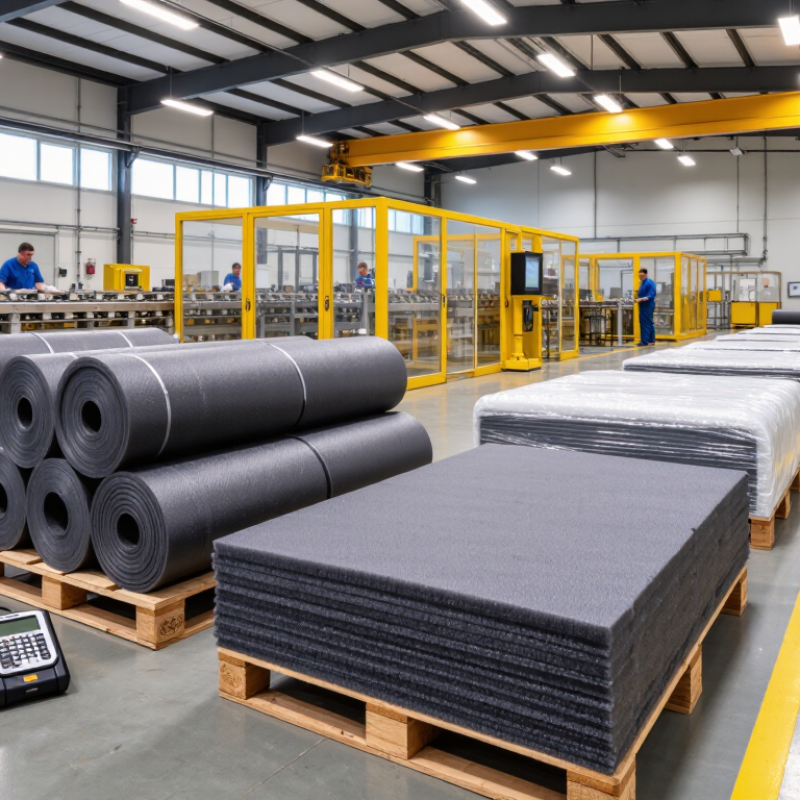
2026 Best Elastomeric Foam Suppliers for Global Buyers

What Elastomeric Foam Is and Why Global Buyers Use It

Elastomeric foam is a flexible insulation material made from synthetic rubber or similar polymers. Its closed-cell structure limits heat transfer and slows moisture movement. When cut, it feels soft and resilient, yet it can protect pipes, ducts, tanks, and chilled-water lines.

Global buyers use it because condensation control matters in humid spaces. A properly fitted sheet around a cold pipe keeps the outer surface dry. This helps reduce corrosion under insulation and prevents wet ceilings or stained equipment rooms.

The material also absorbs vibration and tolerates moderate movement, which supports quieter mechanical systems. It is lightweight, so installers can carry rolls through narrow service corridors without special lifting equipment.

In field inspections, joint quality often matters as much as foam thickness. Gaps at elbows, crushed edges, and poorly sealed seams can weaken the entire insulation system. Buyers should review thermal conductivity, water-vapor resistance, temperature range, density, flexibility, and test documentation. Regional climate, storage conditions, and installation skill also deserve attention. Still, no elastomeric foam solves every problem. Some products age poorly under sunlight, while others lose flexibility after repeated heat exposure. A specification may look complete, but real performance can change when surfaces are dusty or wet. Careful sampling and installation trials remain useful before large international orders.

Key Performance Standards for Comparing Elastomeric Foam Suppliers

When comparing elastomeric foam suppliers, start with measurable performance, not catalog language. Check thermal conductivity at a stated mean temperature. A value without test conditions is difficult to trust. Review water vapor permeability, closed-cell content, density, and operating temperature limits. These figures affect chilled-water pipes, rooftop equipment, and duct insulation differently.

Look for documented fire-test results that match your project’s location and installation method. Ask whether reports come from independent laboratories. Request current production samples, not only a polished brochure. Measure thickness, surface quality, flexibility, and compression recovery. Small cracks around bends can expose weak processing control.

Batch traceability matters. It links delivered rolls to raw materials, test records, and production dates. Reliable suppliers should explain their inspection frequency and corrective-action process.

Ask for technical support before placing a large order. Can the supplier recommend adhesive compatibility, joint sealing, and storage conditions? Specific answers reveal practical experience. Environmental data also deserves careful review, including recycled content, manufacturing energy, and end-of-life guidance. Claims need evidence. Be cautious with vague “premium grade” wording. It proves little. Price comparisons should include waste, installation time, replacement risk, and shipping protection. A cheaper foam may become expensive after deformation or moisture damage. Even strong suppliers may have gaps in documentation. Record those gaps, request clarification, and avoid treating one laboratory value as the whole product story.

How to Evaluate Manufacturing Capacity, Quality, and Certifications

For global buyers, manufacturing capacity means more than a large factory. Request monthly output, current utilization, mold availability, and lead-time records for the past twelve months. A practical audit should compare declared capacity with purchase orders, machine hours, and finished-goods storage. The International Energy Agency reports that buildings consume about 30% of global final energy, increasing demand for dependable insulation materials. Yet capacity figures can mislead when production depends on one aging foaming line. Ask for contingency plans, maintenance logs, and evidence of stable raw-material supply.

Quality evaluation should connect laboratory results with field performance. For elastomeric foam, review thermal conductivity, water-vapor resistance, density, dimensional stability, and fire behavior. ASTM C534 and EN 14304 provide useful product-testing frameworks, but a certificate alone proves little. Request recent batch reports, test methods, sample conditioning details, and traceability from compound to carton. Check whether independent laboratories performed the tests. Small differences matter. An inconsistent surface or compressed edge may reveal poor process control.

Certifications should match the destination market and intended application. ISO 9001 supports quality management, while ISO 14001 and ISO 45001 address environmental and occupational systems. Verify certificate scope, issuing body, expiry date, and factory address through the certification body. Do not accept a scanned logo as proof. A supplier may pass an annual audit yet struggle with urgent orders or specification changes. That uncomfortable gap deserves attention. Use trial orders, retain samples, and documented corrective actions before approving long-term supply.

Regional Supplier Selection for Different Global Markets

Global buyers rarely need one universally “best” elastomeric foam supplier. They need the right regional fit. In Europe, evaluate REACH alignment, technical documentation, and low-emission requirements. European projects often demand traceable test reports. North American buyers may prioritize ASTM-based performance data, local inventory, and fast replacement shipments. A lower purchase price can become expensive when a container waits at customs.

Climate changes the selection criteria. In Southeast Asia, inspect water-vapor resistance, mold control, and storage conditions during humid seasons. For the Middle East, review UV exposure, high-temperature aging, and outdoor adhesive stability. Latin American buyers should examine port reliability, distributor stock, and Spanish or Portuguese technical support. Regional warehouses matter more than impressive factory capacity.

Ask suppliers for samples from the production lot, not only standard catalog pieces. Test thermal conductivity, compression recovery, dimensional stability, and joint sealing on your actual pipe or duct surfaces. I have seen strong laboratory data fail after poor surface preparation. That risk is easy to underestimate. Confirm batch traceability, packaging quality, warranty limits, and technical response times in writing. A local partner may offer faster support, but its storage practices can be inconsistent. Supplier selection should include a site review, customer references, and a small pilot order before long-term contracts.

2026 Best Elastomeric Foam Suppliers for Global Buyers - Regional Supplier Selection for Different Global Markets

Target Market Recommended Supplier Profile Preferred Material and Product Form Typical Technical Requirements Key Standards and Compliance Checks Supply and Logistics Priorities Best-Fit Applications
United States and Canada Supplier with established HVAC distribution, technical documentation in English, local inventory, and project support. Closed-cell NBR/PVC or EPDM flexible sheets, tubes, rolls, and pre-slit sections. Thermal conductivity commonly around 0.034–0.040 W/m·K at room temperature; operating ranges vary by formulation and may extend from approximately -40°C to 105°C. Verify ASTM C534 or applicable ASTM product requirements, ASTM E84 flame-spread and smoke-developed results where specified, ASTM C518 conductivity testing, and project-specific building-code acceptance. Domestic stock, consistent inch-based dimensions, short replenishment cycles, freeze protection during transport, and North American warranty support. Commercial HVAC, refrigeration, plumbing, chilled-water piping, and mechanical-room installations.
Western and Northern Europe Supplier experienced with CE-related documentation, harmonized technical files, environmental declarations, and energy-efficiency projects. Low-smoke closed-cell elastomeric foam, normally NBR/PVC or halogen-reduced formulations, supplied as tubes, sheets, and rolls. Low water-vapor permeability, stable dimensional performance, and thermal conductivity often in the 0.033–0.040 W/m·K range under standard test conditions. Check EN 14304 for factory-made insulation products, EN 13501-1 reaction-to-fire classification, ISO 8497 for pipe insulation testing, REACH and RoHS declarations where relevant, and project-level CE documentation. Metric dimensions, reliable cross-border delivery, recyclable packaging, environmental product information, and documented batch traceability. Energy-efficient HVAC systems, heat pumps, district heating, commercial buildings, data centers, and industrial pipework.
Central and Eastern Europe Supplier combining EU compliance capability with competitive regional production, multilingual technical support, and flexible order quantities. Standard NBR/PVC and EPDM products, with reinforced sheets and pre-insulated fittings available for industrial projects. Prioritize closed-cell structure, low moisture absorption, compression recovery, and temperature suitability for heating, cooling, and process lines. Confirm EN 14304 performance data, EN 13501-1 fire classification, ISO 8497 or equivalent testing, and local language installation instructions. Central warehouse access, pallet efficiency, metric sizing, stable lead times, and the ability to supply both standard and project-specific dimensions. Residential construction, industrial maintenance, HVAC retrofits, and district-energy systems.
China, Japan, and South Korea Supplier with automated production, strong quality-control records, export experience, and the ability to provide customized tooling or dimensions. NBR/PVC, EPDM, and low-smoke formulations in tubes, sheets, rolls, adhesive-backed products, and molded components. Evaluate density consistency, cell uniformity, adhesive bond strength, thermal conductivity, dimensional tolerance, and resistance to humidity and aging. Request ISO 9001 quality certification, ISO 8497 or equivalent thermal testing, applicable regional fire-test reports, REACH/RoHS declarations for exports, and complete material safety documentation. Container-loading efficiency, export packaging, production-capacity verification, pre-shipment inspection, translated technical files, and protection against compression damage. OEM components, HVAC equipment, refrigeration, rail-related systems, electronics facilities, and large-scale construction.
Southeast Asia Supplier with humid-climate experience, regional stock, strong adhesive performance, and technical support for condensation-control design. Closed-cell NBR/PVC or EPDM with low water-vapor permeability; adhesive-backed sheets and tubes are widely useful for installation speed. Emphasize vapor-retarder integrity, resistance to mold-supporting moisture, UV protection for exposed areas, and temperature performance in air-conditioning systems. Check ISO 8497 or equivalent thermal testing, regional fire requirements, mold and moisture test evidence where specified, and compatibility between adhesive and facing materials. Humidity-resistant packaging, covered storage, regional warehouse availability, rapid delivery to construction sites, and clear installation guidance. Split air-conditioning, chilled-water systems, cold rooms, commercial buildings, and data-center cooling.
India and South Asia Supplier offering value-oriented products, local technical service, dependable availability, and documented performance across hot and humid conditions. NBR/PVC tubes, sheets, rolls, and adhesive-backed insulation for HVAC, refrigeration, and plumbing applications. Prioritize condensation control, adequate wall thickness, compression recovery, adhesive stability, and resistance to high ambient temperatures. Verify applicable BIS or project specifications, ISO 8497 or equivalent test reports, fire-performance documentation, and quality-management records. Local inventory, mixed-size orders, cost-efficient packaging, dependable monsoon-season storage, and installation training for contractors. Residential air-conditioning, commercial HVAC, pharmaceutical facilities, cold storage, and industrial maintenance.
Middle East Supplier experienced with high-ambient-temperature projects, fire-safety submittals, regional distributors, and outdoor equipment protection. UV-protected NBR/PVC or EPDM, high-temperature grades, thick-wall tubes, sheets, and weather-resistant jacketing systems. Evaluate high-temperature stability, vapor resistance, UV and weathering protection, low smoke where required, and resistance to condensation on chilled-water lines. Confirm project-specific civil-defense and fire-test acceptance, ASTM or EN test reports as requested, ISO 8497 or equivalent thermal data, and documented installation systems. Regional stock, heat-protected warehousing, fast project delivery, export documentation, and packaging designed for extended transport and high ambient temperatures. District cooling, airports, hotels, commercial towers, oil and gas support facilities, and outdoor HVAC equipment.
Australia and New Zealand Supplier with local code knowledge, project submittal support, weather-resistant product options, and dependable distribution across large geographic areas. Closed-cell elastomeric tubes and sheets, EPDM for demanding outdoor or high-temperature service, and UV-resistant jacketing where exposed. Check thermal performance, condensation control, UV resistance, dimensional stability, and suitability for both warm and cool climatic zones. Verify AS/NZS project requirements, applicable AS/NZS fire and insulation provisions, ISO 8497 or equivalent test methods, and local building-code documentation. Nationwide distribution, palletized shipment, UV-protected storage, metric sizing, and availability of replacement materials for maintenance contractors. Commercial HVAC, marine and coastal facilities, residential construction, refrigeration, and industrial services.
Latin America Supplier with regional distribution, Spanish or Portuguese documentation, flexible order quantities, and experience handling import and customs requirements. Standard NBR/PVC tubes, sheets, rolls, and adhesive-backed products for HVAC, refrigeration, plumbing, and industrial applications. Focus on moisture resistance, thermal conductivity, adhesive durability, tropical-climate performance, and consistent wall thickness. Request local fire and building-code evidence, ASTM or EN test reports when specified, ISO 8497 or equivalent thermal data, and Spanish or Portuguese safety documentation. Regional inventory, customs-ready documentation, moisture-protected packaging, shorter inland delivery routes, and dependable after-sales support. Retail and commercial HVAC, cold rooms, food processing, hospitals, and industrial facilities.
Africa Supplier with strong distributor coverage, robust packaging, technical training, and the ability to support variable infrastructure and long replenishment cycles. Durable closed-cell NBR/PVC or EPDM tubes and sheets, with UV-resistant protection for exposed installations. Prioritize moisture control, mechanical durability, UV protection, dimensional stability, and simple field installation with limited specialist equipment. Confirm the project’s required ASTM, EN, ISO, or national standards; obtain fire-performance reports, thermal test data, safety documentation, and installation instructions. Long-shelf-life packaging, distributor stock, container optimization, protection from heat and humidity, spare-material planning, and installer training. Telecommunications facilities, commercial buildings, hospitals, refrigeration, water infrastructure, and industrial projects.
Buyer validation note: Technical values shown are common reference ranges for closed-cell elastomeric insulation and can vary by grade, thickness, test temperature, and test method. Before purchase, request current third-party test reports, product data sheets, fire classifications, batch traceability, chemical declarations, and project-specific approvals.

Pricing, Logistics, and Risk Factors in International Purchasing

Choosing the best elastomeric foam supplier in 2026 requires more than comparing catalog prices. Buyers should request current quotations, production capacity, and recent quality records. A low unit price can hide expensive packaging, testing, or port charges. For example, a 20-foot container may need moisture protection during a long sea journey. Ask for density, thermal conductivity, thickness tolerance, and test reports. Details matter.

International pricing changes with polymer feedstock, energy costs, exchange rates, and order volume. Compare landed cost, not only the factory quote. Include packaging, export handling, insurance, duties, inland delivery, and inspection fees. An 8% lower material price may become more expensive after storage charges or stronger cartons. Request Incoterms, lead time, payment terms, and quotation validity. Consolidated shipping can reduce freight costs, but it may delay urgent projects. We once treated transit time as fixed. It was not. That assumption needs correction.

Risk checks should cover capacity, backup production, quality consistency, and communication during disruptions. Ask for batch samples, traceability records, and a corrective-action process. Confirm performance after repeated temperature changes and compression. Do not rely only on a polished audit file. A remote video call can reveal packing conditions, but it cannot replace independent inspection. Define acceptance limits for dimensions, density, surface defects, and labeling before ordering. Keep one qualified backup supplier, even if unused. It costs time. It can protect a project when schedules tighten.

FAQS

Which performance figures should buyers compare between elastomeric foam suppliers?

Compare thermal conductivity at a stated mean temperature. Review water vapor permeability, closed-cell content, density, and operating limits. Test conditions matter. These figures affect pipes, ducts, and rooftop equipment differently.

Why are test conditions important when reviewing thermal conductivity?

A thermal conductivity value without test conditions is difficult to trust. Ask for the test method, sample conditioning, and mean temperature. Two similar numbers may describe different testing situations. The comparison can become misleading.

How can buyers check a supplier’s actual product quality?

Request current production samples, not only brochure images. Measure thickness, surface quality, flexibility, and compression recovery. Inspect bends closely for small cracks or crushed edges. Keep a retained sample for later comparison.

What should buyers review in fire and certification documents?

Confirm that fire-test results match the installation method and destination market. Check the report date, certificate scope, factory address, and expiry date. Independent laboratory reports provide stronger evidence. A scanned logo proves little.

How can manufacturing capacity be verified?

Request monthly output, current utilization, mold availability, and recent lead-time records. Compare declared capacity with machine hours and finished-goods storage. Ask about backup equipment, maintenance logs, and raw-material supply. One aging production line creates avoidable risk.

What information should suppliers provide for batch traceability?

Each delivered roll should connect to raw materials, test records, and production dates. Ask about inspection frequency and corrective-action procedures. Batch records help identify repeated defects. They also expose documentation gaps.

What costs should be included when comparing international quotations?

Compare landed cost, not only the factory price. Include packaging, export handling, insurance, duties, inland delivery, and inspection fees. Consider moisture protection for long sea journeys. A cheaper carton may increase damage risk.

How can buyers reduce supply and delivery risks?

Use trial orders before approving long-term supply. Set acceptance limits for dimensions, density, surface defects, and labeling. Confirm lead time, payment terms, shipping conditions, and quotation validity. Keep one qualified backup supplier. It may seem inefficient. Schedules can tighten suddenly.

Conclusion

This guide to the 2026 best Elastomeric Foam suppliers helps global buyers understand how this flexible, closed-cell insulation material supports energy efficiency, condensation control, acoustic performance, and long-term system reliability. It explains the key standards used to compare suppliers, including thermal conductivity, water vapor resistance, temperature range, fire performance, dimensional stability, durability, and product consistency. Buyers will also learn how to assess manufacturing capacity, quality-control systems, technical support, and relevant certifications before placing international orders.

The article provides a practical framework for selecting suppliers according to regional climate, construction practices, transportation requirements, and market regulations. It also examines pricing, minimum order quantities, lead times, packaging, shipping arrangements, currency exposure, and supply-chain risks. By considering product performance alongside production capability, documentation, logistics, and after-sales communication, purchasing teams can make more confident decisions and develop a reliable long-term sourcing strategy for global Elastomeric Foam projects.

Mason

Mason

Mason is a seasoned marketing professional with a deep expertise in the company's offerings and a passion for driving brand awareness. With a strong background in digital marketing strategies, he has an innate ability to connect with diverse audiences and effectively communicate product benefits.......