China Top 10 Floor Insulation Suppliers?

Time:2026-10-08 Author:Ethan
0%

China’s floor insulation market has become a practical source for builders, developers, and international distributors. This guide examines ten leading Chinese suppliers of Floor Insulation products, based on product range, manufacturing experience, technical support, certifications, and export capability.

The review considers materials such as XPS boards, EPS panels, PIR insulation, mineral wool, and underfloor heating systems. It also looks at thermal conductivity, compressive strength, moisture resistance, fire performance, and dimensional stability. These details matter beneath concrete slabs, timber floors, and radiant heating systems. A low price means little if the boards deform during installation.

Building scientist Joseph Lstiburek has repeatedly emphasized, “Water is the most important thing to control in a building.” That principle strongly applies to Floor Insulation. Moisture can reduce thermal performance, damage finishes, and create expensive repair work. Reliable suppliers should explain vapor control, drainage conditions, joint treatment, and installation limits clearly.

No ranking is perfect. Supplier performance can change with batch quality, factory management, and project communication. Some companies present impressive laboratories but provide weak after-sales support. Others offer excellent products but limited documentation for overseas contractors. This guide therefore encourages readers to request test reports, factory videos, product samples, and recent project references. Check the details. Small gaps can become cold bridges. A careful comparison can reveal which Chinese supplier fits a project’s climate, building structure, budget, and compliance requirements.
China Top 10 Floor Insulation Suppliers?

What Is Floor Insulation and Why Does It Matter?

What Is Floor Insulation and Why Does It Matter?

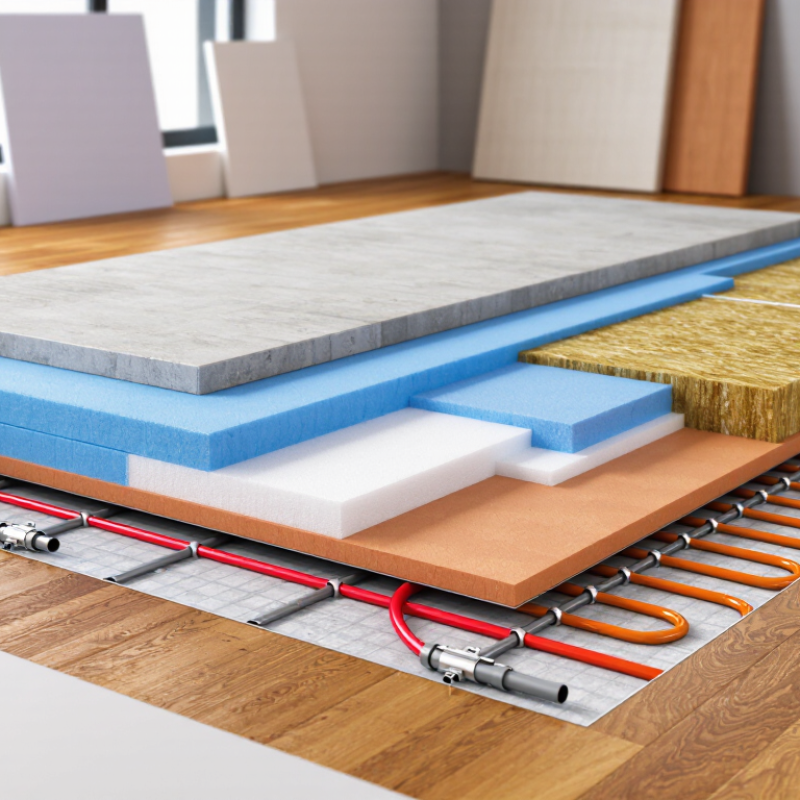
Floor insulation slows heat movement between rooms, ground, garages, and outside air. It works like a thermal blanket beneath your feet. Without it, winter floors may feel cold, even when the thermostat shows comfort. Moisture can also enter through ground-facing floors. That may encourage mold, timber decay, and unpleasant odors.

The United Nations Environment Programme reports that buildings use about 30% of global final energy. They also produce roughly 26% of energy-related emissions. The U.S. Department of Energy estimates that insulation and air sealing can reduce heating and cooling costs by around 15%. These figures are not floor-specific. Real savings depend on climate, construction quality, and household behavior. This limitation deserves attention. A thick product cannot correct poor installation.

Tips: Compare thermal resistance, moisture performance, fire classification, and compressive strength. For concrete floors, check whether the insulation tolerates long-term pressure. For suspended floors, inspect ventilation and pest resistance. Seal gaps around edges, pipes, and service openings. Even a small unsealed joint can become a cold stripe. Ask suppliers for tested values, installation guidance, and quality-control records. A responsible China top-ten supplier should explain performance under local climate conditions, not only advertise a high laboratory rating.

How to Evaluate Floor Insulation Suppliers in China

China Top 10 Floor Insulation Suppliers?

Evaluating floor insulation suppliers in China requires more than comparing prices. Ask for recent technical data, including thermal conductivity, compressive strength, moisture absorption, and fire performance. These figures should match recognized testing methods. A low declared conductivity value means little without an independent report and clear test conditions.

Request physical samples before placing a large order. Check their density, edge quality, surface flatness, and resistance to compression. A warehouse visit can reveal damaged packaging, mixed batches, or poor storage. A polished showroom is not proof of production control. Review factory capacity, quality inspection records, raw material traceability, and corrective-action procedures. These details show how the supplier handles problems.

Confirm whether the supplier can maintain consistent thickness and performance across repeated shipments. Discuss minimum order quantities, lead times, export documents, packaging, and replacement procedures in writing. Ask for references from projects with similar floor loads and climate conditions. Video audits can help, but they cannot replace independent verification. Even a careful checklist may miss seasonal moisture changes or transport damage. Recheck critical assumptions with a qualified local engineer before installation. Suppliers that answer technical questions clearly are usually easier to manage, although communication quality can still vary between sales staff and factory teams.

China Top 10 Floor Insulation Suppliers? - How to Evaluate Floor Insulation Suppliers in China

Rank Anonymous Supplier Profile Recommended Floor Insulation Typical Thermal Conductivity
(W/m·K)
Typical Density
(kg/m³)
Key Compliance Documents to Verify Indicative Lead Time Best Application Evaluation Score
(100)
1 Supplier Profile 01 Extruded polystyrene (XPS) boards 0.028–0.034 28–45 GB/T 10801.2, EN 13164, factory test report, fire-performance report 15–25 days Slab floors, basements, inverted roofs 92
2 Supplier Profile 02 Expanded polystyrene (EPS) boards 0.033–0.041 15–30 GB/T 10801.1, EN 13163, density certificate, fire classification 12–20 days Residential floor voids and lightweight systems 89
3 Supplier Profile 03 Rigid stone wool boards 0.034–0.041 100–180 GB/T 25975, EN 13162, non-combustibility test, water-repellency report 20–30 days Fire-rated floors and acoustic assemblies 88
4 Supplier Profile 04 Glass wool floor insulation panels 0.032–0.040 32–96 GB/T 13350, EN 13162, formaldehyde report, acoustic test data 18–28 days Floating floors and impact-noise control 86
5 Supplier Profile 05 Polyisocyanurate (PIR) boards 0.022–0.028 30–40 EN 13165, ISO 8301, reaction-to-fire report, dimensional stability report 25–35 days Thin-build-up floors and high-performance projects 85
6 Supplier Profile 06 Phenolic foam boards 0.020–0.025 35–45 EN 13166, thermal-aging test, fire classification, compressive-strength report 25–40 days Energy-efficient floors with limited thickness 83
7 Supplier Profile 07 Cement-bonded wood wool panels 0.075–0.095 300–500 EN 13168, moisture-resistance data, acoustic report, structural fixing data 20–35 days Acoustic underlays and robust floor systems 80
8 Supplier Profile 08 Foam glass insulation boards 0.038–0.050 120–180 ASTM C552 or EN 13167, water-absorption data, compressive-strength report 30–45 days Moisture-sensitive basements and ground floors 78
9 Supplier Profile 09 Closed-cell polyethylene foam underlay 0.035–0.045 25–80 EN 16354, compression-creep report, moisture-resistance data, VOC report 10–20 days Laminate, engineered wood, and floating floors 76
10 Supplier Profile 10 Aerogel composite insulation blanket 0.015–0.025 120–220 ISO 8301, ASTM C177 or C518, fire test, thickness-recovery report 25–40 days Retrofit floors and premium low-thickness applications 74
Evaluation basis: thermal performance 25%, compressive strength 20%, fire and moisture resistance 20%, certification and test evidence 15%, manufacturing capacity 10%, lead time and export service 10%. Actual supplier rankings should be confirmed through current certificates, independent laboratory reports, production audits, samples, and project references.

China’s Top 10 Floor Insulation Suppliers

China’s Top 10 Floor Insulation Suppliers

China’s top 10 floor insulation suppliers are often evaluated by material quality, testing records, and production consistency. A reliable supplier should provide clear thermal conductivity data, moisture resistance results, and fire performance documentation. Common products include XPS boards, EPS panels, mineral wool, and reflective insulation systems. Each material suits different floor structures. XPS works well below concrete slabs because it resists compression and ground moisture. Mineral wool offers strong fire performance, but it needs careful moisture control. Choosing by price alone can create costly repairs later.

From practical project reviews, dependable suppliers usually maintain stable thickness, accurate density, and clean board edges. These details affect joints, heat loss, and installation speed. Ask for recent samples, factory inspection records, and batch-based test reports. Check whether the supplier understands local climate conditions and floor loading requirements. A technically strong factory should explain installation limits without vague promises. Some suppliers communicate well but lack long-term field data. That weakness deserves attention.

Tips: Compare at least three samples under the same conditions. Measure thickness, surface flatness, and packaging quality. Request technical support during installation. Do not ignore delivery damage. Even a good product performs poorly when stored in rain or compressed unevenly. My own judgment may miss regional standards, so independent verification remains necessary.

China’s Top 10 Floor Insulation Suppliers — Material Performance Benchmark

This comparison uses ten commonly supplied floor-insulation material categories rather than company or brand data. Values represent typical thermal-conductivity midpoints reported for commercial insulation products; lower values generally indicate better insulation performance.

Thermal conductivity is shown in W/m·K. Actual performance varies by product density, moisture content, temperature, thickness, and installation conditions.

Key Products, Materials, and Applications Compared

China Top 10 Floor Insulation Suppliers

China’s leading floor insulation suppliers usually offer EPS, XPS, PIR, mineral wool, and composite boards. Each material serves a different construction need. EPS is lightweight and economical, while XPS provides stronger moisture resistance and compressive performance. PIR delivers excellent thermal efficiency in thinner sections. Mineral wool supports better fire resistance and sound control. Some suppliers also produce insulated floor panels, edge strips, vapor barriers, and underfloor-heating boards.

When comparing the top ten suppliers, check more than catalog prices. Review thermal conductivity, compressive strength, water absorption, dimensional stability, and fire-test documentation. For basement slabs, closed-cell XPS may resist damp soil better. Underfloor heating needs stable boards that tolerate repeated temperature changes. Apartments may benefit from mineral wool or resilient composite layers beneath floating floors. Industrial floors require higher load ratings and tighter thickness control. Ask for batch reports and installation guidance. Small details matter.

In project inspections, uneven joints often cause more heat loss than the advertised material difference. Poor storage can also warp boards before installation. This is easy to overlook. Supplier reliability includes cutting accuracy, packaging, delivery consistency, and technical support. Certifications should match the destination market and actual product specification. A cheaper board may become expensive after replacement, moisture damage, or labor delays. The comparison is not perfect, because test conditions rarely match every jobsite. That limitation deserves honest attention.

How to Select the Right Supplier for Your Project

China Top 10 Floor Insulation Suppliers?

How to Select the Right Supplier for Your Project

A strong supplier should match your floor system, climate, and installation method. Do not choose from a “top 10” list alone. Request product samples, technical data sheets, and recent project references. Check thermal conductivity, compressive strength, water absorption, dimensional stability, and fire performance. These figures should come from traceable laboratory testing, not only a sales brochure.

Ask how the insulation performs beneath screeds, tiles, or heavy equipment. A warehouse floor may need higher load resistance than a residential room. Measure the sample thickness yourself. Small differences can affect finished floor levels. Confirm whether the supplier understands local building requirements and can provide properly translated documents. Clear answers matter.

Factory experience is important. Review quality-control procedures, production capacity, packaging, and inspection records. Request a video audit or an independent factory visit when the order is significant. Check lead times during peak seasons. A low quotation can look attractive. I have seen projects lose money because replacement material arrived weeks late.

Discuss moisture protection, pallet storage, installation guidance, and claims handling before signing. Ask for a written specification and an approved sample. Do not accept vague promises. Some suppliers communicate well before payment but respond slowly after delivery. That risk deserves attention. Compare the full landed cost, not just the unit price. A slightly higher-cost product may reduce cutting waste, repairs, and installation delays.

FAQS

How should I compare floor insulation suppliers in China?

Compare technical data, samples, factory controls, delivery reliability, and written support. Price alone misleads. Check thermal conductivity, compressive strength, moisture absorption, and fire performance under clear test conditions.

Which technical documents should a supplier provide?

Request recent batch reports and independent test records. They should show thermal conductivity, density, thickness, compression resistance, water absorption, and fire performance. Confirm the testing method and product specification. A low conductivity number proves little without context.

Should I request physical samples before ordering?

Yes, request several samples before placing a large order. Measure thickness, flatness, density, edge quality, and compression resistance. Inspect corners for crushing and surfaces for warping. Small defects matter.

Which insulation material suits different floor applications?

XPS suits areas below concrete slabs because it resists moisture and compression. EPS is lighter and usually more economical. PIR provides strong thermal performance in thinner sections. Mineral wool offers fire and sound benefits but needs moisture control.

What should I inspect during a factory or warehouse visit?

Look for production capacity, inspection records, raw material traceability, and corrective-action procedures. Check packaging for tears, wetness, and mixed batches. Stored boards should remain dry and evenly supported. A polished showroom is not proof of control.

How can I evaluate supplier consistency across repeated shipments?

Ask whether thickness, density, edge accuracy, and thermal performance remain stable between batches. Request batch-based reports and recent production samples. Review replacement procedures, minimum quantities, lead times, and packaging in writing. One good shipment is not enough.

What installation risks should buyers consider?

Uneven joints can increase heat loss, even when the insulation has strong laboratory results. Rain, heavy stacking, or uneven storage can warp boards. Check delivery damage before installation. A qualified local engineer should confirm loading and climate assumptions.

Are video audits and supplier references sufficient?

They help, but they cannot replace independent verification. Ask for references from projects with similar floor loads and climate conditions. Verify certifications against the actual product. My assessment may miss regional standards, so recheck critical details.

Conclusion

This guide explains why Floor Insulation is an essential part of efficient and comfortable building design. It helps reduce heat loss through floors, improve indoor temperature stability, control moisture, and enhance energy performance. The article also outlines how to evaluate insulation suppliers in China by reviewing product quality, material standards, manufacturing capabilities, testing documentation, customization options, delivery reliability, and technical support.

A comparison of China’s top ten floor insulation suppliers focuses on their key products, insulation materials, production strengths, and typical applications in residential, commercial, industrial, and underfloor heating projects. It also discusses the differences between common solutions, such as rigid boards, flexible layers, reflective materials, and moisture-resistant systems. Finally, the guide provides practical advice for selecting the right supplier according to climate, building structure, thermal requirements, budget, installation conditions, certification needs, and long-term project performance.

Ethan

Ethan

Ethan is a seasoned marketing professional with a deep expertise in our company's innovative product line. With a passion for sharing knowledge and insights, he takes the lead in regularly updating our corporate blog, where he explores industry trends, product features, and effective marketing......