Choosing the right Cooling Plumbing supplier can shape project safety, operating costs, and delivery reliability. Global buyers need more than attractive catalog prices. They need suppliers who understand pressure, temperature, corrosion, and regional installation conditions.
This guide introduces leading suppliers for commercial buildings, data centers, factories, and large mechanical systems. It considers product range, manufacturing experience, quality controls, and international support. Useful evidence may include material certificates, pressure-test records, factory audits, and clear warranty terms. A reliable supplier should explain pipe compatibility, valve performance, insulation requirements, and replacement procedures without hiding technical details.
Look closely at real purchasing risks. A shipment may arrive on time, yet contain mismatched fittings. A low-cost valve may later cause leakage, downtime, or expensive maintenance. Strong suppliers provide accurate drawings, responsive engineering advice, and traceable components. They should also understand export packaging, documentation, and local service expectations. Details matter.
Not every supplier fits every project. Climate, water chemistry, building codes, and system scale can change the best choice. Some companies appear impressive online but offer limited support after payment. That deserves careful questioning. Buyers should compare verified capabilities rather than polished marketing claims. No shortlist is perfect. My assessment may still miss regional strengths, especially where supplier data is limited. Therefore, readers should confirm certifications, references, production capacity, and current delivery schedules before signing contracts. A practical decision combines technical proof, communication quality, and long-term accountability. That is where global sourcing becomes safer and more realistic.
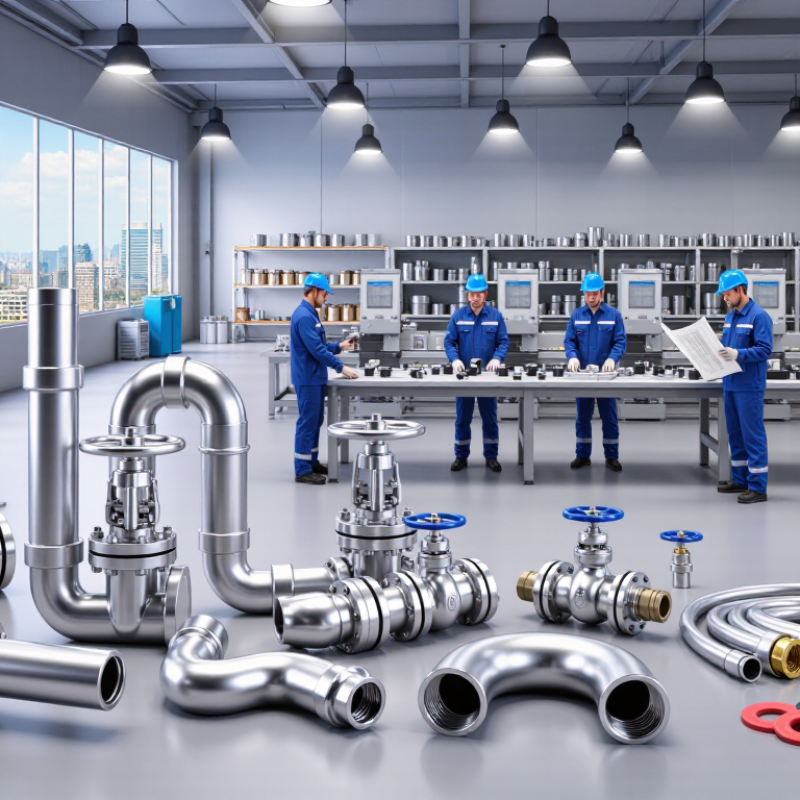
Cooling plumbing systems move chilled water or coolant through buildings, factories, data centers, and transport facilities. They remove heat from equipment, rooms, or production processes. Unlike ordinary water piping, these systems demand careful control of temperature, pressure, flow, and condensation.
Core components include chillers, pumps, heat exchangers, expansion tanks, valves, filters, sensors, and insulated pipes. A typical circuit sends cooled water to air-handling units or process equipment, then returns warmer water for recooling.
Insulation matters. Poor insulation can create dripping pipes, energy loss, and damaged ceilings. I have seen small gaps around valve joints cause serious maintenance problems.
Global applications vary with climate, building use, and local infrastructure. Office towers often use chilled-water loops, while factories may require corrosion-resistant materials and continuous monitoring. Data centers need stable flow and rapid fault detection. In humid regions, vapor barriers deserve close attention. In colder regions, freeze protection becomes critical. Suppliers should provide test records, compatible components, installation guidance, and responsive technical support. However, a polished specification is not enough. Field conditions can differ from drawings, and maintenance access is sometimes overlooked. Buyers should verify performance under real operating loads, confirm local code requirements, and request clear replacement procedures before purchasing.
Global buyers should evaluate cooling plumbing suppliers beyond catalog breadth. The International Energy Agency reports that space-cooling demand could more than triple by 2050. That pressure makes reliable piping, valves, pumps, and insulation increasingly important. A polished catalog is not proof of performance.
Request material certificates, pressure-test records, and thermal-cycle results for every critical component. Check whether testing follows recognized standards, such as ISO or relevant regional plumbing requirements. Water efficiency also matters. The U.S. Environmental Protection Agency states that certified water-saving products use at least 20% less water than standard models. Ask suppliers to provide measured flow rates, not vague efficiency claims. Small details matter.
Inspect production samples before signing a large order. Look for clean threads, even welds, accurate dimensions, and undamaged insulation edges. Verify batch traceability and replacement-part availability. The supplier should explain lead times during seasonal demand, not only under ideal conditions. I would also compare warranty exclusions carefully. They often reveal more than the warranty length. No scorecard is perfect. A supplier may pass laboratory tests yet struggle with packaging or communication. A pilot shipment can expose that weakness early. The International Energy Agency also emphasizes efficiency and system-level performance, so buyers should assess the complete installation rather than one inexpensive component.
| Evaluation Dimension | Recommended Buyer Benchmark | Relevant Products or Scope | Evidence to Request | Global Buyer Importance | Suggested Weight |
|---|---|---|---|---|---|
| Quality management system | Current third-party quality certification or a documented quality system covering incoming inspection, production control, traceability, nonconformity handling, and corrective action. | Pipe, fittings, valves, flexible connectors, manifolds, and assembled cooling modules. | Certificate scope, validity date, audit status, inspection plan, corrective-action records, and sample inspection reports. | Critical | 15% |
| Material traceability | Each production batch should be traceable to material certificates, heat or lot numbers, production records, and final inspection results. | Metal pipes, stainless-steel fittings, copper-alloy components, polymer pipes, and pressure-bearing assemblies. | Material test certificates, lot-control procedure, marking photographs, and traceability records from raw material to shipment. | Critical | 12% |
| Pressure and leakage performance | Products should be tested against the applicable product standard and declared design pressure. Test methods and acceptance criteria must be documented. | Pressure pipes, valves, brazed or welded fittings, hoses, heat-transfer loops, and cooling distribution assemblies. | Hydrostatic or pneumatic test procedure, test pressure and duration, calibration records, and signed test reports. | Critical | 15% |
| Temperature capability | Published minimum and maximum operating temperatures must cover the project fluid, ambient conditions, startup, shutdown, and abnormal operating scenarios. | Chilled-water systems, glycol circuits, process cooling lines, data-center cooling, and refrigeration-related plumbing. | Technical datasheets, temperature ratings, material compatibility tables, gasket specifications, and application limitations. | Critical | 10% |
| Fluid and chemical compatibility | Compatibility should be confirmed for water treatment chemicals, glycol concentration, corrosion inhibitors, cleaning agents, and expected pH conditions. | Seals, gaskets, hoses, plastic pipe systems, valves, heat-exchanger connections, and corrosion-sensitive components. | Compatibility statement, elastomer and polymer grades, chemical-resistance data, and recommended concentration limits. | Critical | 10% |
| Dimensional and connection compliance | Connection dimensions, wall thickness, pressure class, flange drilling, thread type, and tolerances must match the destination-market specification. | Threaded, grooved, flanged, press-fit, welded, and solvent-welded connection systems. | Dimension drawings, tolerance tables, interface samples, gauge reports, and compatibility confirmation for mating parts. | Critical | 10% |
| Product certification and regulatory readiness | Products should have certificates or test reports required by the destination country, project specification, or sector regulation. | Building services, industrial cooling, potable-water-adjacent applications, fire-related systems, and regulated facilities. | Certificates, laboratory reports, declarations of conformity, safety data, and country-specific compliance documentation. | Critical | 10% |
| Production capacity and scalability | Supplier should demonstrate stable monthly capacity, backup equipment, qualified operators, and a documented plan for demand increases. | Standard catalog items, engineered-to-order assemblies, large-diameter pipework, and project-based packages. | Capacity statement, equipment list, production schedule, bottleneck analysis, and recent delivery-performance data. | High | 7% |
| Lead time and delivery reliability | For planning purposes, standard items commonly require several weeks, while customized assemblies may require additional engineering and production time. Actual dates should be contractually confirmed. | Stock products, customized fittings, valve packages, skids, and project assemblies. | Historical on-time delivery percentage, quoted lead time, production milestones, logistics plan, and escalation procedure. | High | 7% |
| Packaging and export protection | Packaging should protect against impact, moisture, contamination, deformation, and mixed-lot errors during international transport. | Long pipes, precision valves, coated components, elastomeric parts, and assembled cooling equipment. | Packaging specification, loading photographs, moisture-control procedure, crate markings, and container-loading checklist. | High | 4% |
| Technical support and documentation | Supplier should provide clear drawings, installation instructions, maintenance guidance, spare-part information, and responsive engineering support. | Complex valve assemblies, balancing components, manifolds, control-related plumbing, and engineered systems. | Sample technical file, response-time commitment, installation manual, bill of materials, and change-control procedure. | High | 5% |
| Warranty and after-sales process | Warranty terms should define coverage, exclusions, claim evidence, response time, replacement procedure, and responsibility for field failures. | All cooling plumbing products, especially assembled or engineered-to-order systems. | Warranty document, claim workflow, service contacts, failure-analysis procedure, and spare-parts policy. | Medium | 4% |
| Total cost of ownership | Evaluate purchase price together with freight, duties, installation labor, pressure loss, maintenance, replacement parts, leakage risk, and expected service life. | All products; particularly valves, pumpside connectors, insulation-compatible components, and high-volume pipe systems. | Detailed quotation, energy or pressure-loss data, maintenance schedule, spare-part pricing, and lifecycle assumptions. | High | 6% |
| Environmental and responsible sourcing | Supplier should disclose material composition, restricted substances, waste controls, and relevant environmental-management practices. | Metal and polymer plumbing products, coatings, elastomers, packaging, and assembled systems. | Material declarations, environmental certificates where applicable, recycling information, and responsible-sourcing policy. | Medium | 5% |
Cooling plumbing suppliers usually fall into several practical categories. Manufacturers of pumps and circulation sets support chilled-water movement across commercial buildings and industrial plants. Valve specialists provide control, balancing, isolation, and safety components. Pipe and fitting suppliers focus on corrosion resistance, dimensional accuracy, and fast installation. Heat exchanger producers serve systems requiring stable temperature transfer and compact equipment.
Product specialization matters during international sourcing. A supplier may offer stainless steel fittings but lack experience with low-temperature insulation details. Another may produce efficient pumps while providing weak documentation. Ask for pressure ratings, flow curves, material certificates, test records, and installation guidance. These details reveal more than a polished catalogue. Small errors matter.
Cooling tower suppliers often concentrate on drift control, water distribution, and replacement parts. Refrigeration plumbing specialists may handle copper tubing, brazed joints, filters, and vibration control. For large projects, integrated suppliers can combine valves, pumps, strainers, and monitoring accessories. However, one supplier rarely excels in every category. A lower quotation may hide higher freight costs, uncertain lead times, or difficult maintenance. That assumption needs checking. Practical buyers compare spare-part availability, packaging quality, communication speed, and after-sales response. Clear tolerances and traceable inspection records create stronger confidence than broad promises.
Top Cooling Plumbing Suppliers for Global Buyers?
International sourcing requires more than comparing unit prices. Buyers should verify factory experience, production capacity, and quality controls before requesting quotations. Cooling plumbing products may face pressure, temperature, corrosion, and potable-water requirements. Ask for material declarations, test reports, dimensional drawings, and batch traceability. Requirements differ by destination, so local regulations must guide final approval.
A reliable supplier should explain compliance clearly, not simply send a generic certificate. Check whether documents match the exact product, material grade, and testing method. Independent inspection can confirm wall thickness, thread accuracy, leakage performance, and packaging condition. This costs more, but one failed shipment can cost far more. A spreadsheet may look complete while one important certificate is missing. That mistake is easy to make.
Tips: Confirm the applicable standards before sampling. Use written specifications. Request pre-shipment inspection. Clarify Incoterms, customs codes, labeling, and importer responsibilities. Ask about production lead times during peak seasons. Export packaging should protect fittings from moisture, dust, and impact. Crates and cartons need clear marks, quantity details, and handling symbols. Keep spare components available for installation teams. Sea freight may reduce cost, while air freight suits urgent replacements. However, rushed logistics often create paperwork errors. Allow time for customs review, especially when documents, product descriptions, or declared values do not match.
Top Cooling Plumbing Suppliers for Global Buyers
Global buyers should select cooling plumbing suppliers through evidence, not polished catalogs. Check product materials, pressure ratings, flow capacity, and temperature limits. Request recent test reports and traceable batch records. A supplier with clear technical documentation usually reduces installation risks. Ask whether fittings suit your local pipe standards and water conditions. Small mismatches can cause leaks, delays, and expensive site changes.
Tips: Order samples before a large purchase. Measure threads, seals, wall thickness, and connection tolerance. Review factory photographs, inspection procedures, and packaging details. Confirm production capacity, minimum order quantities, shipping terms, and realistic lead times. Avoid choosing only by the lowest quotation. I have seen low prices become costly after repeated replacements. That lesson is easy to overlook.
Reliable communication matters as much as product quality. Evaluate how quickly the supplier answers technical questions and handles defects. Request a written warranty, spare-part policy, and clear claim process. Independent inspection before shipment can verify dimensions, surface condition, labeling, and carton protection. Certificates should match the actual shipment, not a generic file. This point is often missed. Buyers should also check whether the supplier follows applicable safety, environmental, and import requirements in the destination market. A careful supplier will discuss limitations openly, even when the answer may slow the order.
A practical supplier-evaluation scorecard for cooling plumbing products, including valves, fittings, pumps, pipes and related components. The weights total 100% and can be adjusted to match project requirements.
Recommended priority: verify compliance and product quality first, then compare total landed cost, delivery capability, technical support and sustainability performance.
Manufacturers may specialize in pumps, valves, pipes, fittings, or heat exchangers. Integrated suppliers can combine several components. Few suppliers excel everywhere. Specialization matters.
Request pressure ratings, flow curves, material certificates, test reports, and dimensional drawings. Batch traceability and installation guidance also matter. Do not trust a polished catalogue alone.
Check pipe standards, connection sizes, thread accuracy, seals, wall thickness, and temperature limits. Confirm compatibility with local water conditions. Small mismatches can cause leaks.
Samples allow teams to measure threads, seals, dimensions, and connection tolerances. They can reveal problems before installation. Sampling is cheaper than replacement work.
Confirm destination-market requirements before sampling or ordering. Documents should match the exact product, material grade, and testing method. Generic certificates are not enough.
Inspect dimensions, wall thickness, leakage performance, surface condition, labels, and packaging. Independent inspection adds cost. One failed shipment may cost more.
Compare total costs, not unit prices alone. Include freight, customs responsibilities, spare parts, lead times, packaging, and maintenance needs. A cheap quotation may become expensive later.
Clarify Incoterms, customs codes, declared values, labeling, and importer responsibilities. Use moisture-resistant packaging with clear quantity marks and handling symbols. Rushed shipping creates paperwork risks.
Cooling Plumbing systems are essential for managing temperature in residential, commercial, industrial, and infrastructure projects worldwide. This article explains their core definition, including pipes, pumps, valves, heat exchangers, cooling towers, controls, and related accessories. It also examines how buyers can evaluate suppliers by reviewing product quality, engineering capability, manufacturing consistency, customization options, technical support, certifications, production capacity, and after-sales service. Different supplier categories may specialize in components, complete systems, project engineering, or industry-specific solutions, making it important to match supplier expertise with application requirements.
For international sourcing, global buyers should consider material compatibility, performance standards, documentation, packaging, shipping methods, lead times, import procedures, and regional compliance requirements. A structured supplier selection process should compare technical specifications, total cost, communication efficiency, quality assurance, delivery reliability, and long-term cooperation potential. By assessing these factors carefully, buyers can select a dependable Cooling Plumbing supplier capable of supporting safe, efficient, and scalable cooling projects across different markets.

Kingflex