Choosing the right Sound Insulation material is rarely as simple as selecting the thickest product. Sound travels through walls, floors, ceilings, doors, and tiny construction gaps. A material that performs well in a laboratory may disappoint in a busy apartment or home studio.
Leo Beranek, a respected acoustician and author of Acoustics, wrote, “Noise is unwanted sound.” His statement remains practical today. Effective insulation must reduce airborne voices, traffic, music, and impact noise without creating new weaknesses elsewhere. Mass-loaded vinyl, mineral wool, acoustic foam, cellulose, fiberglass, resilient channels, soundproof drywall, cork, rubber underlay, and composite panels each solve different problems. Some absorb sound inside cavities. Others block transmission or separate vibrating surfaces.
Real projects demand careful judgment. Mineral wool may improve a partition, but poor sealing around sockets can undermine it. Acoustic foam can control echoes, yet it usually cannot stop loud neighbors. That difference matters.
This guide examines the top ten Sound Insulation materials through performance, installation, durability, cost, and practical suitability. It also considers fire resistance, moisture exposure, environmental impact, and compatibility with existing structures. These factors are easy to overlook.
The rankings are not absolute. Room shape, frequency range, workmanship, and building design can change the result. A perfect material does not exist.
Some recommendations may seem obvious. Others deserve closer inspection. Testing data helps, but lived experience reveals limitations. By comparing each option honestly, readers can choose a solution that reduces unwanted sound without wasting money or space.
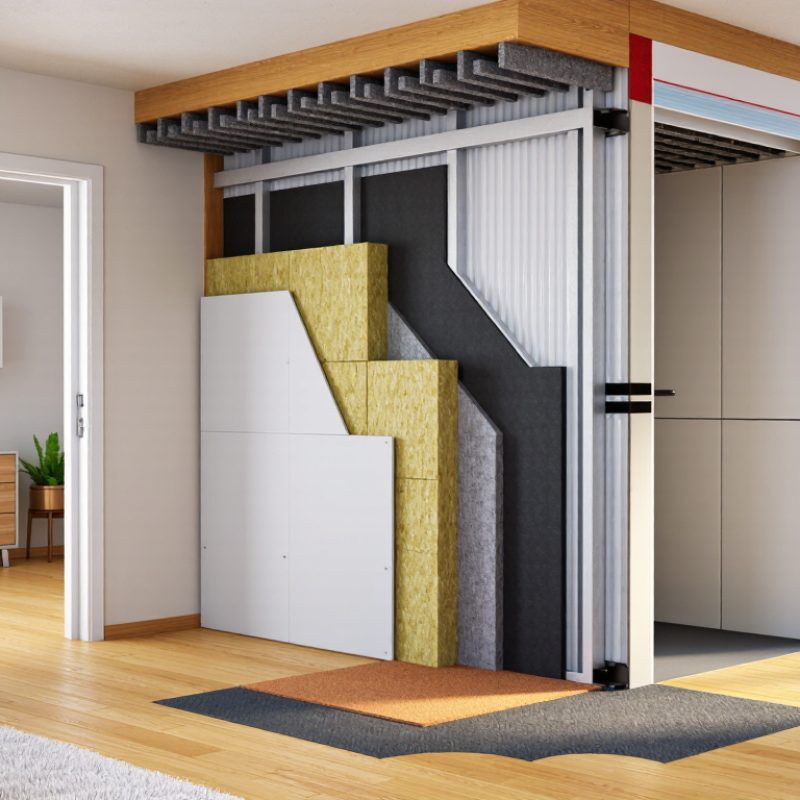
How Sound Insulation Materials Reduce Noise Transmission
What Are the Top 10 Sound Insulation Materials?
Sound insulation materials reduce noise transmission in different ways. Mineral wool and fiberglass absorb airborne sound inside wall cavities. Cellulose performs similarly when densely packed. Acoustic foam controls reflections, but it cannot block heavy noise alone. Mass-loaded vinyl adds mass to floors, walls, and ceilings. Gypsum board also blocks sound because heavier surfaces vibrate less easily. Cork, rubber, felt, and wood fiber can reduce impact noise when installed beneath flooring or behind panels. Each material has a different role.
Noise control works best as a system. Absorption weakens sound energy inside a cavity. Mass resists vibration. Damping converts some vibration into small amounts of heat. Decoupling separates wall layers, limiting the path between rooms. Airtight construction matters too. A narrow gap around a socket can transmit surprising noise. Many projects fail there. It is easy to focus on thick insulation and overlook weak joints, doors, or ceiling edges. No single material solves every transmission problem.
Tips: Seal gaps with suitable acoustic sealant before closing the wall. Use resilient channels when structure-borne noise is serious. Check floor impacts separately from voices or music. Install materials without crushing them, because poor fitting reduces performance. Measure the room before choosing products. A technically strong material may still disappoint when the installation is rushed.
Key Performance Factors for Comparing Sound Insulation Materials
What Are the Top 10 Sound Insulation Materials?
Key Performance Factors for Comparing Sound Insulation Materials
The ten commonly compared options include mineral wool, fiberglass, cellulose, acoustic foam, mass-loaded vinyl, gypsum board, cork, wood fiber, PET felt, and resilient channels. Their performance depends on more than material type. ASTM C423 measures sound absorption through the Noise Reduction Coefficient, or NRC. Values near 0.90 can indicate strong absorption, but only under tested conditions. A ceiling panel may perform differently inside a thin wall cavity. Not always.
For airborne sound, compare STC under ASTM E90 and ASTM E413, or Rw under ISO 10140 and ISO 717-1. These ratings help assess speech and television noise, yet they can hide weak low-frequency performance. Mass-loaded vinyl and double gypsum layers add mass, while mineral wool and fiberglass reduce cavity resonance. Resilient channels help separate surfaces, but poor fastening can create acoustic bridges. Acoustic foam and PET felt mainly absorb reflections; they rarely replace a sealed barrier. The World Health Organization’s Environmental Noise Guidelines for the European Region identifies 55 dB Lden as a key daytime outdoor exposure level, reminding designers that comfort depends on background noise, not ratings alone. Measure twice. Install once.
Air gaps, sealed joints, flanking paths, and moisture resistance deserve equal attention. ISO laboratory data is useful, but field results often fall because doors, outlets, and ductwork remain untreated. Cork and wood fiber may support sustainable designs, although density and fire classification must be verified. Cellulose can fill irregular cavities effectively, but settlement deserves inspection. The best comparison uses tested ratings, thickness, installation quality, durability, and the actual noise spectrum.
The Top 10 Sound Insulation Materials by Type and Function
Sound insulation materials work through different physical functions. Some absorb sound, while others block, separate, or seal it. Porous materials, such as mineral fiber, fiberglass, and cellulose, reduce echoes inside wall cavities. Their open fibers trap moving air and convert some sound energy into heat. They work best when installed without gaps or compression.
Mass-based materials block airborne noise. Dense boards, loaded vinyl sheets, and layered gypsum panels add weight to walls, floors, and ceilings. Resilient channels and rubber underlays reduce vibration by separating surfaces. These materials help with footsteps, machinery, and low-frequency impact noise. Sealing materials have a smaller role, but acoustic sealant around outlets, joints, and pipe openings prevents sound leaks. Tiny gaps matter.
Composite systems combine several functions. A wall may use insulation, an air space, two dense layers, and flexible connections. This arrangement usually performs better than one thick material used alone. However, laboratory ratings can differ from real rooms because installation quality, flanking paths, and doors affect results. This classification is useful, but not perfect. A heavy panel cannot fix a poorly sealed frame. Soft foam can reduce room reflections, yet it often provides limited sound blocking. Careful measurement and correct placement matter more than impressive product claims. For reliable decisions, compare tested performance with the room’s actual noise source, frequency range, and construction limits.
Best Applications for Each Sound Insulation Material
What Are the Top 10 Sound Insulation Materials?
The best material depends on the noise source and room structure. Mass loaded vinyl suits walls, ceilings, and equipment enclosures because its dense layer blocks airborne sound. Mineral wool works well inside stud walls, home theaters, and ceiling cavities. Fiberglass insulation is practical for bedrooms and offices where budgets are limited. Soundproof drywall adds mass around recording rooms, apartments, and conference spaces. Resilient channels reduce vibration between framing and wall surfaces. Installation gaps can weaken all five solutions.
Acoustic foam belongs in studios, podcast rooms, and control booths. It controls reflections, but it does not stop loud bass from crossing walls.
Rubber underlayment fits beneath wood, laminate, or tile floors. It helps reduce footsteps between apartments.
Cork underlayment suits quieter residential floors and smaller rooms.
Acoustic curtains are useful around windows, doors, and temporary partitions. They are convenient, though their performance is limited by thin construction.
Cellulose insulation works well in enclosed wall cavities and attic retrofits, especially where loose-fill access is available.
No material works everywhere.
A dense barrier may block voices but leave impact noise untouched. A soft absorber may improve clarity without reducing sound transfer.
In practice, I would inspect flanking paths around outlets, vents, and door frames before choosing products.
The ranking is not absolute.
Even a technically strong assembly can disappoint when seams remain open or layers are installed too tightly.
How to Choose the Right Material for a Specific Noise Problem
What Are the Top 10 Sound Insulation Materials?
How to Choose the Right Material for a Specific Noise Problem
Choosing sound insulation begins with identifying the noise, not admiring a material’s advertised rating. Voices and television are airborne sounds. Footsteps and dropped objects are impact sounds. Traffic and machinery may contain deep bass, which is harder to control. The ten commonly considered options include concrete, gypsum board, mass-loaded vinyl, mineral wool, fiberglass, cellulose, acoustic foam, cork, rubber underlay, and resilient channels.
For airborne noise, dense layers work best. A double gypsum-board wall, combined with mass-loaded vinyl, can reduce speech transmission. Mineral wool or fiberglass inside the cavity absorbs energy and limits resonance. Cellulose can suit enclosed wall spaces, but installation quality matters. For footsteps, rubber underlay or cork beneath flooring is usually more suitable. Resilient channels separate the wall surface from its framing. That small gap can make a noticeable difference.
Acoustic foam is often misunderstood. It controls echo inside a room, but rarely blocks a neighbor’s noise. Concrete provides excellent mass, although its weight and construction limits are significant. Sealing gaps around doors, outlets, and pipes is essential. A tiny opening can weaken an expensive assembly. I would compare laboratory ratings with field conditions, because real buildings rarely perform perfectly. Low-frequency noise may still pass through floors, windows, or structural connections. Sometimes the best answer is a combined system, not one “top” material. Test a small section first.
What Are the Top 10 Sound Insulation Materials?
Comparison of representative Noise Reduction Coefficient (NRC) values. Higher NRC indicates stronger sound absorption, while actual sound blocking depends on thickness, density, airtightness, and the complete wall or ceiling assembly.
How to choose: Use mineral wool, fiberglass, cellulose, or acoustic panels to reduce reverberation and airborne noise inside a room. Use gypsum board, mass-loaded vinyl, plywood, or layered assemblies when the main goal is blocking sound between spaces. Cork and heavy curtains are useful for supplementary absorption but normally provide less isolation than dense, properly sealed assemblies.
FAQS
Mineral wool, fiberglass, cellulose, gypsum board, and dense barrier sheets are common choices. They serve different roles. Some absorb sound, while others block vibration with mass.
Acoustic foam mainly absorbs reflections inside studios and recording rooms. It improves clarity. It rarely blocks heavy bass or loud sound crossing a wall.
Mass-loaded vinyl adds a dense, flexible layer to walls, ceilings, floors, or equipment enclosures. Its mass resists vibration. It works better when seams and edges are sealed.
Rubber or cork underlayment can reduce impact noise beneath wood, laminate, or tile flooring. It helps soften footsteps. It may not stop voices or music passing through walls.
No. Ratings provide useful laboratory comparisons, but real rooms can perform differently. Low-frequency noise may remain troublesome. Doors, outlets, ducts, and ceiling edges can weaken results.
Small gaps can transmit surprising amounts of sound between rooms. Seal joints before closing the wall. A gap near a socket may undermine thick insulation.
Resilient channels help separate wall surfaces from framing. They can reduce structure-borne vibration. Incorrect fastening may create acoustic bridges and reduce their benefit.
Densely packed cellulose can fill irregular cavities and attic spaces effectively. Settlement requires inspection. It may disappoint when installation is rushed or uneven.
Use absorbers to reduce sound energy and reflections inside cavities or rooms. Use heavy layers to resist airborne sound. The best result usually combines absorption, mass, damping, decoupling, and airtight construction.
Crushing insulation, leaving open seams, and ignoring doors or vents can lower performance. Measure the room first. I would inspect flanking paths before trusting any material ranking.
Conclusion
This article explores the top 10 Sound Insulation materials and explains how they reduce noise transmission through absorption, damping, decoupling, and added mass. It compares key performance factors such as sound transmission loss, noise reduction, thickness, density, durability, moisture resistance, fire performance, installation requirements, and cost. The materials are organized by type and function, including fibrous insulation, acoustic foam, dense barriers, resilient layers, composite panels, and sound-blocking building elements.
Each material is matched with its most suitable application, from reducing airborne noise between rooms to controlling impact noise in floors, ceilings, walls, doors, and windows. The article also provides practical guidance for choosing the right solution based on the noise source, building structure, available space, environmental conditions, and project budget. By understanding the strengths and limitations of each option, readers can develop an effective, balanced approach to improving acoustic comfort in residential, commercial, and industrial spaces.

 Kingflex