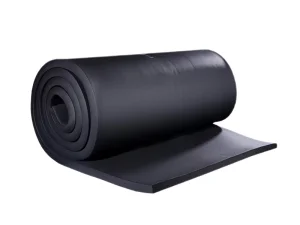
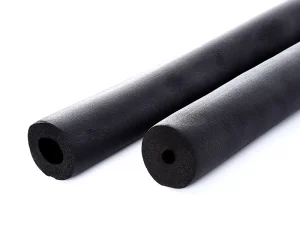
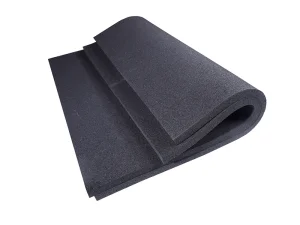
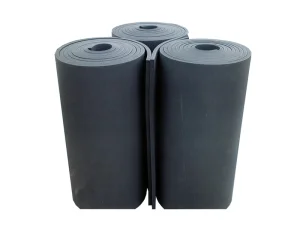
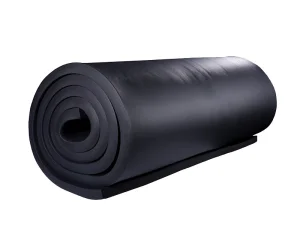
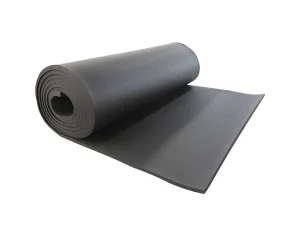
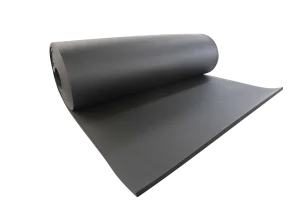
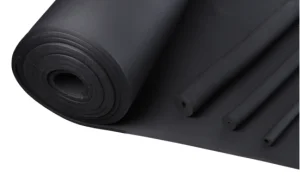
 Kingflex

1 / 1






| Dimension Chart | |||||||
|---|---|---|---|---|---|---|---|
| Thickness | Width 1m | Width 1.2m | Width 1.5m | ||||
| Inches | mm | Size(L*W) | ㎡/Roll | Size(L*W) | ㎡/Roll | Size(L*W) | ㎡/Roll |
| 1/4" | 6 | 30 × 1 | 30 | 30 × 1.2 | 36 | 30 × 1.5 | 45 |
| 3/8" | 10 | 20 × 1 | 20 | 20 × 1.2 | 24 | 20 × 1.5 | 30 |
| 1/2" | 13 | 15 × 1 | 15 | 15 × 1.2 | 18 | 15 × 1.5 | 22.5 |
| 3/4" | 19 | 10 × 1 | 10 | 10 × 1.2 | 12 | 10 × 1.5 | 15 |
| 1" | 25 | 8 × 1 | 8 | 8 × 1.2 | 9.6 | 8 × 1.5 | 12 |
| 1 1/4" | 32 | 6 × 1 | 6 | 6 × 1.2 | 7.2 | 6 × 1.5 | 9 |
| 1 1/2" | 40 | 5 × 1 | 5 | 5 × 1.2 | 6 | 5 × 1.5 | 7.5 |
| 2" | 50 | 4 × 1 | 4 | 4 × 1.2 | 4.8 | 4 × 1.5 | 6 |


| Technical Specifications | |||
|---|---|---|---|
| Property | Unit | Value | Test Method |
| Temperature range | °C | (-50 - 110) | GB/T 17794-1999 |
| Density range | Kg/m3 | 45-65Kg/m3 | ASTM D1667 |
| Water vapor permeability | Kg/(m.s.pa) | ≤0.91×10 ﹣¹³ | DIN 52 615 / BS 4370 Part 2 1973 |
| μ | - | ≥10000 | - |
| Thermal Conductivity | W/(m.k) | ≤0.030 (-20°C) | ASTM C 518 |
| ≤0.032 (0°C) | |||
| ≤0.036 (40°C) | |||
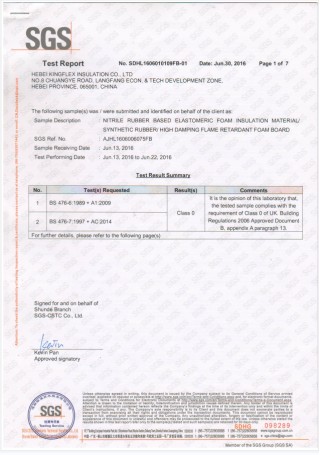
| Fire Rating | - | Class 0 & Class 1 | BS 476 Part 6 & Part 7 |
| Flame Spread and Smoke Developed Index | - | 25/50 | ASTM E 84 |
| Oxygen Index | - | ≥36 | GB/T 2406, ISO 4589 |
| Water Absorption, % by Volume | % | 20% | ASTM C 209 |
| Dimension Stability | - | ≤5 | ASTM C534 |
| Fungi resistance | - | Good | ASTM 21 |
| Ozone resistance | Good | GB/T 7762-1987 | |
| Resistance to U.V. and weather | Good | ASTM G23 | |
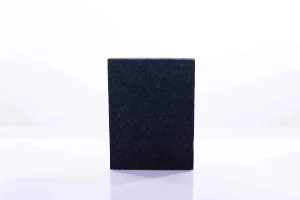
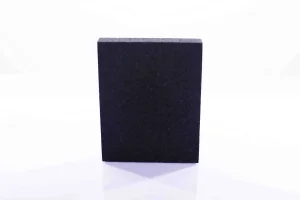
The expanded closed-cell structure is designed to deliver superior insulation efficiency. It is also calculated to effectively control condensation on the outer surface of cold HVAC systems.
No. The Thermal Insulation Rubber Foam Sheet is manufactured completely without the use of CFCs, HFCs, or HCFCs, ensuring compliance with strict environmental regulations.
Yes. In addition to thermal insulation, the foam sheet provides excellent sound attenuation, making it highly effective at blocking HVAC noises and dampening structure-borne vibrations.
According to the technical testing standard GB/T 17794-1999, the insulation sheet operates safely within a temperature range of -50°C to 110°C.
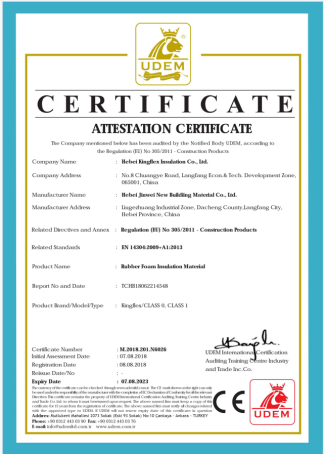
The material holds Class 0 and Class 1 fire ratings under BS 476 Part 6 & 7 testing standards, and scores a Flame Spread and Smoke Developed Index of 25/50 under ASTM E 84.
It is manufactured using three main components: a synthetic rubber blend (such as NBR and/or EPDM), Polyvinyl chloride (PVC), and a chemical foaming agent that expands into closed-cell air pockets during heating.