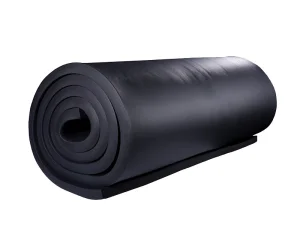
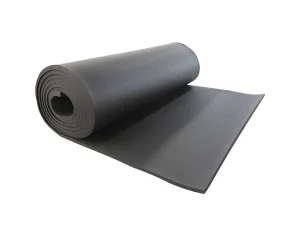
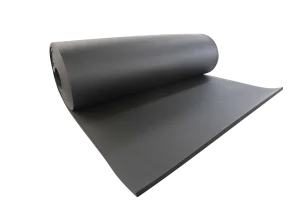
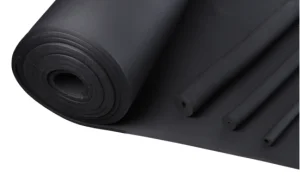
 Kingflex

1 / 2
| Technical Data | |||
|---|---|---|---|
| Property | Unit | Value | Test Method |
| Temperature range | °C | (-50 - 110) | GB/T 17794-1999 |
| Density range | Kg/m³ | 45-65Kg/m³ | ASTM D1667 |
| Water vapor permeability | Kg/(m.s.pa) | ≤0.91×10 ﹣¹³ | DIN 52 615 / BS 4370 Part 2 1973 |
| μ | - | ≥10000 | - |
| Thermal Conductivity | W/(m.k) | ≤0.030 (-20°C) | ASTM C 518 |
| ≤0.032 (0°C) | |||
| ≤0.036 (40°C) | |||
| Fire Rating | - | Class 0 & Class 1 | BS 476 Part 6 part 7 |
| Flame Spread and Smoke Developed Index | - | 25/50 | ASTM E 84 |
| Oxygen Index | - | ≥36 | GB/T 2406, ISO4589 |
| Water Absorption, % by Volume | % | 20% | ASTM C 209 |
| Dimension Stability | - | ≤5 | ASTM C534 |
| Fungi resistance | - | Good | ASTM G21 |
| Ozone resistance | Good | GB/T 7762-1987 | |
| Resistance to U.V. and weather | Good | ASTM G23 | |

1. What is the thermal conductivity of this insulation material?
The material has a thermal conductivity of ≤0.030 W/(m.k) at -20°C, ≤0.032 W/(m.k) at 0°C, and ≤0.036 W/(m.k) at 40°C tested in accordance with ASTM C 518 standards.
2. What fire rating standards does this product meet?
This insulation achieves a Class 0 and Class 1 fire rating according to BS 476 Part 6 & Part 7, and has a Flame Spread and Smoke Developed Index of 25/50 under ASTM E 84.
3. How does the insulation improve building energy efficiency?
By providing high thermal efficiency, it keeps the building warmer in winter and cooler in summer, thereby significantly reducing energy consumption for heating and cooling systems.
4. Can this material help with noise reduction?
Yes, it is designed to reduce the transmission of exterior sound to the interior of the building and absorb reverberating sounds within the structure.
5. Is the material resistant to environmental factors like UV and ozone?
Yes, the insulation material demonstrates "Good" resistance to ozone (tested via GB/T 7762-1987), fungi (ASTM G21), and U.V. radiation & weathering (ASTM G23).