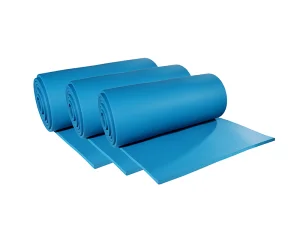
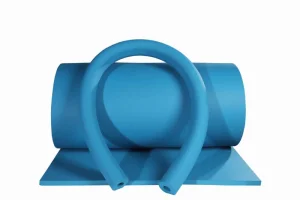
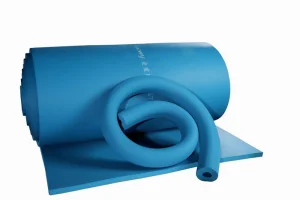
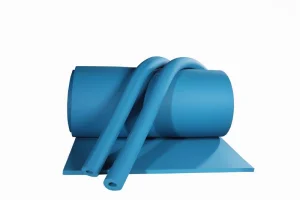
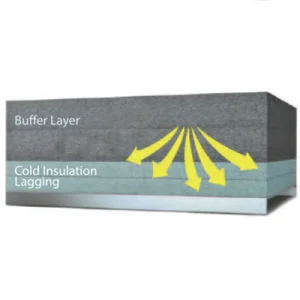
- No need moisture barrier
- Insulation that maintains its flexibility at very low temperatures down to -200℃ to +125℃
- No need the expansion joint
- Low thermal conductivity
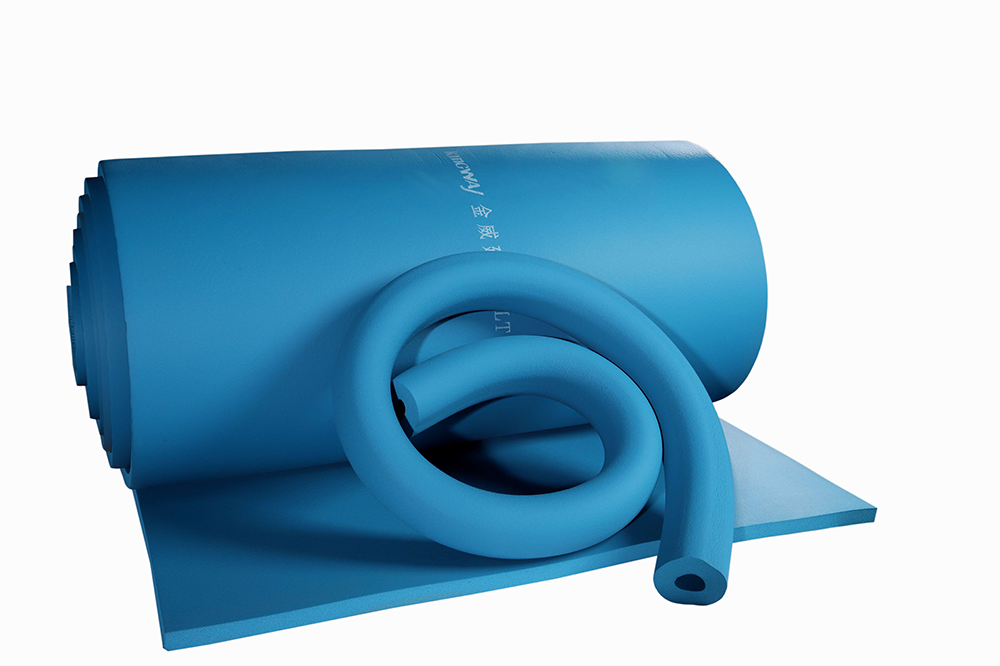
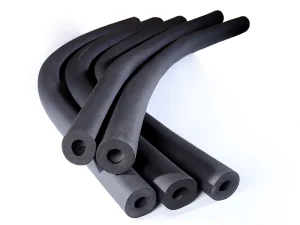
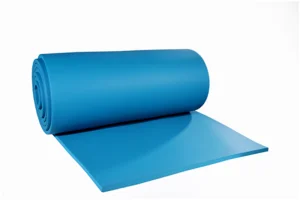
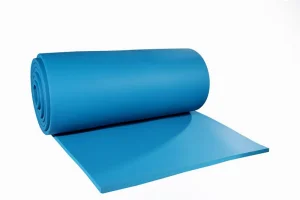
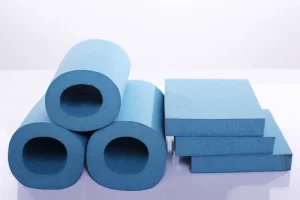
These are flexible, closed-cell, rubber foams based on dienes rubber. Flexible elastomeric foams exhibit such a high resistance to the passage of water vapour that they do not generally require additional water-vapour barriers. Such high vapour resistance, combined with the high surface emissivity of rubber, allows flexible elastomeric foams to prevent surface condensation formation with comparatively small thicknesses.
Dimensions Specification
| Dimension Reference |
| Inches |
mm |
Size (L * W) |
㎡ / Roll |
| 3/4" |
20 |
10 × 1 |
10 |
| 1" |
25 |
8 × 1 |
8 |
Main Physical Properties
| Main Property |
Base Material |
Test Method / Standard |
| Model ULT |
Model LT |
| Thermal Conductivity |
-100°C: 0.028
-165°C: 0.021 |
0°C: 0.033
-50°C: 0.028 |
ASTM C177 |
| Density Range |
60-80 Kg/m³ |
40-60 Kg/m³ |
ASTM D1622 |
| Recommend Operation Temperature |
-200°C to 125°C |
-50°C to 105°C |
- |
| Percentage Of Close Areas |
> 95% |
> 95% |
ASTM D2856 |
| Moisture Performance Factor |
NA |
< 1.96x10 g(m.m.Pa) |
ASTM E 96 |
| Wet Resistance Factor |
NA |
> 10000 |
EN12086 / EN13469 |
| Water Vapor Permeability Coefficient |
NA |
0.0039 g/h.m² (25mm thickness) |
ASTM E 96 |
| PH Value |
≥ 8.0 |
≥ 8.0 |
ASTM C871 |
| Tensile Strength (Mpa) |
-100°C: 0.30
-165°C: 0.25 |
0°C: 0.15
-50°C: 0.218 |
ASTM D1623 |
| Compressive Strength (Mpa) |
-100°C: ≤ 0.3 |
-40°C: ≤ 0.16 |
ASTM D1621 |
Frequently Asked Questions (FAQ)
What are the primary characteristics of this flexible elastomeric foam?
This is a closed-cell rubber foam based on dienes rubber. It features high water vapor resistance, low thermal conductivity, and remains flexible at extremely low temperatures down to -200°C.
Does this insulation require an additional moisture barrier?
No, due to the high resistance of the closed-cell rubber foam to water vapor, an additional moisture barrier is generally not required.
What is the temperature limit for Model ULT and Model LT?
Model ULT is recommended for operations between -200°C and 125°C. Model LT is suitable for operations ranging from -50°C to 105°C.
How does this product perform against surface condensation?
The high vapor resistance and high surface emissivity of the rubber enable it to prevent surface condensation effectively, even when using relatively small insulation thicknesses.
What test standards are used to verify thermal conductivity?
The thermal conductivity of this insulation is tested and verified in accordance with the ASTM C177 standard.
 Kingflex