Frequently Asked Questions
Why does this ULT insulation system not require a moisture barrier?
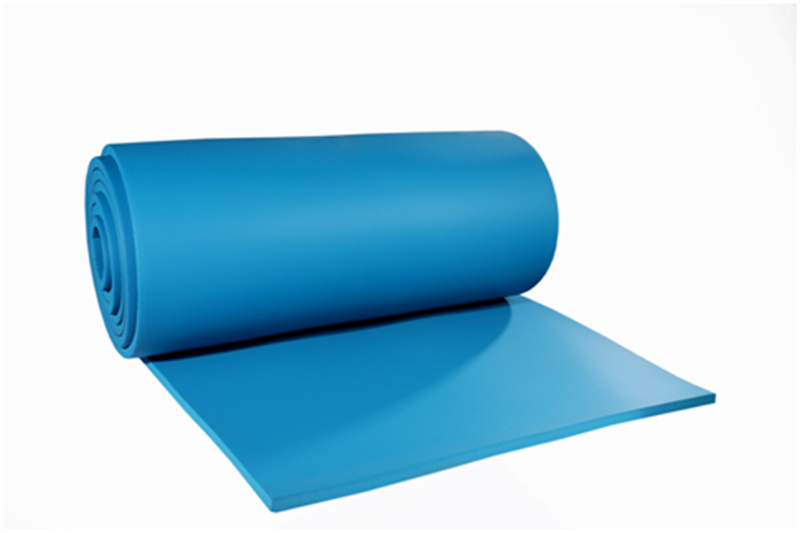
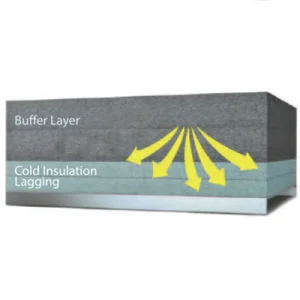
Due to its unique closed-cell structure and polymer blend formulation, the low-temperature elastomeric materials are highly resistant to water vapor permeation, providing continuous moisture resistance throughout its entire thickness.
How does the built-in vapor barrier prevent pipe corrosion?
By providing continuous resistance to moisture penetration, the system prevents water accumulation under the insulation, which significantly reduces the risk of pipe corrosion and extends the life of the cold insulation system.
Are expansion joint fillers like fiber materials necessary?
No. Unlike rigid foam insulation systems used on LNG pipes, this flexible ULT system does not require fiber materials to act as expansion and expansion fillers.
How is expansion joint movement managed in this system?
It is resolved simply by installing the low-temperature elastomeric material in each layer according to recommended reserved lengths, relying on the material's natural elasticity to absorb longitudinal contraction and expansion.
How does low-temperature elasticity benefit the system?
The elasticity retained at extremely low temperatures allows the insulation material to expand and shrink in the longitudinal direction, eliminating the need for complicated traditional expansion joint systems.
 Kingflex