 Kingflex

1 / 1
This solution system overcomes stress at low temperatures and provides maximum mechanical performance.
| Property | Base Material | Standard Test Method | |
|---|---|---|---|
| ULT | LT | ||
| Thermal Conductivity | -100°C: 0.028 -165°C: 0.021 |
0°C: 0.033 -50°C: 0.028 |
ASTM C177 |
| Density Range | 60-80 Kg/m³ | 40-60 Kg/m³ | ASTM D1622 |
| Recommend Operation Temperature | -200°C to 125°C | -50°C to 105°C | - |
| Percentage Of Close Areas | >95% | >95% | ASTM D2856 |
| Moisture Performance Factor | NA | <1.96x10⁻¹¹ g/(m·s·Pa) | ASTM E 96 |
| Wet Resistance Factor (μ) | NA | >10000 | EN12086 / EN13469 |
| Water Vapor Permeability Coefficient | NA | 0.0039 g/h·m² (25mm thickness) | ASTM E 96 |
| PH | ≥8.0 | ≥8.0 | ASTM C871 |
| Tensile Strength Mpa | -100°C: 0.30 -165°C: 0.25 |
0°C: 0.15 -50°C: 0.218 |
ASTM D1623 |
| Compressive Strength Mpa | -100°C: ≤0.3 | -40°C: ≤0.16 | ASTM D1621 |
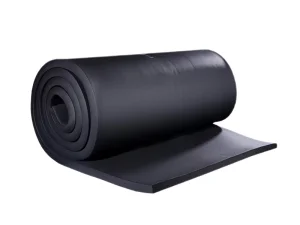
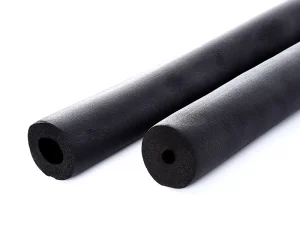
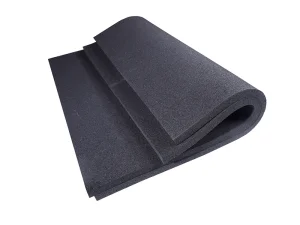
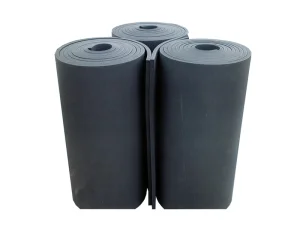
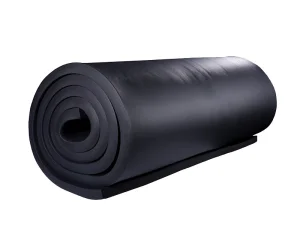
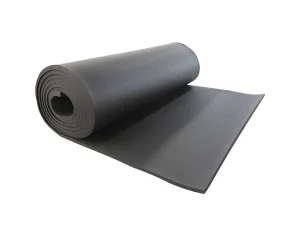
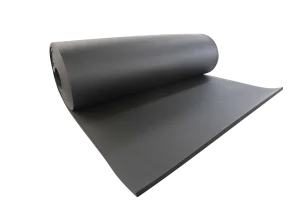
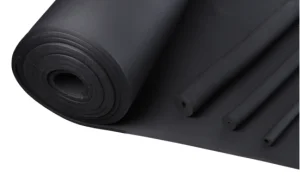
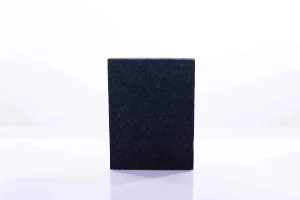
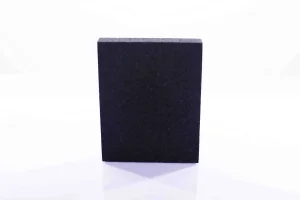
ULT is a flexible, high density and mechanically robust, closed cell cryogenic thermal insulation material based on extruded elastomeric foam. The product has been specially developed for use on the import/export pipelines and process areas of liquefied natural gas (LNG) facilities. It is part of the cryogenic multi-layer configuration, providing low temperature flexibility to the system.
| Dimension | |||
|---|---|---|---|
| Inches | mm | Size (L * W) | ㎡ / Roll |
| 3/4" | 20 | 10 × 1 | 10 |
| 1" | 25 | 8 × 1 | 8 |

The ULT base material is recommended for use in temperature environments ranging from -200°C to 125°C, making it suitable for demanding cryogenic systems.
Under ASTM C177 testing standards, the thermal conductivity of ULT is 0.028 W/(m·K) at -100°C and drops to 0.021 W/(m·K) at -165°C, showcasing its excellent insulation efficiency at ultra-low temperatures.
According to ASTM D1622 test methods, the density range of the ULT material is 60-80 Kg/m³, whereas the LT material has a density range of 40-60 Kg/m³.
Yes. Both materials feature a closed-cell area percentage greater than 95% (tested under ASTM D2856), which provides high resistance to moisture and water vapor penetration.
ULT has been specifically developed for import/export pipelines and process areas of liquefied natural gas (LNG) facilities, serving as a critical component in multi-layer cryogenic configurations.