China NBR/PVC Rubber Foam Insulation For Cryogenic System Factory, Pricelist

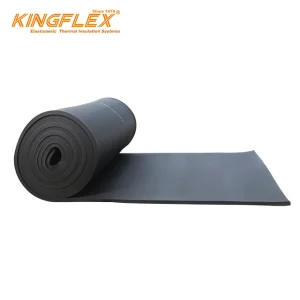
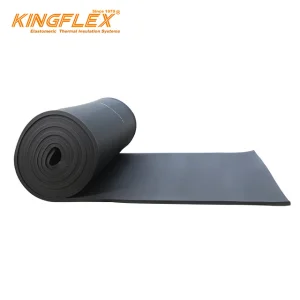
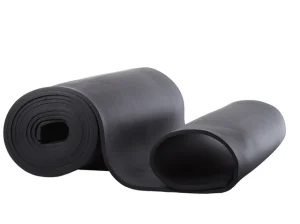
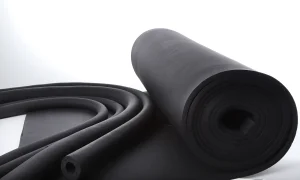
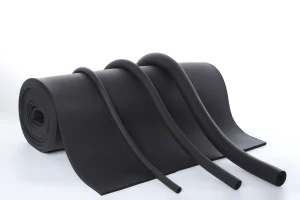
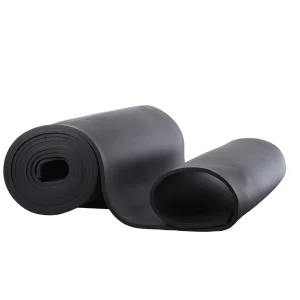
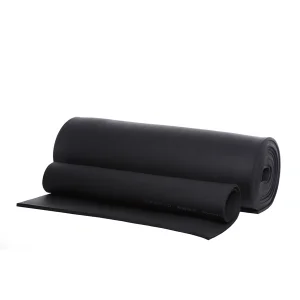
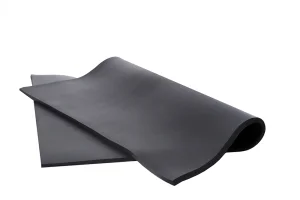
Multi-layer composite structure: ULT for inner layer; LT for outer layer. Main material: ULT—alkadiene polymer; color in Blue LT—NBR/PVC; color in Black

Product Description

Flexible ultra-low temperature insulation system does not require a moisture barrier. Thanks to the unique closed cell structure and polymer mix formula, the elastic foam material of nitrile butadiene rubber has a high resistance to water vapor penetration. This foam material provides continuous resistance to moisture penetration throughout the thickness of the product.
Dimension specifications info
Dimension Specifications
Dimension Information
Inches mm Size (L*W) ㎡/Roll
3/4" 20 10 × 1 10
1" 25 8 × 1 8
Key Applications: Low temperature storage tank; industrial gas and agricultural chemical production plants; platform pipe; gas station; nitrogen plant...
Property and testing standards diagram
Technical Properties
Property Base Material Standard / Test Method
ULT Grade LT Grade
Thermal Conductivity -100°C, 0.028
-165°C, 0.021
0°C, 0.033
-50°C, 0.028
ASTM C177
Density Range 60-80Kg/m³ 40-60Kg/m³ ASTM D1622
Recommend Operation Temperature -200°C to 125°C -50°C to 105°C -
Percentage Of Close Areas >95% >95% ASTM D2856
Moisture Performance Factor NA <1.96x10⁻¹¹ g/(m·s·Pa) ASTM E 96
Wet resistance Factor (μ) NA >10000 EN12086
EN13469
Water Vapor Permeability Coefficient NA 0.0039g/h.m²
(25mm thickness)
ASTM E 96
PH ≥8.0 ≥8.0 ASTM C871
Tensile Strength Mpa -100°C, 0.30
-165°C, 0.25
0°C, 0.15
-50°C, 0.218
ASTM D1623
Compressive Strength Mpa -100°C, ≤0.3 -40°C, ≤0.16 ASTM D1621
Insulation system installation
Frequently Asked Questions
Does this low temperature insulation system require a separate moisture barrier?
No, it does not require a separate moisture barrier. The elastic foam material made of nitrile butadiene rubber has a unique closed cell structure and a polymer mix formula that provides built-in, continuous resistance to water vapor penetration.
What are the recommended operating temperatures for the ULT and LT grades?
The ULT Grade is recommended for temperatures ranging from -200°C to 125°C, making it suitable for ultra-low cryogenic systems. The LT Grade is recommended for operating temperatures from -50°C to 105°C.
What is the closed-cell percentage of this insulation foam?
Both the ULT and LT grades have a closed-cell ratio of greater than 95% (tested under ASTM D2856), which ensures outstanding resistance to moisture absorption and excellent thermal performance.
Where is this ultra-low temperature insulation typically applied?
Common applications include low-temperature storage tanks, industrial gas plants, agricultural chemical production plants, platform piping, gas stations, and nitrogen plants.
How does the thermal conductivity change at cryogenic temperatures for the ULT grade?
According to the ASTM C177 test method, the thermal conductivity of the ULT grade is 0.028 W/(m·K) at -100°C, and it decreases to an even lower 0.021 W/(m·K) at -165°C.
What are the tensile and compressive strengths of the ULT grade?
Tested under ASTM D1623, the tensile strength is 0.30 Mpa at -100°C and 0.25 Mpa at -165°C. Under ASTM D1621, the compressive strength is ≤0.3 Mpa at -100°C.

Related Products