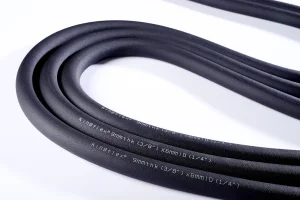
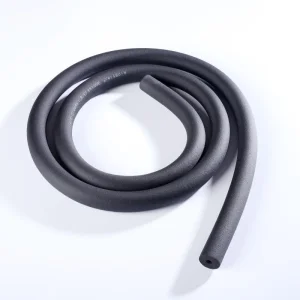
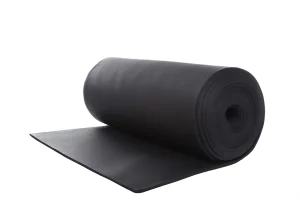
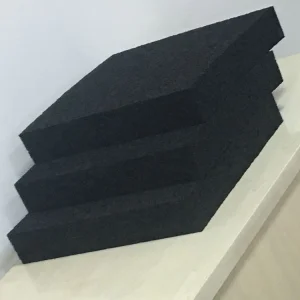
Wholesale Foam Supplier & Factories

High-Performance Elastomeric Rubber Foam & Insulation Systems Engineered for Global Projects

Executive Brief

Global Procurement Challenges in Advanced Insulation Systems

In today's fast-changing construction and industrial landscapes, specifying insulation materials demands more than just comparing raw material quotes. Mechanical engineers and procurement officers face escalating structural requirements, rigid energy-efficiency codes, and strict fire safety regulations. Low-performance materials fail to prevent moisture intrusion, leading to condensation, structural corrosion under insulation (CUI), and premature mechanical breakdown.

As a leading wholesale foam manufacturer, Kingflex Insulation Co., Ltd. addresses these pain points by offering high-density, closed-cell NBR/PVC elastomeric rubber foam. Engineered with a closed-cell rate exceeding 98%, our products deliver low thermal conductivity and stable insulation performance over a long service life, protecting HVAC networks, process pipelines, and building envelopes globally.
Moisture Resistance: Closed-cell system prevents vapor migration.
Thermal Efficiency: Ultra-low thermal conductivity coefficient.
Fire Safety: Formulated with advanced flame retardants.
Durability: Strong resistance to tearing and physical wear.
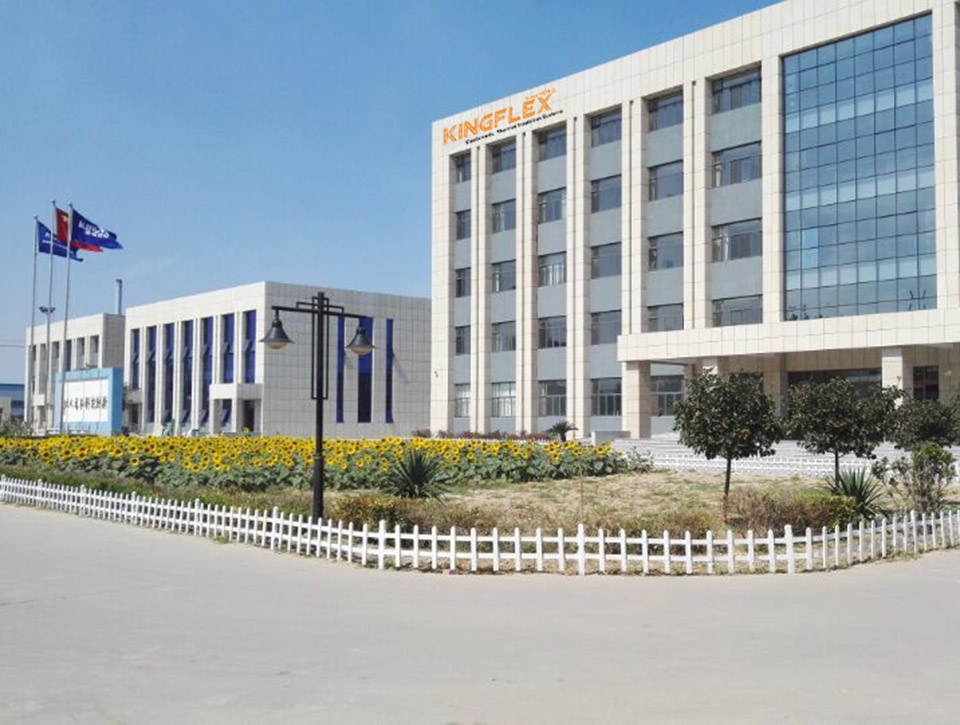
Kingflex Factory Manufacturing Facility
Factory Scale & Supply Chain

Unrivaled Chinese Supply Chain Capacity

Strategically situated in Dacheng, China—the recognized global capital of green building materials.

600,000+
Cubic Meters Annual Capacity
5
Automatic Assembly Lines
40+
Years Industry Lineage
66+
Export Destinations

Streamlined Production for Global Supply Chain Security

By integrating manufacturing and trade, Kingflex operates five fully automated, high-speed continuous foaming extrusion lines. This infrastructure delivers a stable output exceeding 600,000 cubic meters annually, reducing lead times for major infrastructure, chemical, and building projects.

Our raw material sourcing is secured through stable local industrial agreements, insulating our clients from global supply chain volatility. Our direct relationship with Jinwei Group (established in 1979 as the pioneer manufacturer of thermal insulation materials north of the Yangtze River) provides deep technical heritage and operational scale.
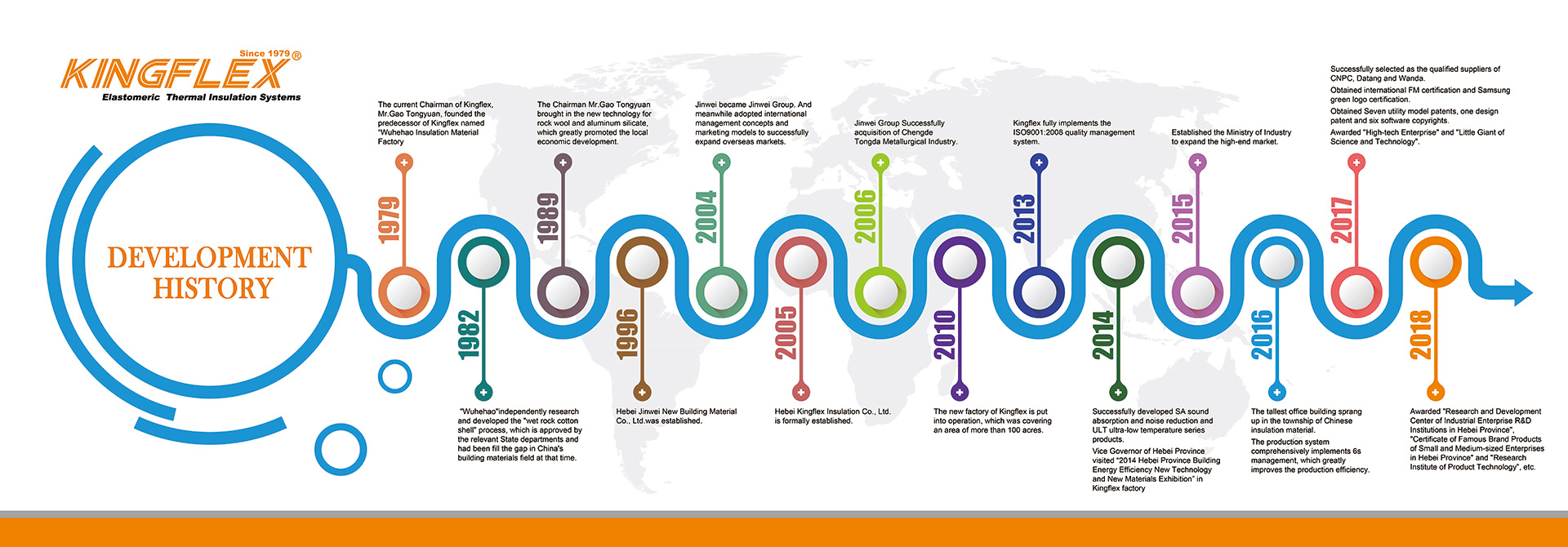
Pioneering thermal insulation history in northern China
Material Science

Material Science: Elastomeric Rubber Foam vs. Rock Wool

A comparative analysis of physical performance criteria to assist specification engineers in selecting the right thermal insulation system.

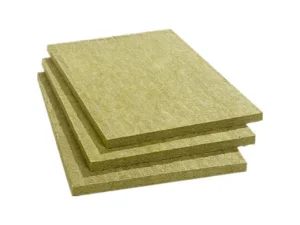
Elastomeric rubber foam is a flexible, closed-cell NBR/PVC material. Its closed structure yields high resistance to moisture vapor and stable thermal conductivity in high-humidity applications. Rock wool, conversely, is an open-cell mineral fiber suitable for high-temperature applications but requires an external vapor barrier to prevent moisture accumulation.

Performance Metrics Kingflex Elastomeric NBR/PVC Rubber Foam Traditional Rock Wool Insulation
Cellular Structure Closed-Cell (≥98% rate) Open-Cell (Fibrous structure)
Moisture & Vapor Resistance Excellent (Built-in vapor barrier, high μ factor) Poor (Requires additional jacket, vulnerable to moisture)
Thermal Conductivity (λ at 0°C) ≤ 0.034 W/(m·K) - Long-term stable ≤ 0.040 W/(m·K) - Degrades with moisture
Flexibility & Installation Ease Highly flexible, cuts easily around complex shapes Rigid or semi-rigid, prone to dust generation during install
Working Temperature Range -40°C to 105°C (Special cryogenic grades available) Up to 650°C (Excellent for heavy industrial steam lines)
Compressive Resilience >80% recovery, returns to original volume after stress Low, prone to fiber collapse under compression
Dust & Fiber Hazard Zero fiber emission, suitable for cleanrooms and hospital HVAC High fiber shedding, requires PPE during installation
Application Engineering

Industrial & Civil Engineering Application Scenarios

How global contractors and engineers deploy Kingflex systems to reduce energy loss, stop condensation, and control noise.

HVAC & Duct Insulation

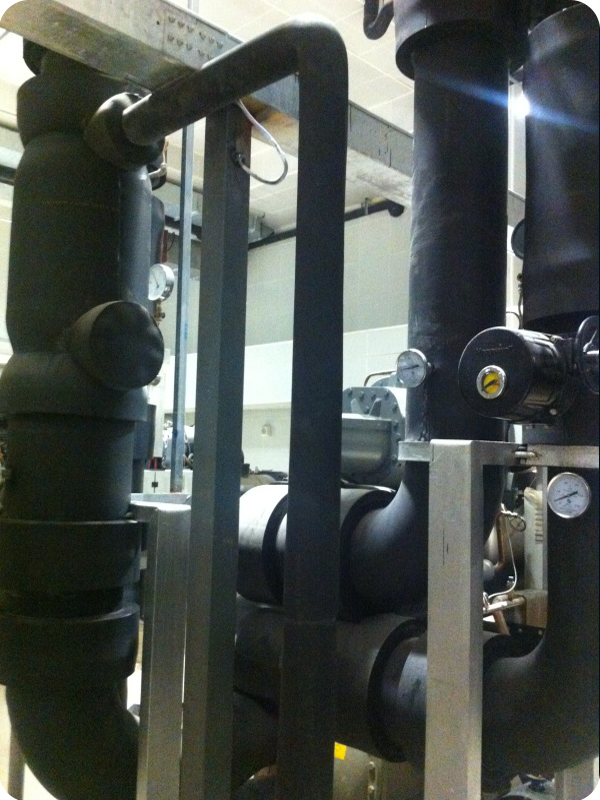
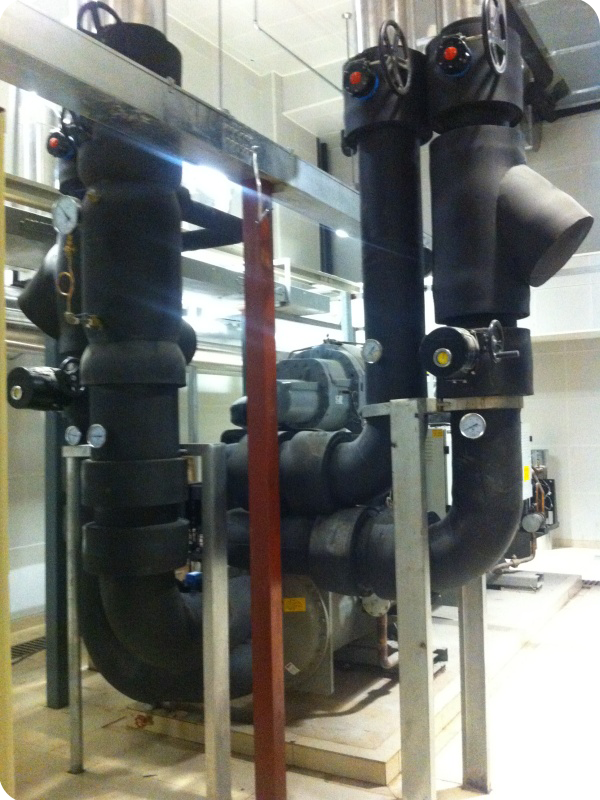
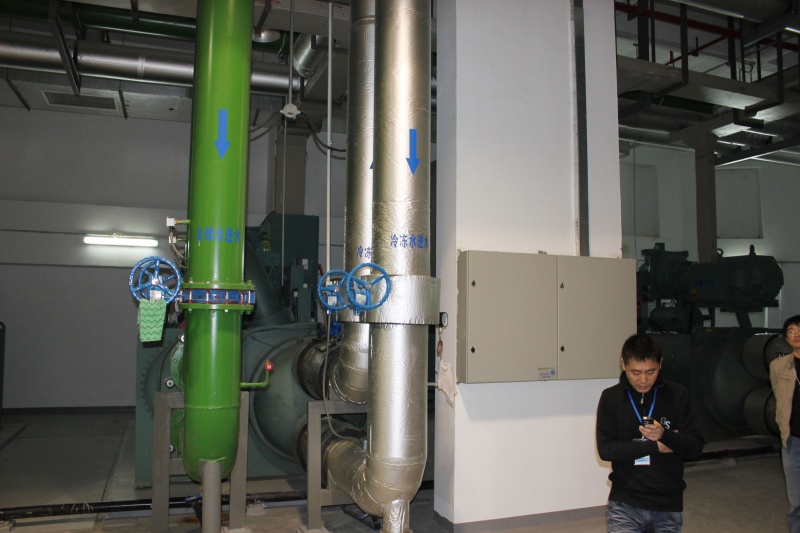
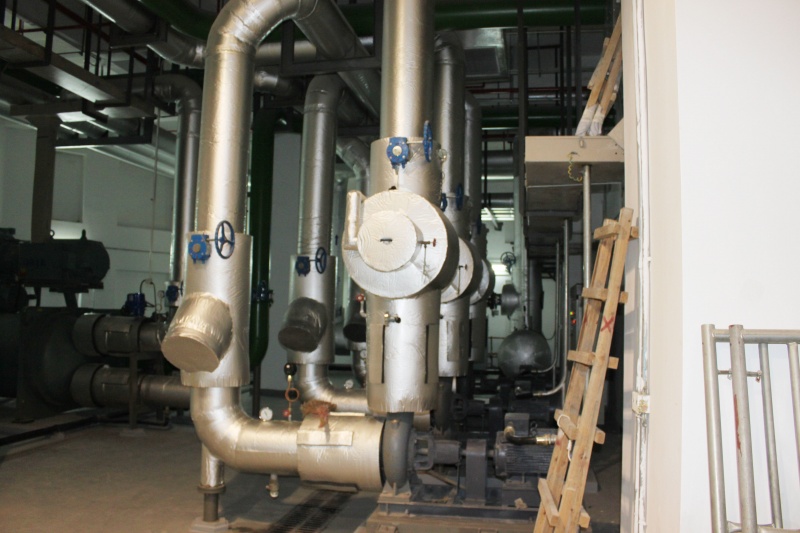
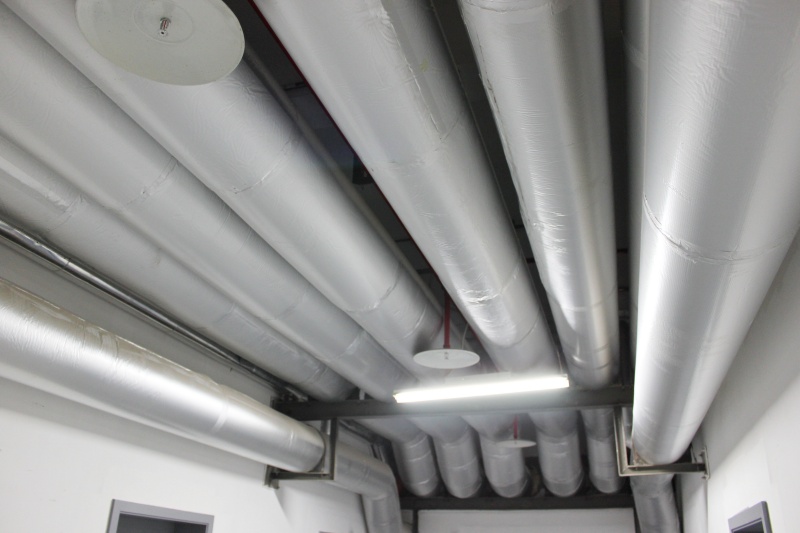
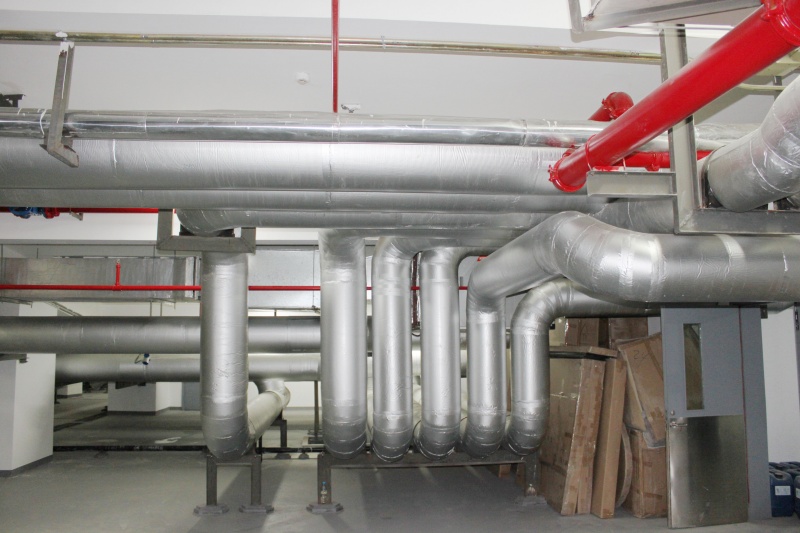
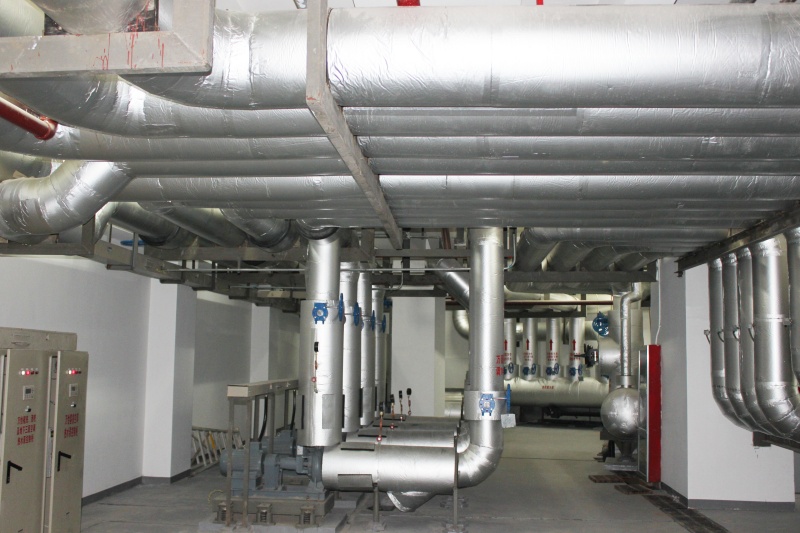
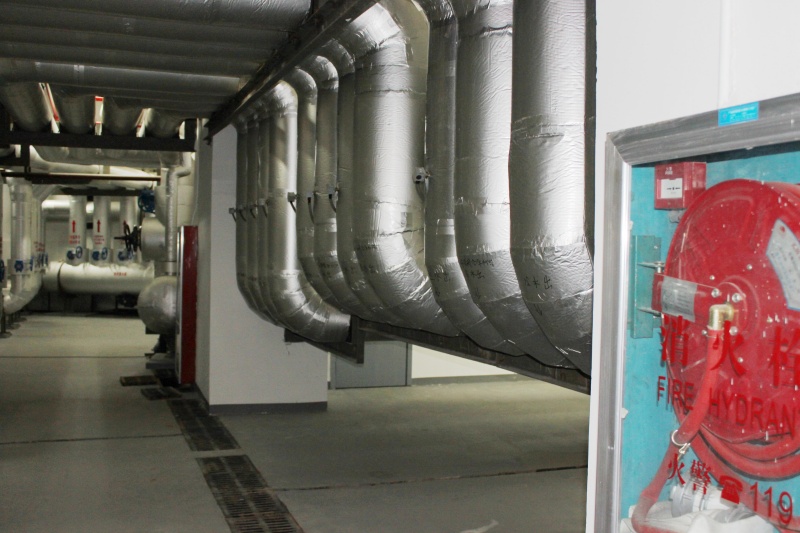
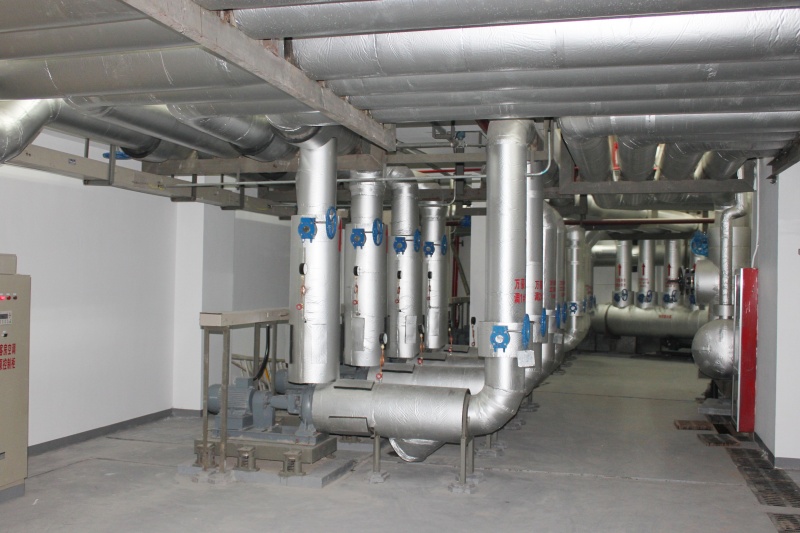
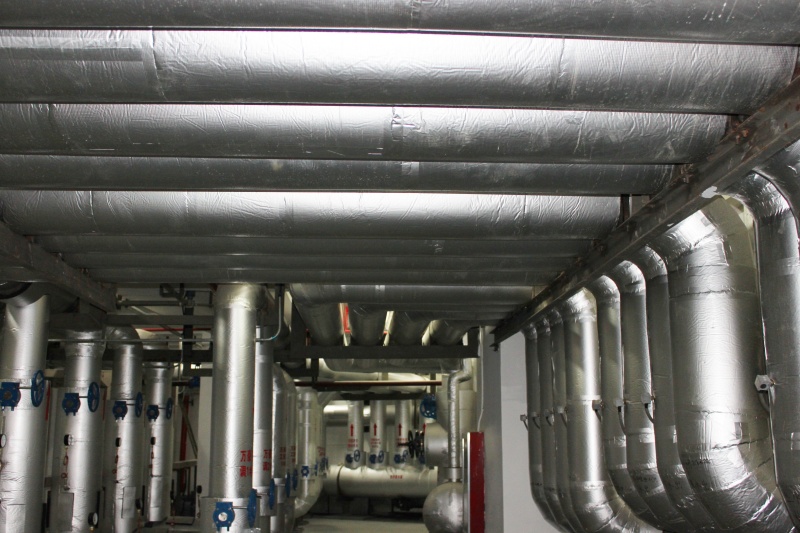
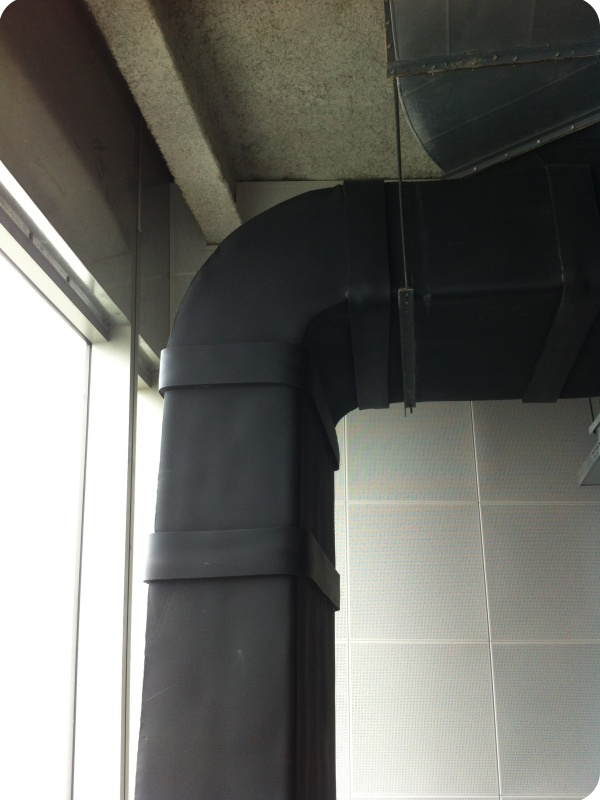
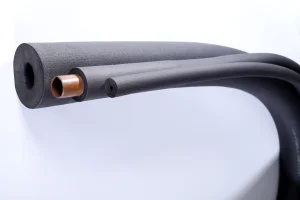
In central air conditioning chilled/hot water pipes and condensate lines, elastomeric rubber foam prevents condensation. Condensation can lead to water dripping, ceiling damage, and structural mold. Kingflex insulation maintains system design efficiency and prevents thermal energy losses.

Cryogenic & Ultra-Low Systems

For industrial cold chains and cryogenic applications, our Dolefin Flexible Cryogenic Insulation maintains performance down to ultra-low temperatures, preventing outer layer cracking and thermal contraction.

Acoustic & Noise Dampening

Our open-cell, flexible soundproof insulation sheets are engineered for machine rooms, hotels, hospitals, and transit carriages. They combine thermal protection with sound absorption to limit noise transmission.

Technical Specifications: Rolls vs. Pipes

Below are the standard technical baselines for Kingflex elastomeric foam sheets and pipe insulation products. Custom configurations can be developed by our engineering team to meet project requirements.

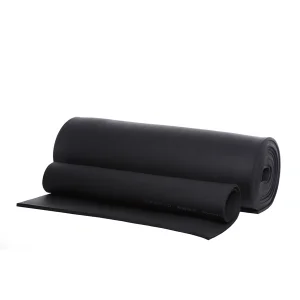
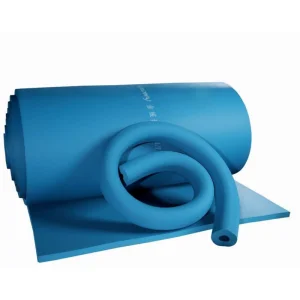
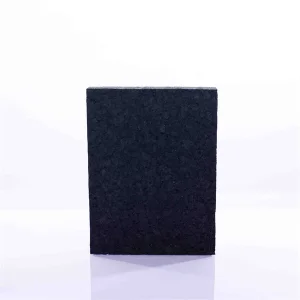
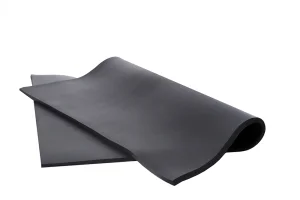
Black Rubber Foam Insulation Sheet Roll

  • Material Blend: High-grade NBR/PVC polymer blend
  • Available Thicknesses: 6mm to 50mm
  • Apparent Density: 40 to 55 kg/m³
  • Service Temperature: -40℃ to 105℃
  • Closed Cell Rate: Over 98% for low vapor permeability
  • Compression Resilience: Over 80% recovery
  • Safety: Self-extinguishing flame-retardant formulation

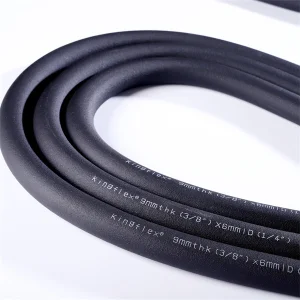
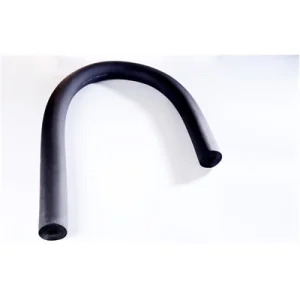
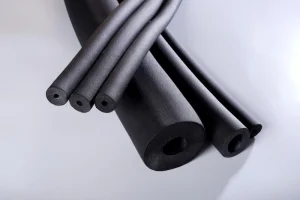
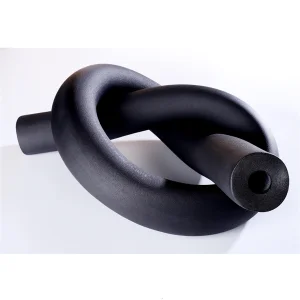
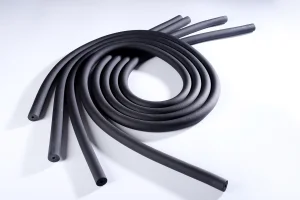
Black Rubber Foam Insulation Pipe

  • Material Blend: Extruded NBR/PVC polymer blend
  • Wall Thickness Range: 9mm to 40mm
  • Inside Diameter (ID): 6mm to 114mm (HVAC standard sizes)
  • Apparent Density: 40 to 55 kg/m³
  • Service Temperature: -40℃ to 105℃
  • Coating: Even pipe spraying for clean outer finish
  • Mitigation: Reduces pipe freezing and cracking risks
Compliance & Certifications

Global Compliance, Certification & Full Batch Traceability

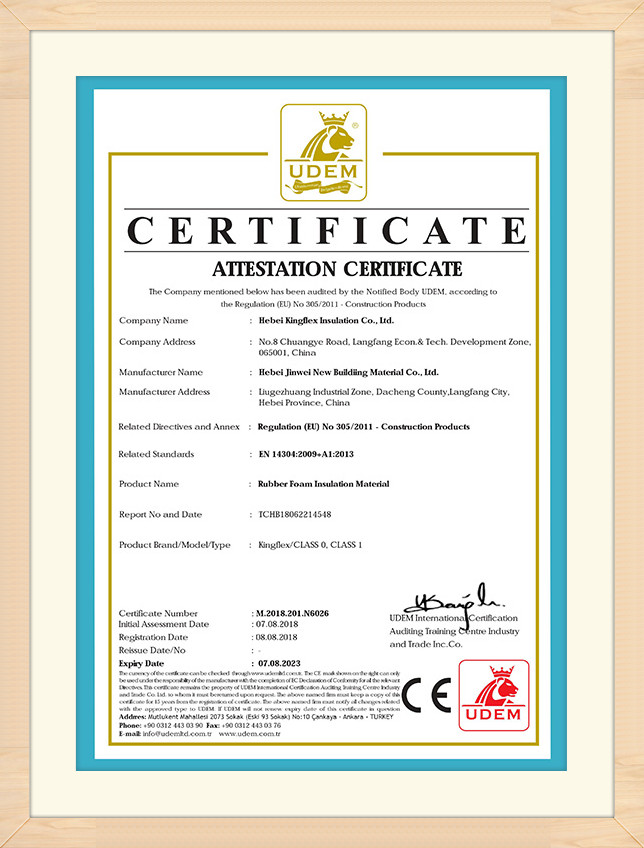
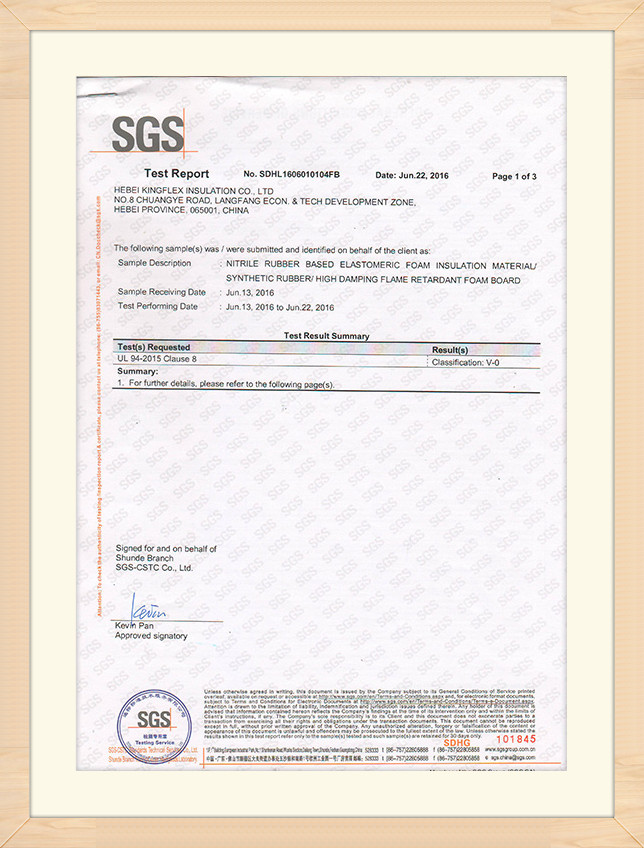
Exporting insulation materials to strict markets like the UK, EU, USA, and Middle East requires compliance with regional fire safety and chemical guidelines. Kingflex products undergo third-party testing to verify compliance with international standards, helping your projects pass structural and safety inspections.

Our factory implements a production tracking system. Each batch of raw materials is logged, and every finished shipment is stamped with a manufacturing ID. This process ensures traceability from raw chemicals to the on-site mechanical installation.
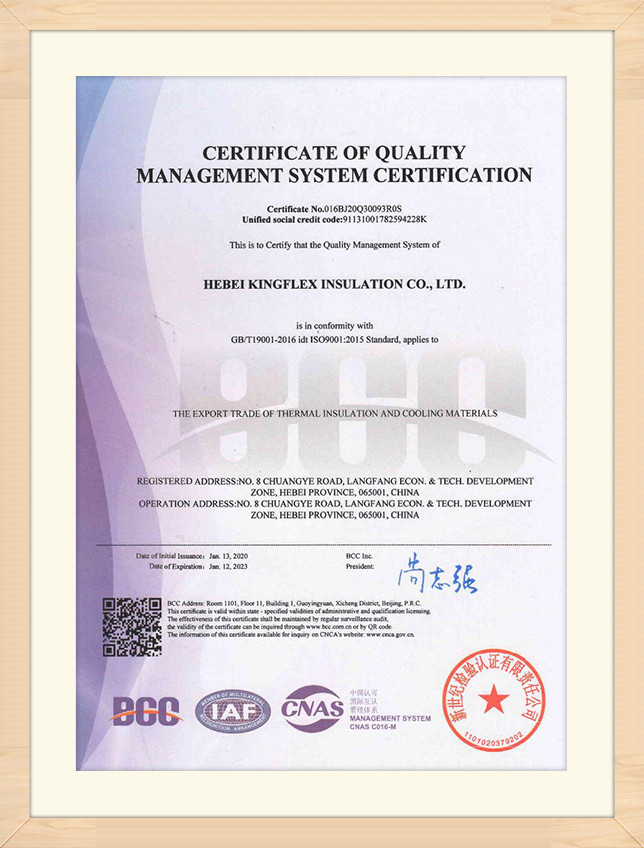
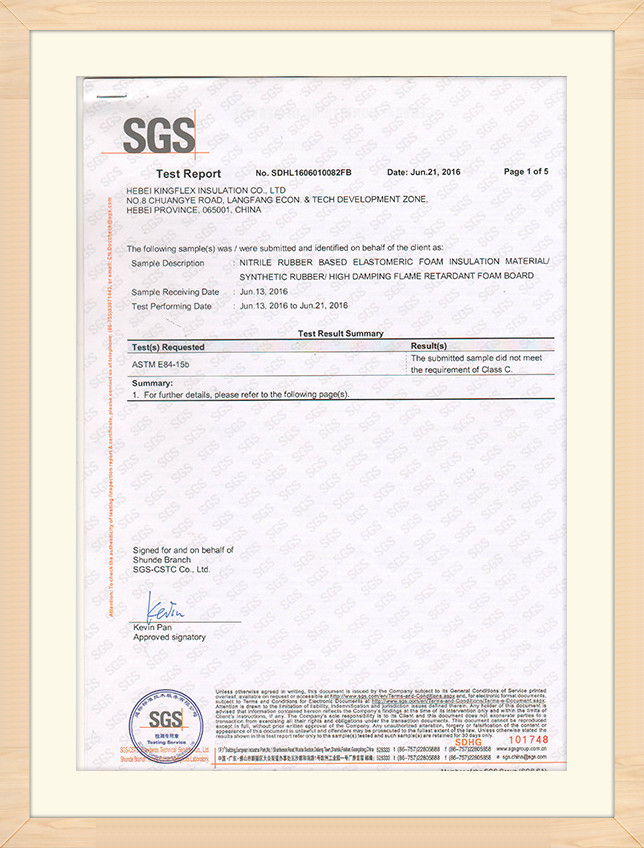
BS 476
UK Fire Test Standards Passed
CE & REACH
EU Safety and Chemical Compliance
UL 94 & ASTM
Flame Retardant Verified
Kingflex Quality Certificate 1 Kingflex Quality Certificate 2 Kingflex Quality Certificate 3 Kingflex Quality Certificate 4
Human Capital & R&D

Experienced Technical Team & Advanced R&D

Our personnel combine material expertise with responsive customer service to support your projects.

Kingflex technical production staff

Collaborative R&D for Engineered Solutions

The Kingflex team comprises specialized professionals focused on building and industrial insulation:

  • 8 Senior Engineers in our R&D Department, managing material formulation and properties.
  • 6 Dedicated International Sales Consultants, providing professional advice on global logistics, tariffs, and customs.
  • 230 Skilled Production Workers, operating our extrusion lines to maintain product consistency.

We offer consultation services throughout your project, providing thermal calculations, layout advice, and installation guidance.

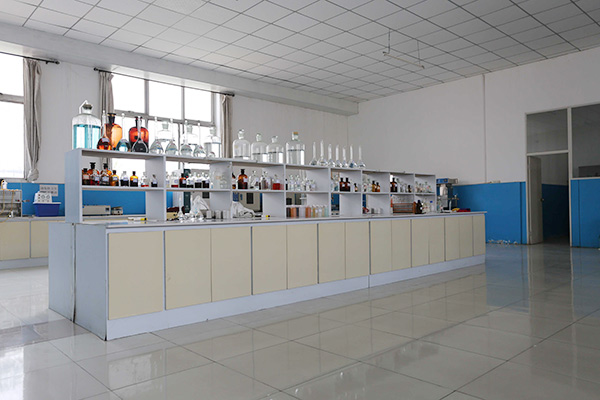
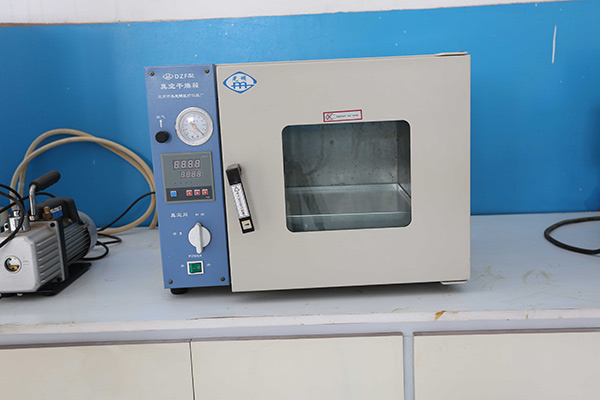
Advanced Laboratory & Testing Protocols

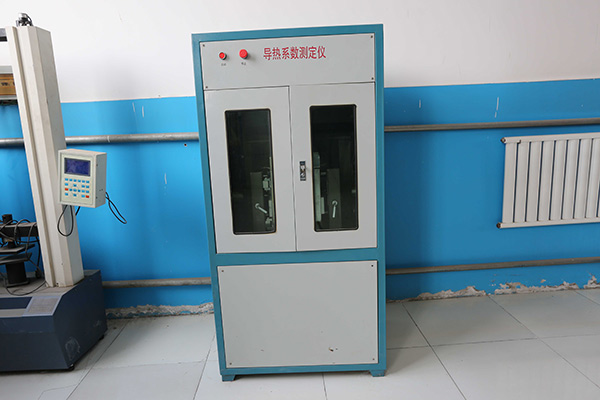
Thermal Conductivity Testing Lab
Chemical Formulation Mixing Lab
Vapor Permeability Chamber
Customer Satisfaction

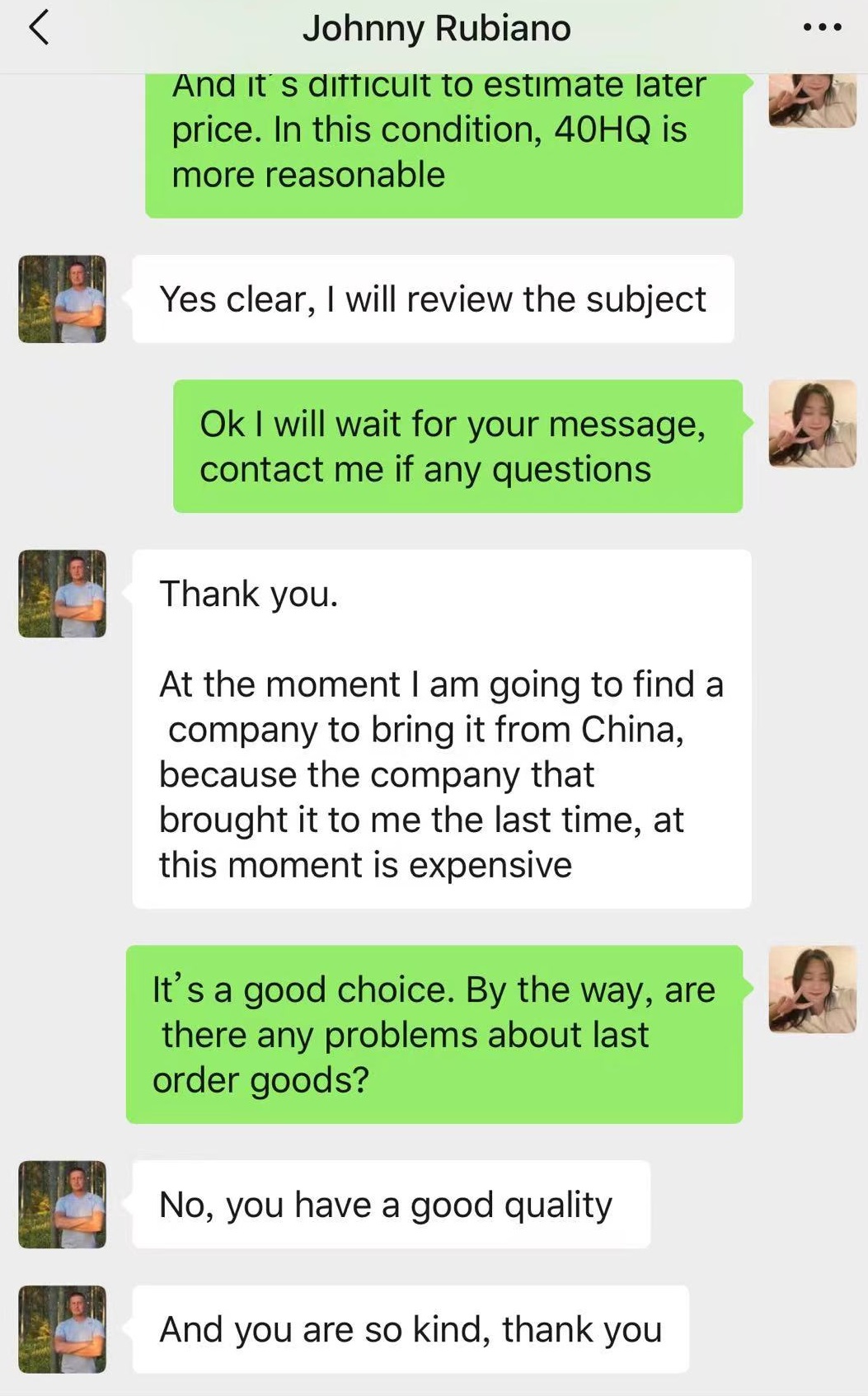
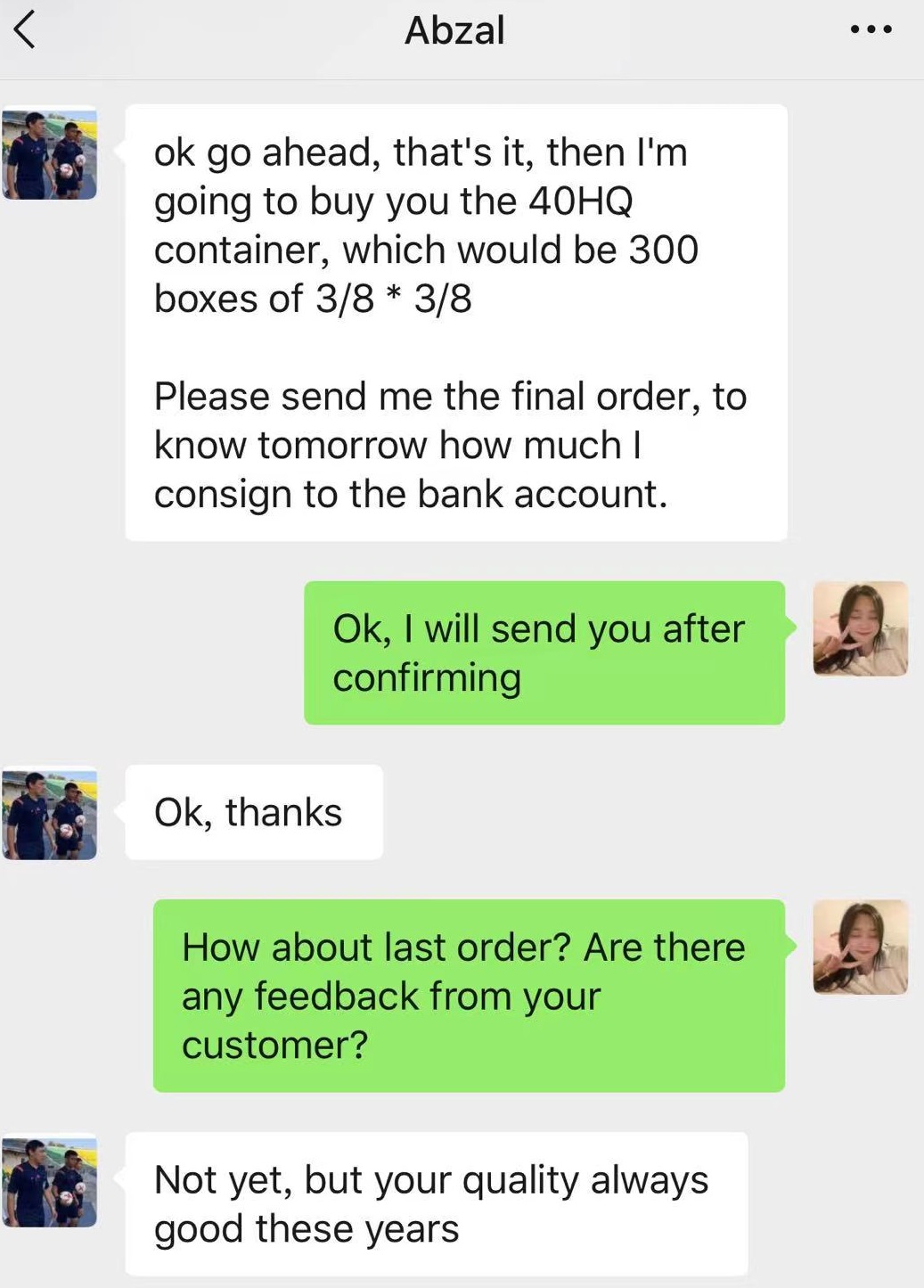
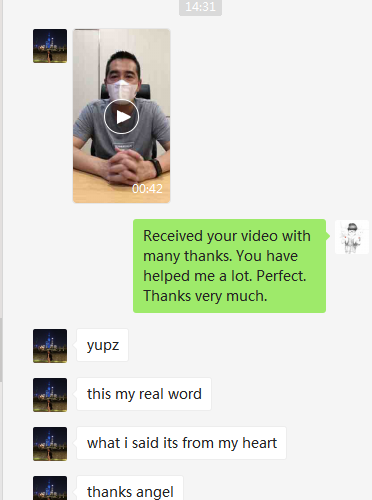
Direct Feedback from Professional Buyers

Verified communication records showing our commercial support and service levels.

Buyer Chat 1
Buyer Chat 2
Buyer Chat 3
Buyer Chat 4
Buyer Chat 5
Kingflex international trading office team
Projects Registry

Global Engineering Projects Showcase

Kingflex insulation materials are specified on major construction sites worldwide.
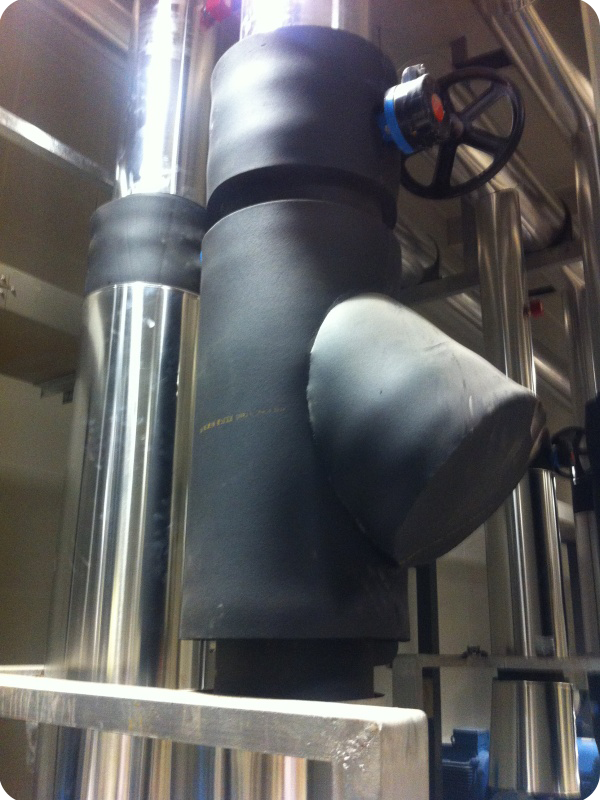
Duct Work Installation Project
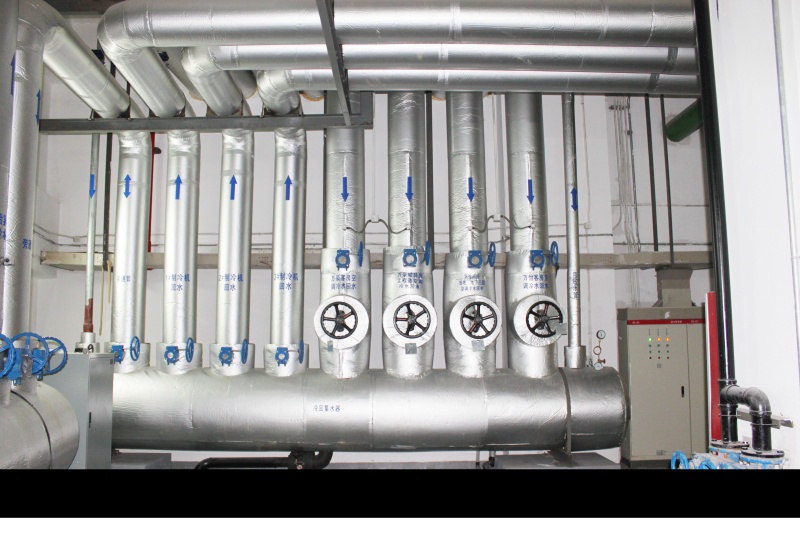
Commercial HVAC Insulation Project
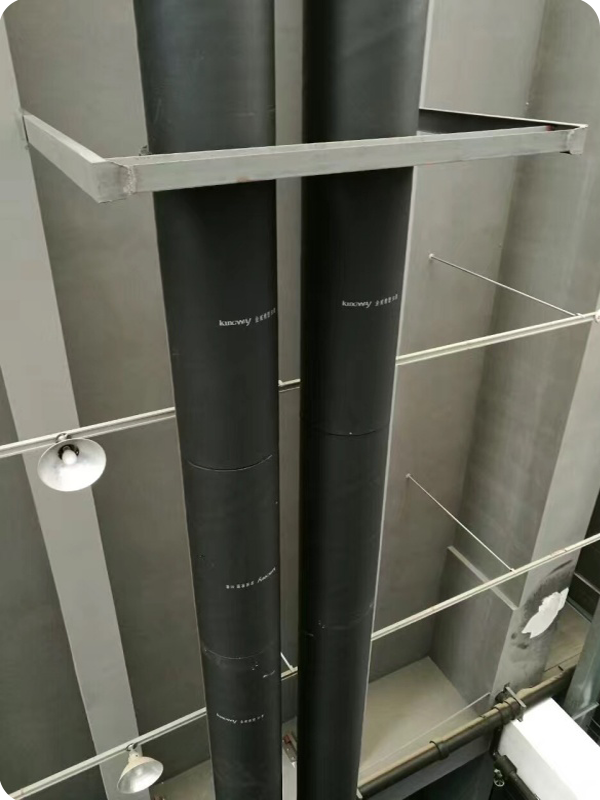
Chilled Water Pipe Insulation Project
Industrial Steam Pipe Insulation Project

Continuous Quality Control and Material Foaming Extrusion Lines

Foaming production line raw mixing Extrusion and shaping tunnel Cooling and slicing automation Finished roll packing center
Factory Operations

Continuous Foaming Extrusion Lines & Quality Inspections

Inside the Kingflex production facilities: monitoring density, cell growth, and mechanical performance.
Answers Database

Technical FAQ: Commercial Elastomeric Insulation Procurement

Expert answers addressing the selection, compliance, customization, and logistics of elastomeric foam.

Q1: What applications is elastomeric rubber foam insulation typically used for?
A1: It is primarily used for central air conditioning chilled/hot water pipes, condensate lines, building ventilation system ducts, and industrial process pipelines requiring thermal protection or condensation control. It is also utilized for sound absorption and vibration isolation in mechanical rooms and vehicle insulation.
Q2: Is Kingflex rubber foam insulation fire retardant?
A2: Yes, our elastomeric rubber foam is formulated with fire retardants to meet BS 476 (Class 0 and Class 1), CE (EN 14304), and UL 94 V-0/V-1 flammability classifications. It is self-extinguishing and helps limit fire propagation along pipe routes.
Q3: What are the main differences between NBR rubber foam and rock wool insulation?
A3: The choice depends on the application. Rubber foam features a closed-cell structure with a high built-in moisture resistance factor (μ ≥ 10,000), making it ideal for refrigeration, cold lines, and HVAC systems. Rock wool has an open-cell fibrous structure that can absorb water if the jacket is damaged, but it withstands higher temperatures (up to 650°C), making it suitable for high-temperature steam lines.
Q4: Do you offer custom sizing and OEM options for project orders?
A4: Yes, we provide OEM services. We customize thickness (from 6mm to 50mm for sheets), internal diameters (from 6mm to 114mm for tubes), colors, and add options like self-adhesive backing or protective outer foils (Alu-foil or fiberglass cloth).
Q5: What international quality and environmental certifications do Kingflex products carry?
A5: Our products are certified under BS 476, CE, REACH, RoHS, UL94, and ASTM standards. They are free from CFCs, HFCs, and dust fibers, making them suitable for cleanrooms, commercial buildings, and healthcare facilities.
Q6: Do you maintain product traceability for international logistics?
A6: Yes. We use barcode tracking from raw materials to final shipping pallets. Each production run has a batch number for tracking material logs and test certificates.
Q7: What range of thicknesses can you produce for rubber foam sheet rolls?
A7: We produce sheet insulation in thicknesses ranging from 6mm up to 50mm, allowing designers to select the appropriate thickness to prevent condensation based on local ambient humidity and design pipe temperatures.
Q8: What is the typical service life of NBR/PVC rubber foam insulation?
A8: When installed according to specifications and protected from UV light (e.g., using a protective jacket outdoors), Kingflex elastomeric foam maintains stable thermal performance for 10 to 15 years.
Q9: How does the closed-cell rate affect thermal efficiency over time?
A9: An insulation material's thermal conductivity (λ) degrades if moisture enters. Water conducts heat roughly 24 times faster than dry air. With a closed-cell rate exceeding 98%, Kingflex foam blocks moisture penetration, ensuring its thermal conductivity remains stable over time.
Q10: What is the minimum order quantity (MOQ) for factory-direct shipping?
A10: MOQs vary by customization level. Standard sizes (like common HVAC pipe IDs and sheet thicknesses) are often available from stock with low MOQs. Custom dimensions or special backings typically require a minimum volume, such as a 20ft or 40ft shipping container, to optimize freight costs.

Global Partner Certifications & Production Sites