Explore our elite NBR/PVC closed-cell rubber foam solutions optimized for global projects
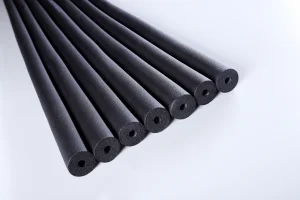
In the global thermal insulation sector, the term "Talc Pipe" refers to flexible elastomeric rubber foam insulation pipes (commonly manufactured using NBR/PVC blends) that are internally coated with a precision dusting of talc powder ($Mg_3Si_4O_{10}(OH)_2$). But how does this system work, and why is it crucial for massive HVAC infrastructure, industrial water lines, and cryogenic engineering?
During extrusion, hot elastomeric rubber is highly tacky. Without an internal release agent, the inner core of the insulation tube would stick to itself, rendering installation impossible. By applying a micron-thin layer of industrial talc powder within the inner bore, the factory creates a dry, lubricating sliding surface. This reduces the friction coefficient between the metal pipe (copper or steel) and the rubber foam from approximately 0.8 down to less than 0.15.
The Core Working Principles:
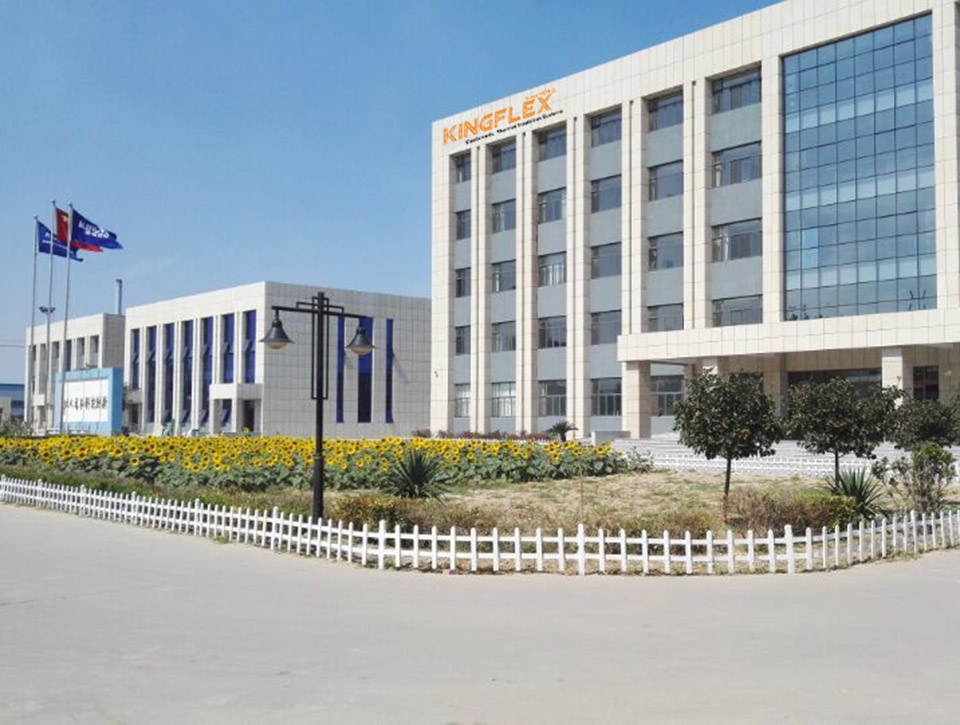
Kingflex Insulation Co., Ltd. is a premier manufacturing and trading combo for high-end thermal insulation products. Headquartered in Dacheng, China—globally recognized as the capital of green-building materials—we are an energy-saving, environmentally friendly enterprise focusing on the full lifecycle of HVAC and industrial insulation.
Originally established by the Jinwei Group (which carries a legacy of over 40 years since its inception in 1979 as the pioneer manufacturer of thermal insulation materials north of the Yangtze River), Kingflex has consistently driven innovation in elastomeric foams.
Our production floor utilizes five high-speed automated extrusion lines, incorporating in-line powder dusting systems to ensure an uniform talc coating inside every insulation pipe. With designation from the Ministry of Energy, Ministry of Electric Power, and Ministry of Chemical Industry, Kingflex supplies critical installations worldwide.
To satisfy engineering procurement guidelines, we manufacture to tight tolerances with continuous density verification ($40-55\text{ kg/m}^3$). Below are the standard operational parameters for our primary product lines:
| Product Type | Material Blend | Available Thickness | Internal Diameter (ID) | Temperature Threshold | Key Advantages |
|---|---|---|---|---|---|
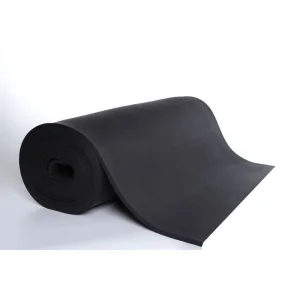
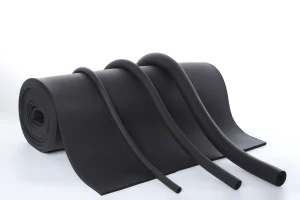
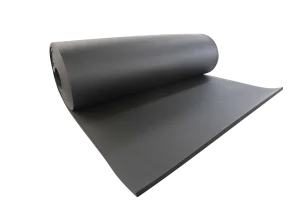
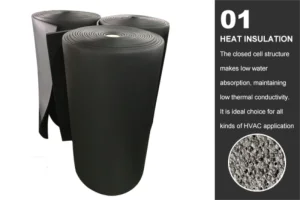
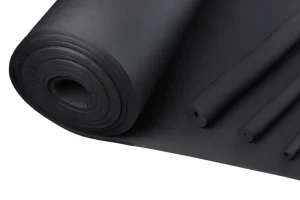
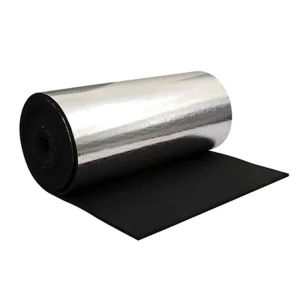
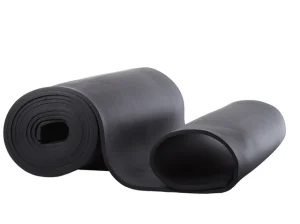
| Black Rubber Foam Sheet Roll | Premium NBR/PVC | 6mm - 50mm | N/A (Flat Sheet) | -40℃ to 105℃ | 98% closed-cell, high moisture resistance, self-extinguishing |
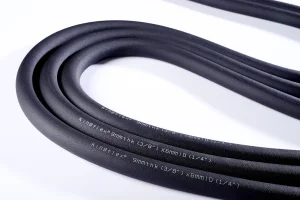
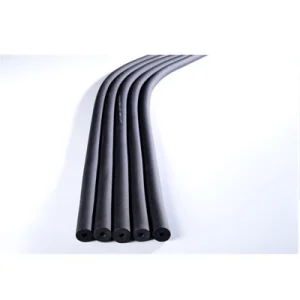
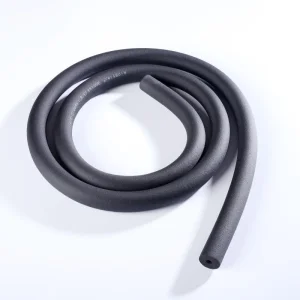
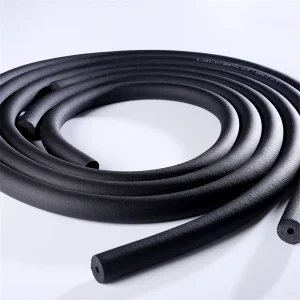
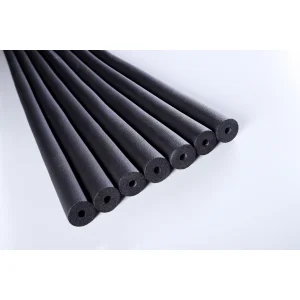
| Black Rubber Foam Pipe (Talc Dusted) | Premium NBR/PVC | 9mm - 40mm | 6mm - 114mm | -40℃ to 105℃ | Ultra-slick inner wall, reduced shearing risks, professional spray finish |
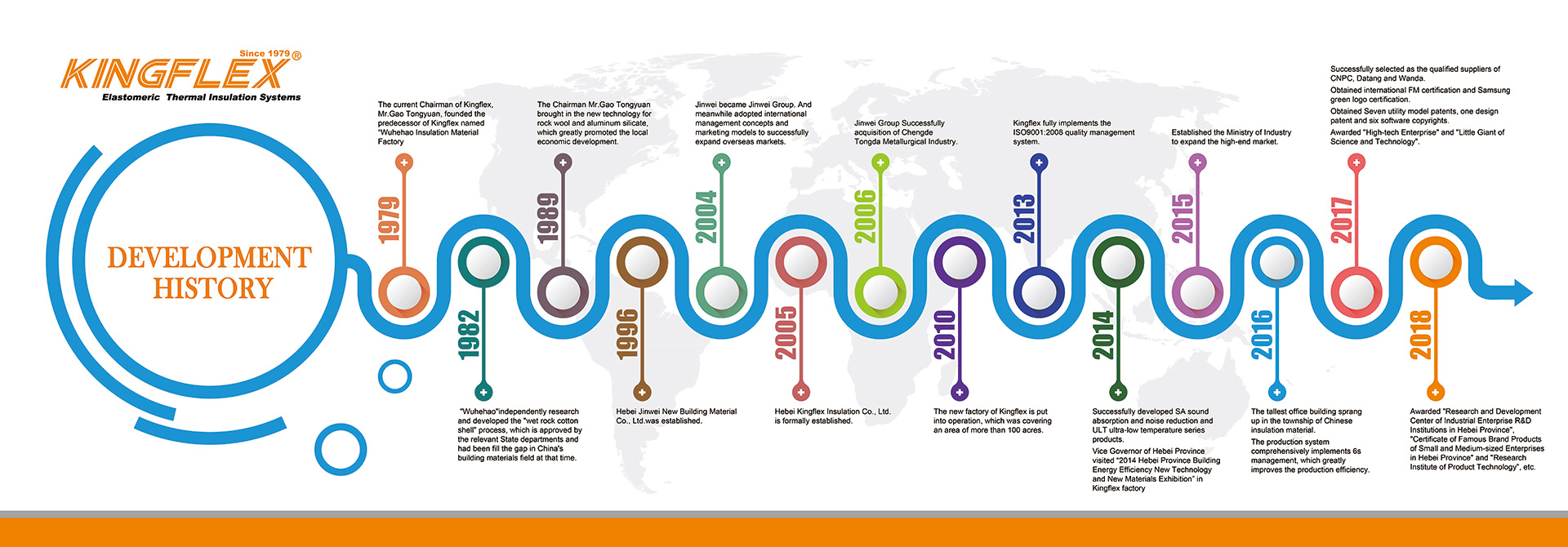
Our internal R&D department features eight specialized materials engineers who continually test the chemistry of our NBR/PVC compounding blocks. By optimizing the foaming agent and polymer ratios, we achieve compression resilience exceeding 80%, providing long-term structural defense against degradation.
Modern sourcing agents require deep insights into price formations. For rubber foam insulation systems, cost structures depend heavily on raw nitrile rubber indexes, PVC processing stabilizing agents, and energy inputs during high-temperature continuous vulcanization extrusion.
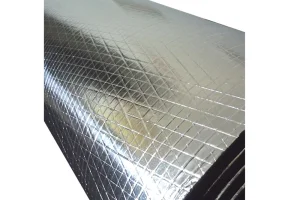
Our factory pricelist is structured upon volumetric requirements ($m^3$) and customized treatments (e.g., self-adhesive backings, glass fiber scrims, or high-tensile aluminum foils). Standard NBR/PVC elastomer sheets range from USD $120 to $280 per cubic meter FOB Tianjin, depending on density calibrations and fire safety ratings (Class 0 / Class 1).
To maintain transparency, Kingflex offers customized quote calculations for regional distributors, covering container consolidation margins, packaging customization options, and sea freight logistics variables.
The global HVAC and industrial cold-chain sectors are shifting rapidly toward sustainable, halogen-free, and low-smoke materials. Kingflex's engineering team is actively executing a tech roadmap focused on three distinct areas:

Our Team & Service Ethos:
With a dedicated force of 230 factory workers, 8 R&D engineers, and 6 international customer managers, we provide comprehensive technical advisory and post-sale installation oversight. This hands-on expertise reduces project delivery risks for global engineering firms.
To ensure compliance on international construction sites, Kingflex maintains a robust quality management framework. Our products are fully tested and certified under global safety and environmental protocols, providing complete reassurance for mechanical specifications.
Our materials regularly undergo independent audits to verify conformity with ASTM, RoHS, CE, and ISO standards, ensuring seamless project approvals in Europe, the Americas, and Southeast Asia.
Explore specialized materials, aluminum foil laminates, and high-performance tubing
 Kingflex