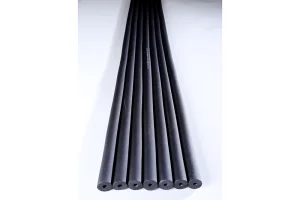
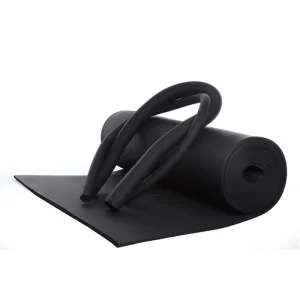
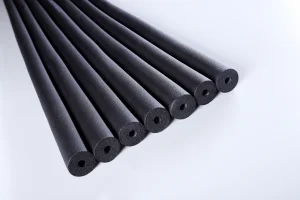
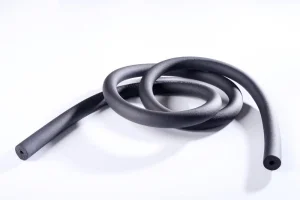
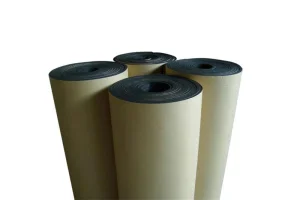
Explore our industrial grade solutions engineered to optimize thermal transfer efficiency and eliminate energy leakage in high capacity HVAC installations.
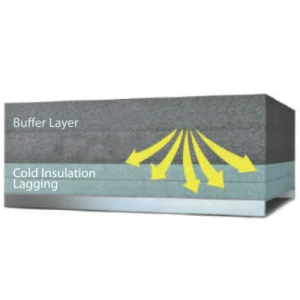
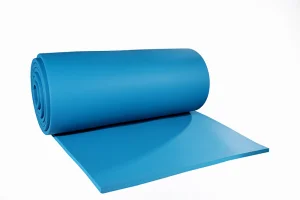
In modern building construction, industrial engineering, and processing plants, thermal containment systems act as critical thermal barriers. HVAC and AC vent insulation systems are no longer selected based on installation convenience alone. Today, they are evaluated as primary parameters of thermodynamic design. Over 40% of building energy usage is directed to heating, ventilation, and air conditioning (HVAC) systems. Thermally inefficient systems can result in massive thermal transmission losses, structural corrosion caused by condensation, and poor indoor air quality.
The global commercial insulation sector is shifting from traditional open-fibrous structures to advanced closed-cell elastomeric synthetic rubber networks (such as NBR/PVC blends). Key market regions like North America (governed by ASHRAE 90.1 energy guidelines), the European Union (directed by the Energy Performance of Buildings Directive), and rapidly expanding manufacturing hubs in the Asia-Pacific region are driving this transition. This shift is motivated by the need to prevent condensation, control thermal bridging, and maintain clean mechanical environments in modern structures.
When ambient moisture penetrates insulating barriers, water collects inside the system. This drastically increases the thermal conductivity ($k$-value) of the insulation. Just a 1% moisture absorption by volume can increase thermal conductivity by up to 15%. This degrades performance and creates breeding grounds for mold and mildew. Elastomeric closed-cell structures resist water vapor diffusion naturally, eliminating the need for separate vapor barriers.
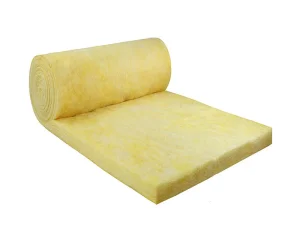
Understanding the differences between closed-cell elastomeric rubbers, fiberglass, and rock wool is critical when choosing insulation. Selecting the wrong material can lead to condensation, high maintenance costs, and premature failure of piping networks.
| Performance Metric | NBR/PVC Elastomeric Rubber | Fiberglass / Glass Wool | Rock Wool (Stone Wool) |
|---|---|---|---|
| Thermal Conductivity (at 0°C) | ≤ 0.034 W/(m·K) (Excellent) | 0.036 - 0.042 W/(m·K) | 0.038 - 0.045 W/(m·K) |
| Moisture Resistance Factor (μ) | ≥ 10,000 (Built-in Vapor Barrier) | ~ 1 (Requires external jacketing) | ~ 1 (Highly susceptible to moisture) |
| Operating Temperature Range | -40°C to +105°C (Cryogenic to High Temp) | -18°C to +540°C | -250°C to +1000°C |
| Dust & Fiber Shedding | Zero emissions (Safe for cleanrooms) | High (Potential respiratory irritant) | High (Requires full protective containment) |
| Flexibility & Installation Ease | Highly flexible (Contours easily) | Semi-flexible (Vulnerable to tearing) | Rigid / Semi-rigid slabs |
While mineral fibers like glass wool and rock wool remain useful in high-temperature applications (such as steam lines and chimneys), closed-cell elastomeric foam is the industry standard for chilled water lines, condensation-prone AC vents, cleanrooms, and moderate-temperature applications.
Different environmental conditions require specific insulation layouts. Global project engineering depends on choosing the right material and thickness for localized mechanical stresses and climate conditions.
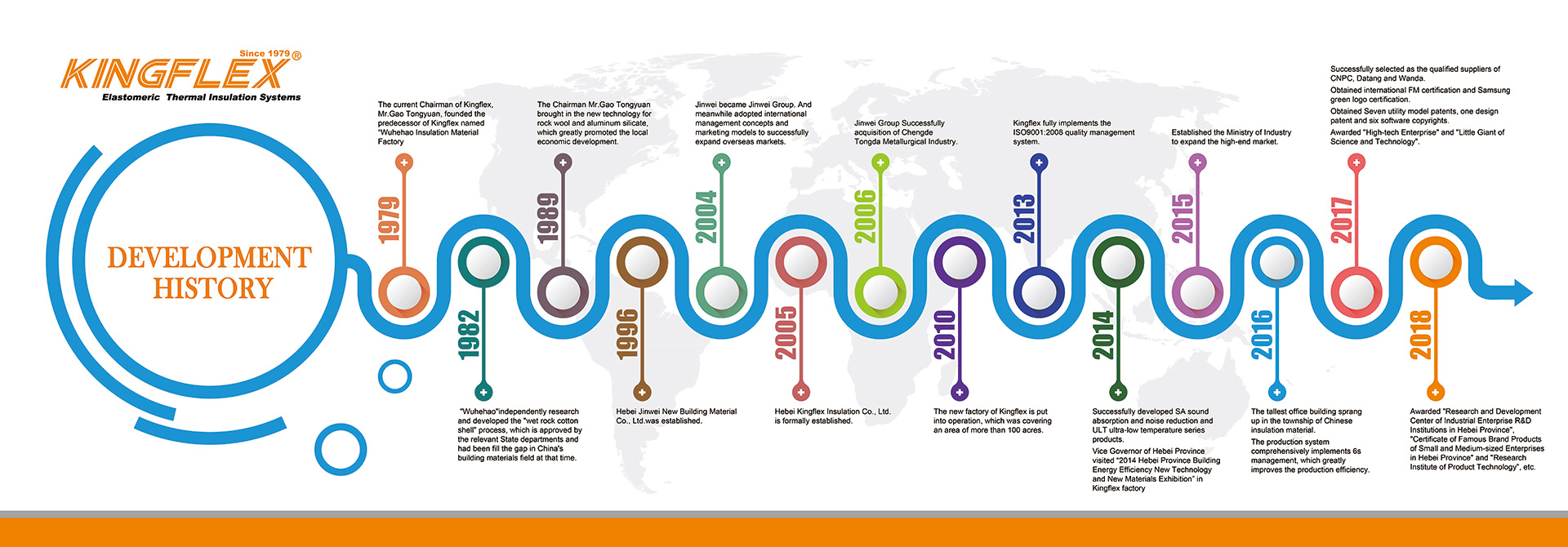
At Kingflex, research and development is focused on making building materials more sustainable, environmentally friendly, and efficient. Our engineers are constantly working to improve thermal performance.
A manufacturing and trading combo providing insulation systems for construction, petroleum, chemical, national defense, and aerospace applications worldwide.
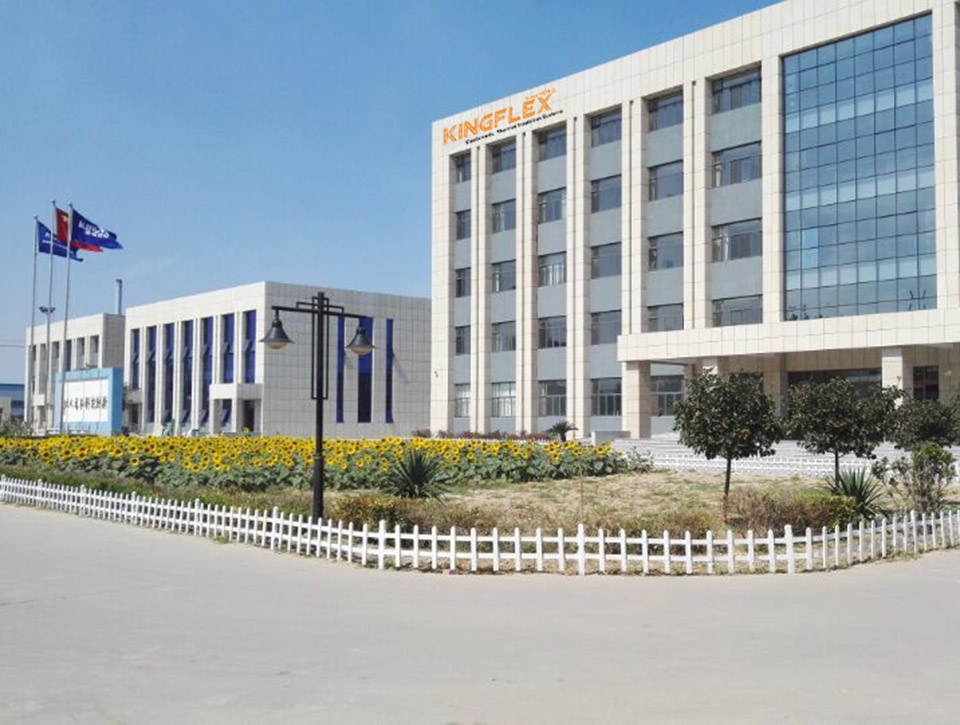
Kingflex Insulation Co., Ltd. is located in Dacheng, China—a hub for green building materials. Focused on energy efficiency and carbon reduction, we support industrial developments from initial consultation and R&D to production, installation support, and after-sales service.
Kingflex runs 5 automated production lines with an annual capacity of over 600,000 cubic meters. Our R&D department is staffed by 8 engineers focused on improving thermal properties, mechanical strength, and fire safety ratings. We operate under strict QA systems to ensure consistent product quality across all batches.
Our employees bring diverse expertise together to achieve a shared goal: delivering reliable, high-performing insulation products and responsive support to our partners.
From the factory floor to our international logistics offices, we work to ensure your orders are manufactured, inspected, and shipped on time.


A look inside our testing facilities, where materials undergo rigorous thermal, stress, and fire testing.
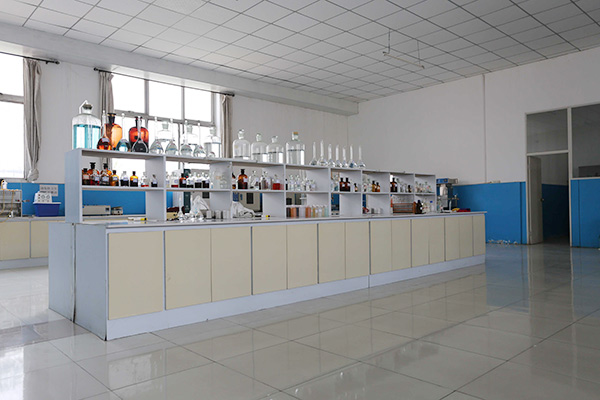
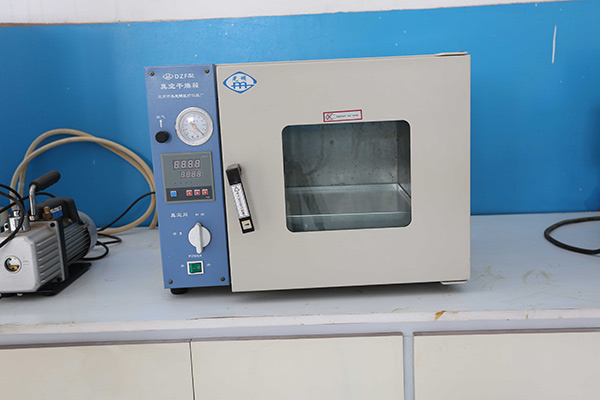
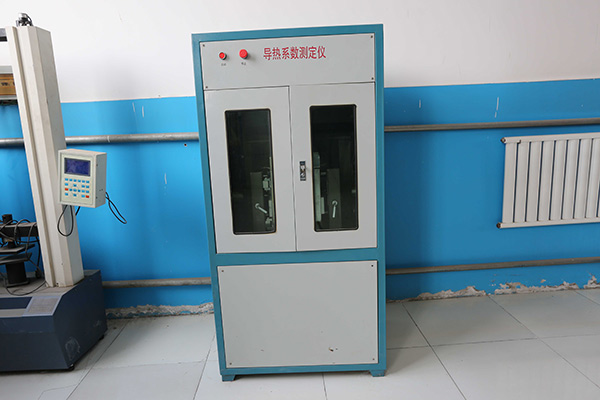
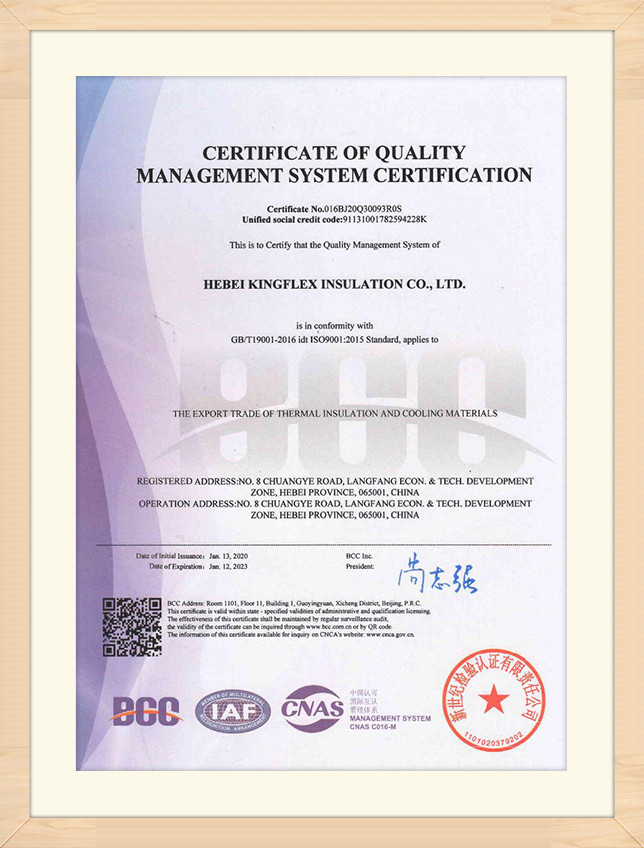
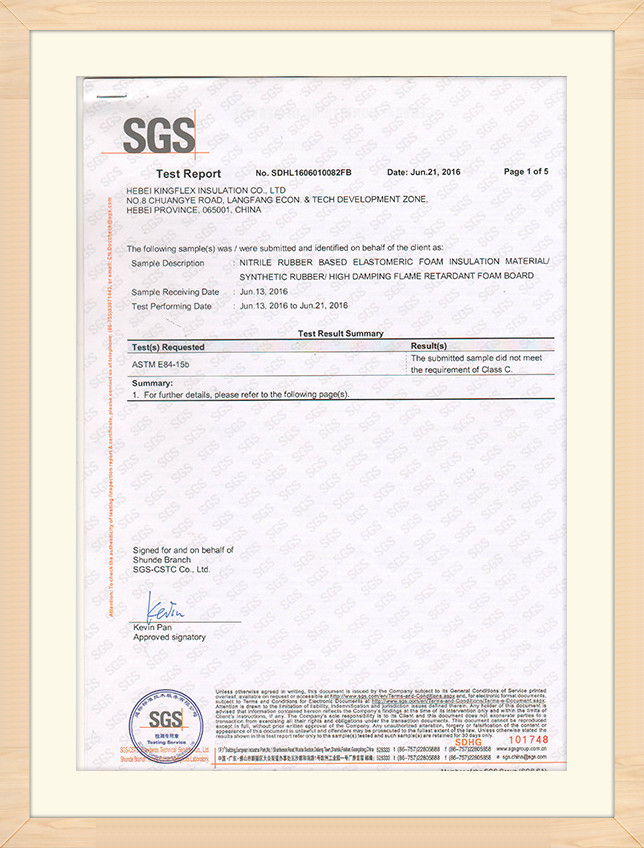
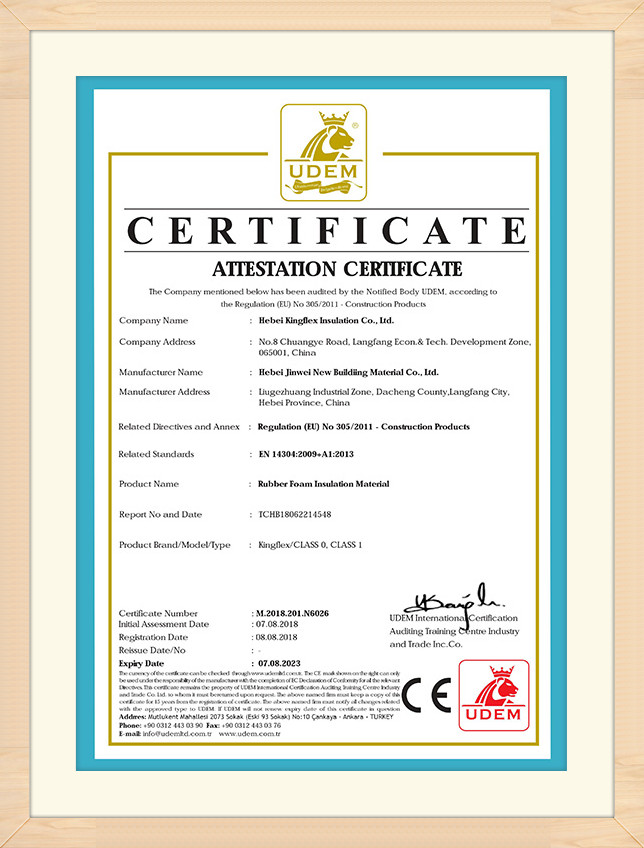
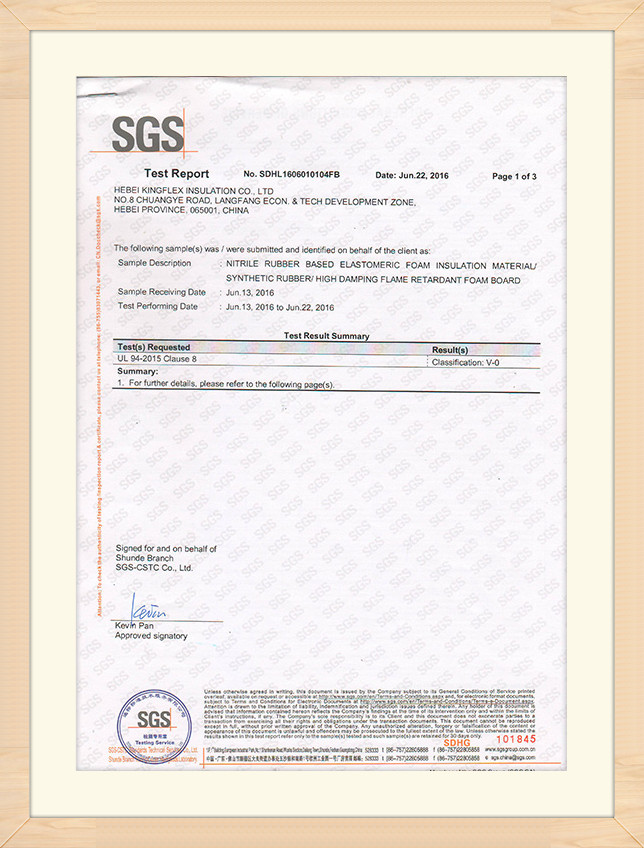
Our products are tested by third-party laboratories to meet fire, environmental, and toxicity standards.
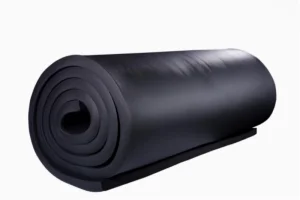
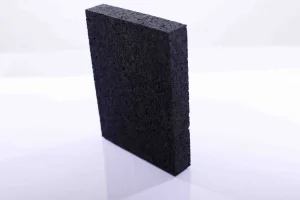
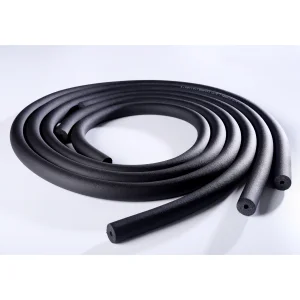
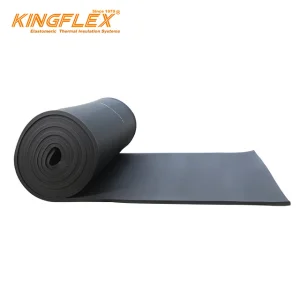
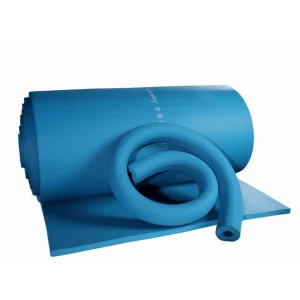
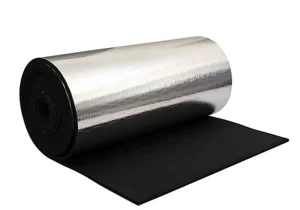
Review the physical property specifications for our primary NBR/PVC closed-cell elastomeric rubber foam sheets and pipelines.
Standard Dimension Range: Thicknesses from 6mm up to 50mm. Designed for wall linings, air duct wrapping, structural concrete cavities, and large-diameter tanks.
| Property | Value / Parameter | Testing Method |
|---|---|---|
| Density | 40 - 55 kg/m³ | ASTM D1622 |
| Service Temperature Limit | -40°C to +105°C | ASTM C411 |
| Thermal Conductivity (at 0°C) | ≤ 0.034 W/(m·K) | ASTM C518 |
| Water Vapor Permeability Resistance | μ ≥ 10,000 | EN 12086 |
| Compression Resilience | > 80% recovery rate | ASTM D1056 |
| Fire Rating Classifications | BS 476 Part 6 & 7 Class 0, UL94 V-0, CE Class B-s3, d0 | BS476, UL94, EN 13501 |
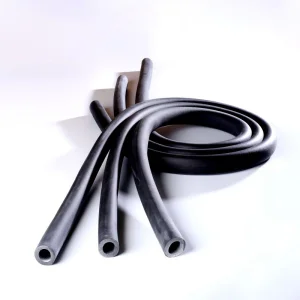
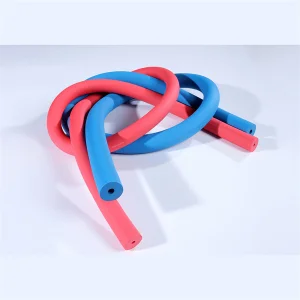
Standard Dimension Range: Thicknesses from 9mm up to 40mm. Inside Diameters (ID) from 6mm up to 114mm. Engineered for hot water, refrigeration, and chiller loop lines.
| Property | Value / Parameter | Key Advantage |
|---|---|---|
| Inner Tube Uniformity | Precision-extruded profile with uniform wall thickness | Prevents localized thermal bridging |
| Flame Retardancy | Self-extinguishing without dripping | Maintains mechanical stability on vertical runs during fire exposure |
| Anti-Vibration Property | Elastomeric cell configuration damping properties | Reduces structural noise transmission |
| Moisture Barrier | Built-in skin on both inner and outer boundaries | No external protective wrap needed for condensation prevention |
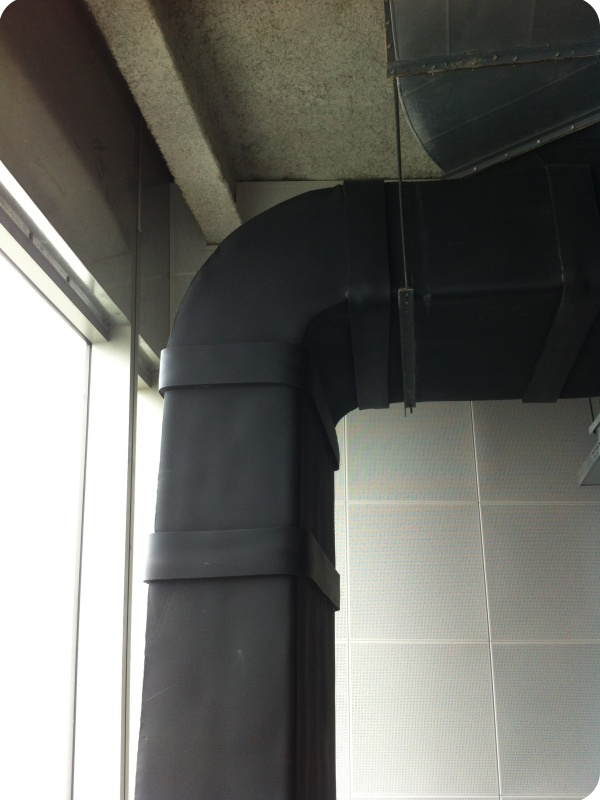
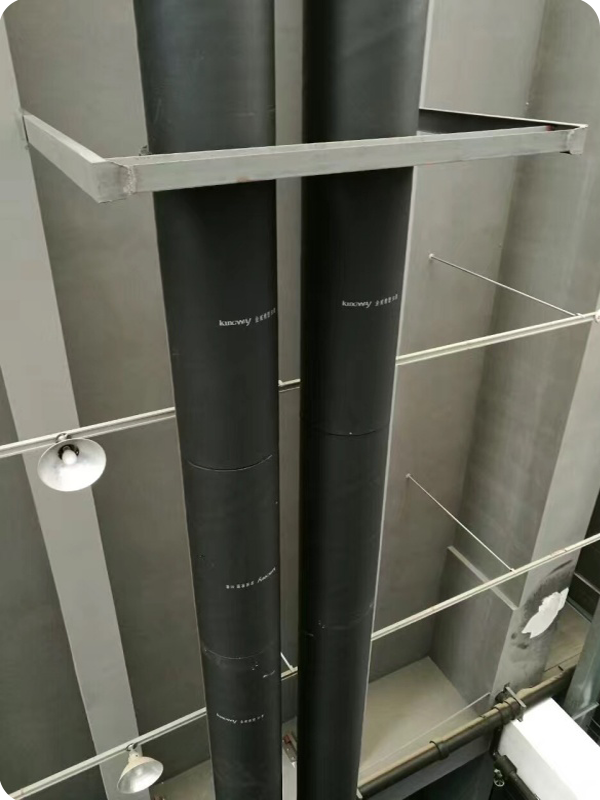
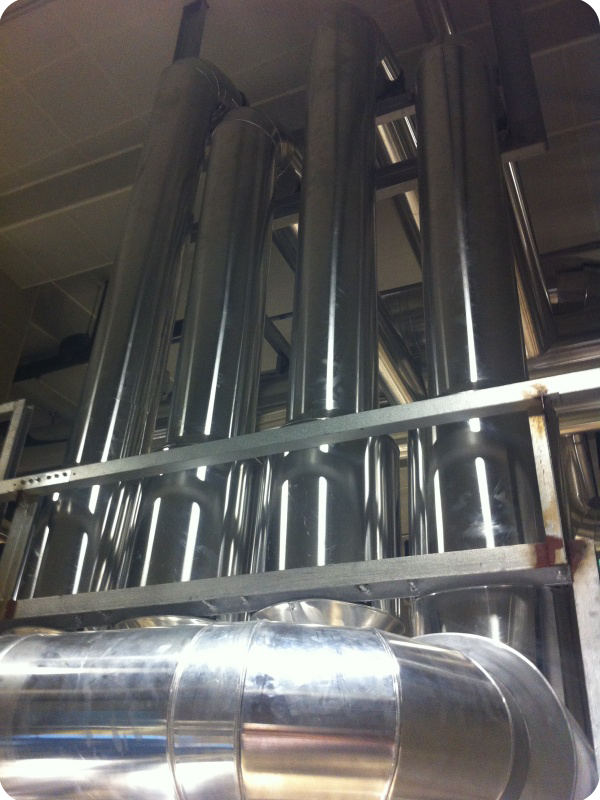
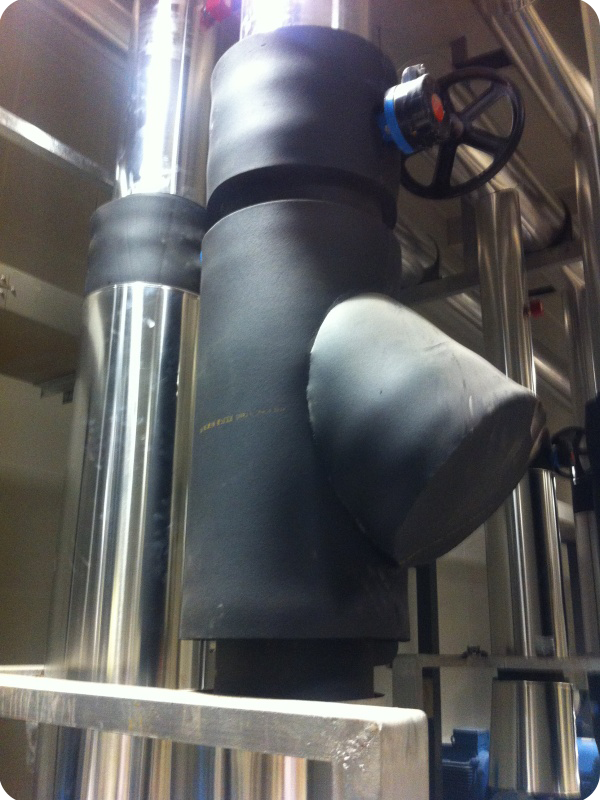
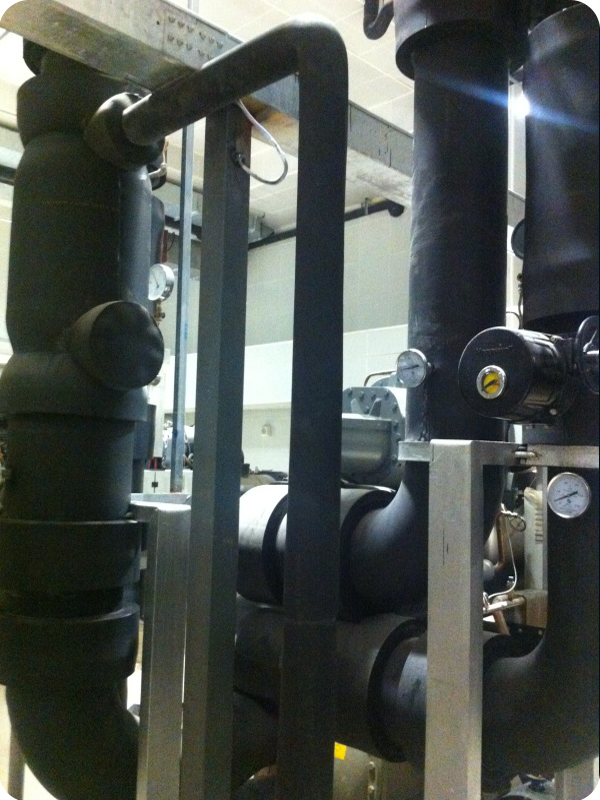
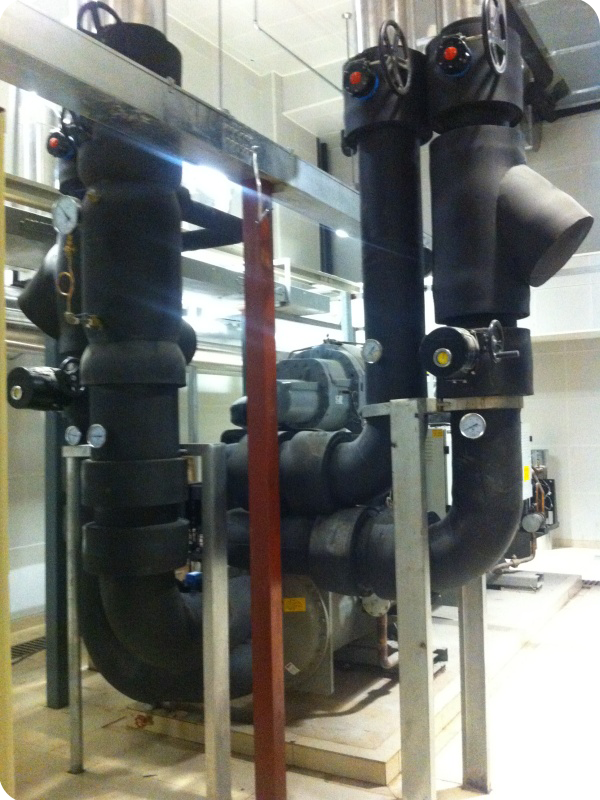
A look at recent engineering installations using Kingflex insulation systems.


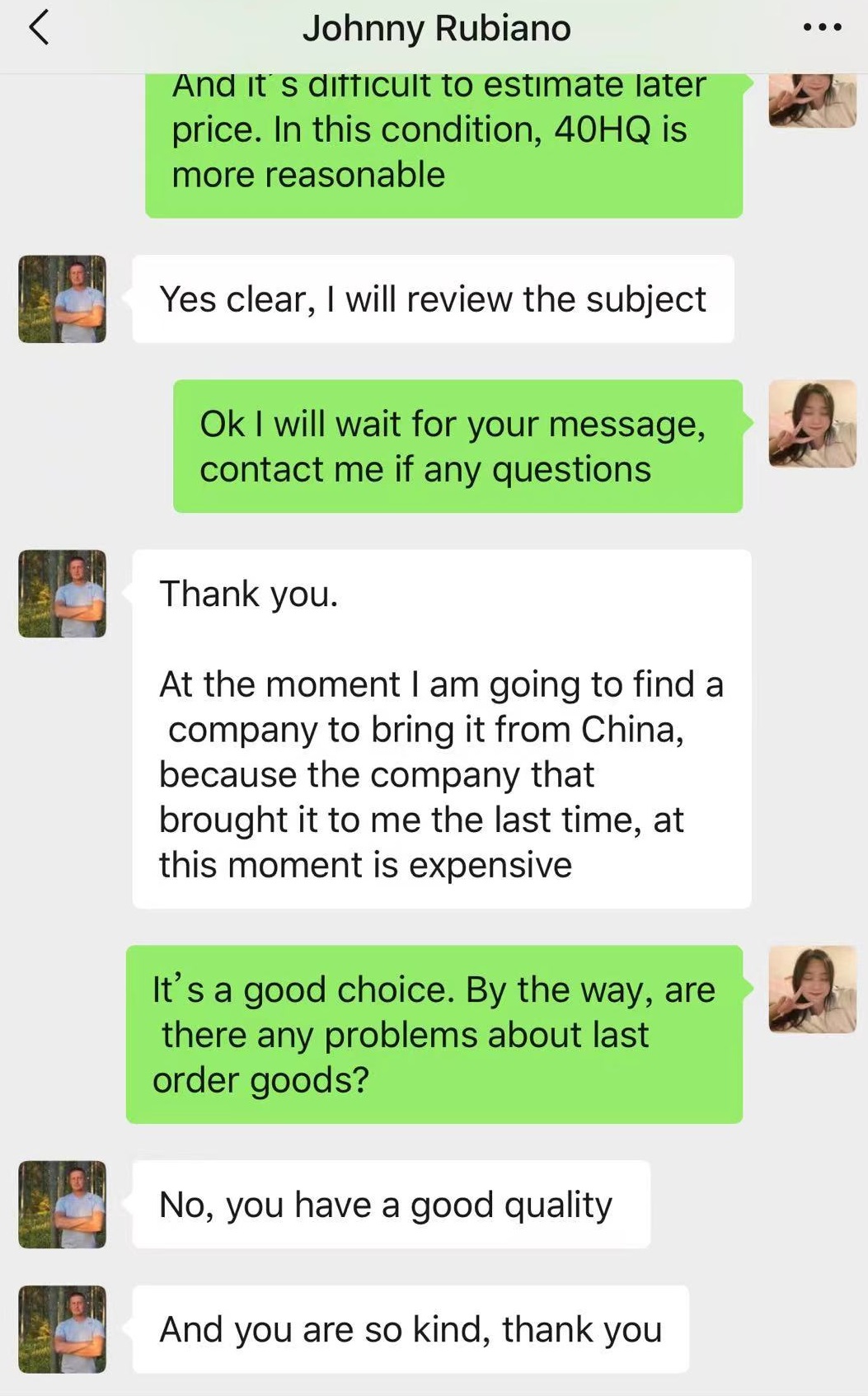
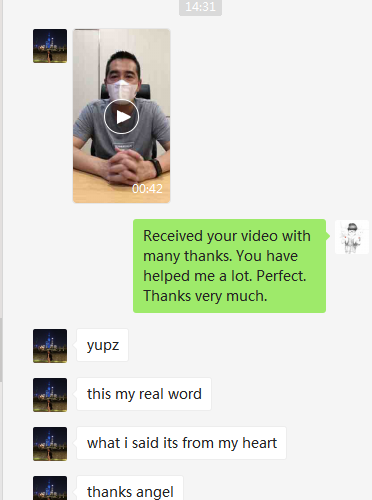
A few examples of customer interactions and performance reviews from our global partners.



Find answers to common questions about material selection, fire resistance, and installation requirements.
Explore our targeted product range designed for specialized low-temperature, noise-mitigation, and foil-clad applications.
 Kingflex