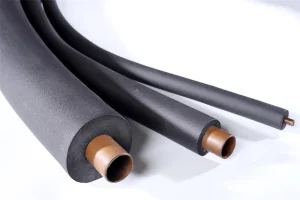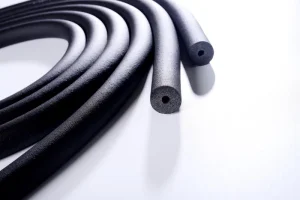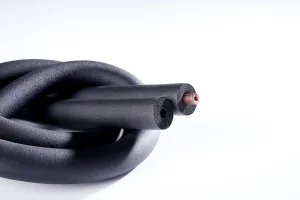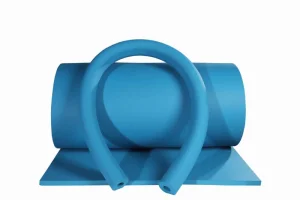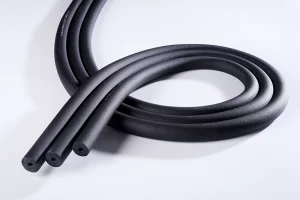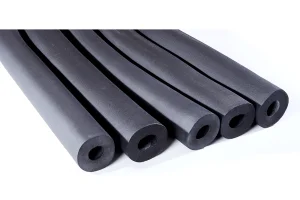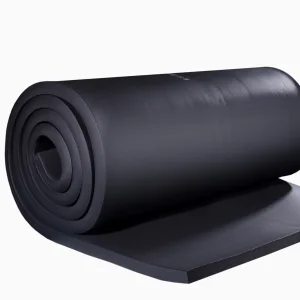
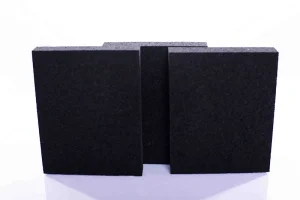
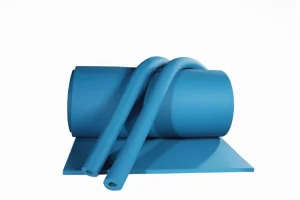
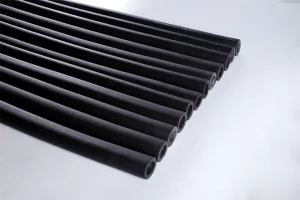
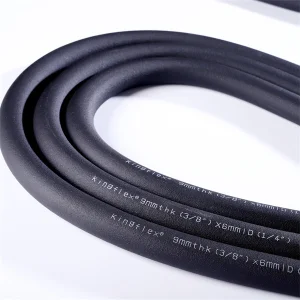
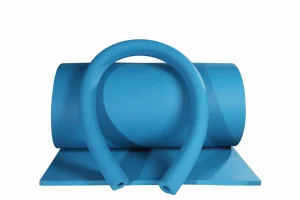
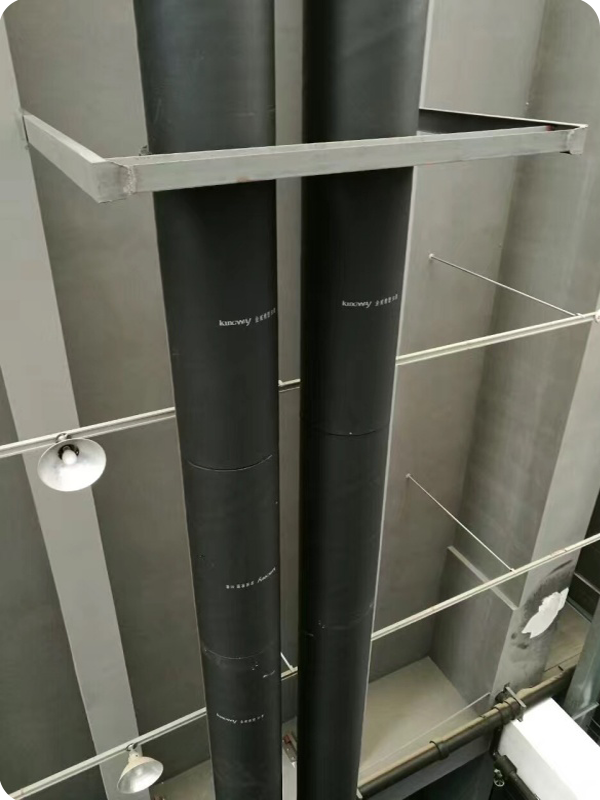
In modern industrial HVAC, commercial infrastructure, and district cooling grids, chilled water systems operate under strict thermal gradients. Preventing condensation while optimizing energy efficiency requires precise calculation of the chilled water insulation thickness.
As worldwide energy codes tighten under international standard frameworks (such as ASHRAE 90.1, BS 5422, and EN ISO 12241), procurement executives and MEP engineers can no longer specify insulation using basic rules of thumb. Over-specification results in inflated capital expenses (CAPEX), whereas under-specification leads to condensation failure, corrosion under insulation (CUI), indoor air quality degradation, and operating losses (OPEX).
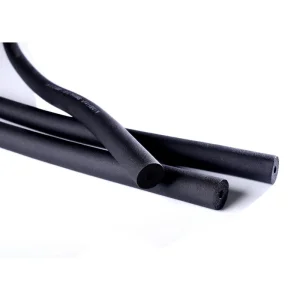
China has established itself as the global manufacturing hub for advanced elastomeric nitrile butadiene rubber (NBR/PVC) foam, offering high-performance, closed-cell structures that balance cost and thermal insulation capabilities. This whitepaper analyzes engineering metrics, provides direct manufacturing pricing models, and explains the parameters that determine thickness requirements across different climate zones.
Chilled water lines typically convey fluid at temperatures between 4°C and 7°C (39°F to 45°F). When the surrounding ambient temperature and relative humidity (RH) yield a dew point higher than the outer surface temperature of the pipeline, condensation forms immediately.
To prevent condensation, the insulation thickness ($x$) must satisfy the thermal balance equation:
Where:
• λ (Lambda Value): Thermal conductivity of NBR/PVC foam (typically ≤ 0.034 W/m·K at 0°C).
• T_ambient: Design ambient dry-bulb temperature of the local climate zone.
• T_dew: Dew point temperature based on design wet-bulb conditions (Relative Humidity).
• h_c: Surface heat transfer coefficient (convection and radiation factors).
| Nominal Pipe Size (NPS) | Outer Diameter (mm) | Insulation Thickness (Light Duty - 70% RH) | Insulation Thickness (Standard - 80% RH) | Insulation Thickness (Severe - 90% RH) |
|---|---|---|---|---|
| DN15 (1/2") | 21.3 mm | 9 mm | 13 mm | 19 mm |
| DN25 (1") | 33.7 mm | 13 mm | 19 mm | 25 mm |
| DN50 (2") | 60.3 mm | 19 mm | 25 mm | 32 mm |
| DN100 (4") | 114.3 mm | 25 mm | 32 mm | 38 mm |
| DN200 (8") | 219.1 mm | 32 mm | 38 mm | 50 mm |
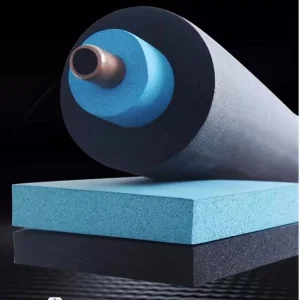
Kingflex elastomeric foam utilizes a proprietary vulcanized synthetic rubber structure blended with polyvinyl chloride (NBR/PVC). This formulation produces a closed-cell matrix containing over 98% non-connecting microscopic air cells.
With a water vapor permeability resistance factor (μ) exceeding 10,000, our material features an integrated vapor barrier throughout its cross-section. Surface abrasions do not compromise its moisture-resistant performance.
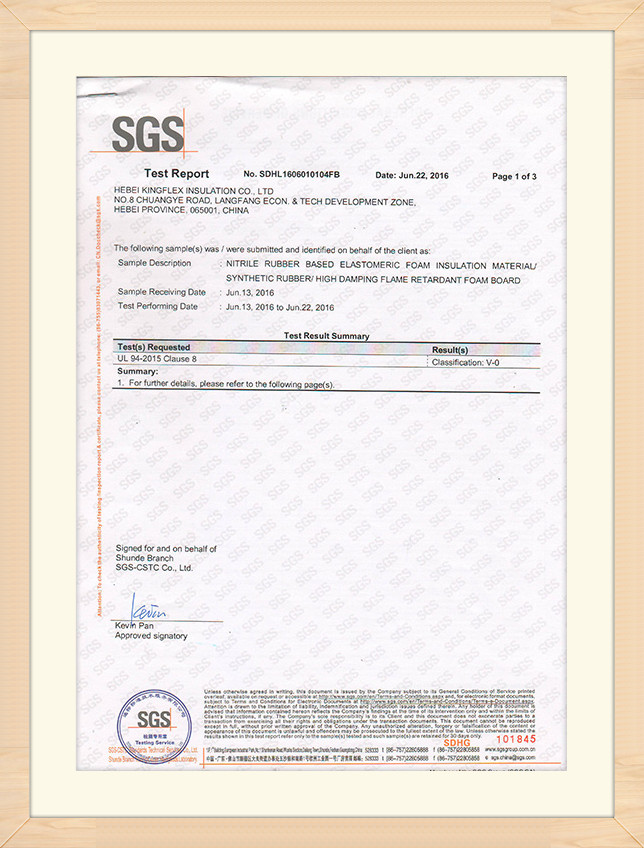
Engineered to meet BS 476 Part 6 & 7 (Class 0 and Class 1 standards) and UL94 V-0 ratings, our rubber foam exhibits self-extinguishing properties, low smoke development, and does not drip when exposed to direct flames.
Featuring a compression recovery rate exceeding 80%, Kingflex insulation fits tightly around complex system shapes, such as expansion joints, elbows, flanges, and air handling unit connections.
| Parameter | Test Standard | Kingflex Target Values |
|---|---|---|
| Service Temperature Range | ASTM C534 | -40℃ to 105℃ |
| Density Range | ASTM D1622 | 40 to 55 kg/m³ |
| Thermal Conductivity (at 0°C) | ASTM C177 / EN 12667 | ≤ 0.034 W/m·K |
| Water Vapor Permeability | ASTM E96 / BS EN 12086 | μ ≥ 10,000 (Permeability value ≤ 0.9 x 10^-13 g/m·s·Pa) |
| Flammability Rating | BS 476 (Part 6/7) / UL94 | Class 0 (GB 8624 Class B1) / V-0 Rated |
Chilled water systems extend beyond comfort cooling in high-rise buildings. They are critical elements in data center cooling, pharmaceutical production, and advanced cryogenic liquefaction facilities. Each of these fields requires customized technical solutions:
Pricing for chilled water insulation depends on raw material costs, NBR density requirements, fire-resistance ratings (Class 1 vs. Class 0), and order volume. Purchasing directly from a manufacturing hub in China, such as Dacheng (Hebei Province), offers structural cost benefits.
Standard Quotation Matrix: Direct factory pricing structures are typically based on cubic volume (USD/m³) for custom dimensions or linear length metrics for standard pipe sections. Standard packaging utilizes PE bags or carton packaging, with options for customized self-adhesive backing or exterior foil laminations (Alu-Clad or glass cloth jackets) to protect against mechanical wear and UV degradation.
To receive an accurate quote, supply the following project specifications to our international sales team:
Kingflex Insulation Co., Ltd. is a specialized manufacturer and trading concern focused on high-performance thermal insulation products. Our R&D and production facilities are based in China's green building materials production hub in Dacheng. As an energy-efficient enterprise, we integrate research, production, and technical sales support.
Heritage & History: Kingflex was established by the Jinwei Group, which has more than 40 years of industry history. Established in 1979, the group was the first major manufacturer of thermal insulation materials located north of the Yangtze River.
Production Capacity: Kingflex operates five automated assembly lines, with an annual output capacity of over 600,000 cubic meters. We are a designated production enterprise for major domestic energy, power, and chemical industry departments. Our thermal insulation systems are exported to over 66 countries and regions worldwide, providing engineering solutions for diverse climatic zones.
Establishment of the parent Jinwei Group, pioneering thermal insulation materials manufacturing north of the Yangtze River.
Dedicated international distribution channels established, shipping NBR/PVC elastomeric systems to over 66 countries.
Operating 5 automated production lines with over 600,000 m³ of annual output, supported by 8 specialized R&D engineers.
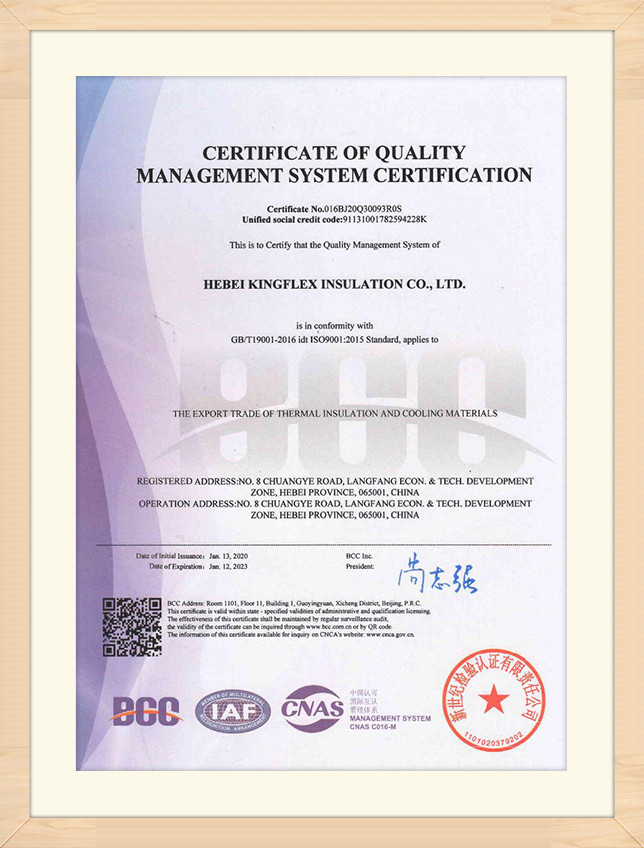
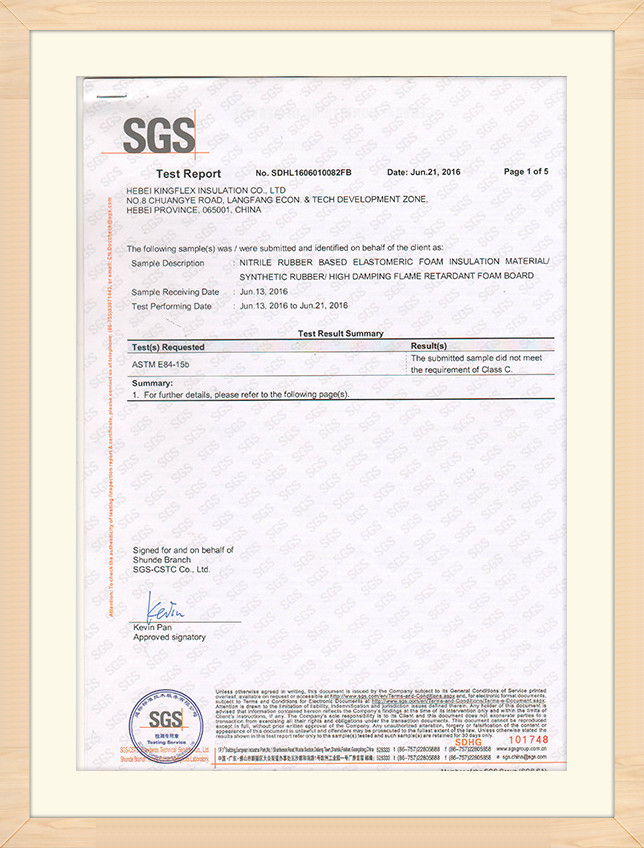
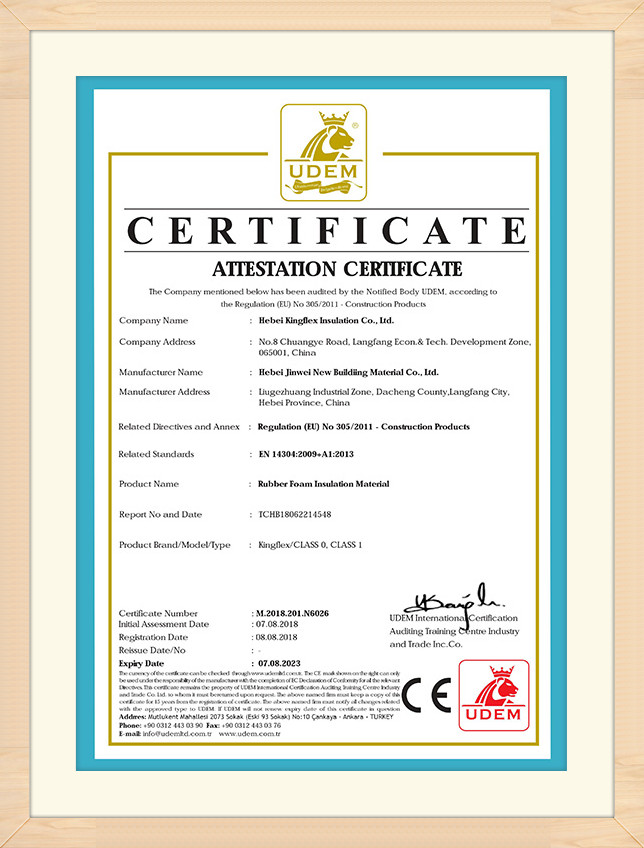
Chilled water lines are critical infrastructure systems. Kingflex insulation undergoes comprehensive quality control testing during manufacture. Material samples are verified against international standards for moisture resistance, thermal conductivity, and fire safety.
Our facilities maintain ISO 9001 and ISO 14001 certifications. Our products have also received the following third-party certifications:
Q1: What is elastomeric rubber foam insulation used for?
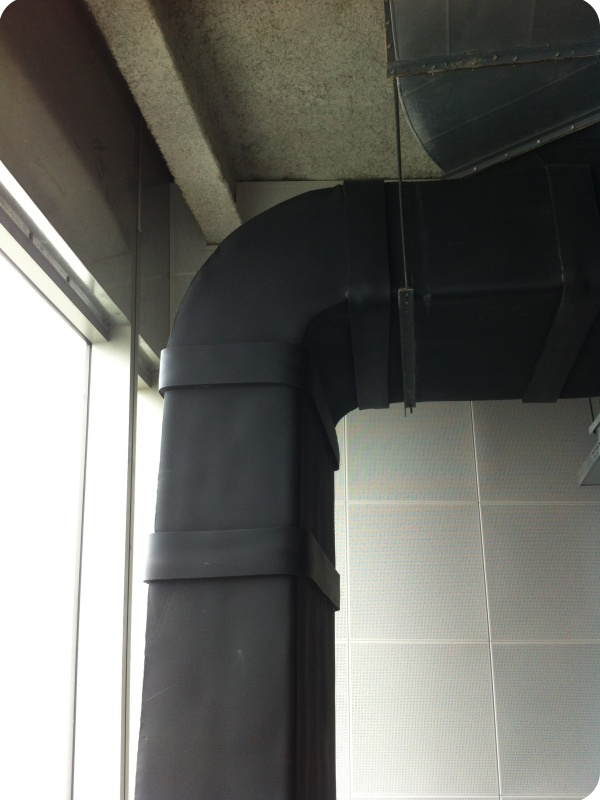
It is primarily used to insulate HVAC ductwork, chilled water and refrigeration lines, building thermal barriers, and industrial process piping to prevent condensation, control heat transfer, and mitigate acoustic noise.
Q2: Is Kingflex rubber foam insulation fire resistant?
Yes. Our rubber foam insulation includes flame-retardant additives to meet fire safety standards, achieving BS 476 Part 6 & 7 Class 0 and UL94 V-0 ratings.
Q3: What is the difference between rubber foam and rock wool insulation?
Rubber foam is a flexible, closed-cell material that prevents moisture absorption, making it suitable for cold line insulation (preventing condensation). Rock wool is an open-fiber material designed for high-temperature applications and passive fire containment.
Q4: Do you provide customized insulation products?
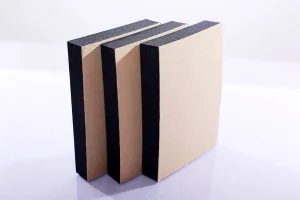
Yes. We offer customized production, including specific densities, wall thicknesses, custom inner diameters (ID), pre-slit configurations, self-adhesive backings, and aluminum foil laminations.
Q5: What certifications do your products have?
Kingflex products are tested and certified to BS 476, CE, REACH, RoHS, UL94, and ASTM standards.
Q6: Does Kingflex products have traceability?
Yes. Each production batch features automated line printing with date codes and batch numbers for tracking from raw material delivery through dispatch.
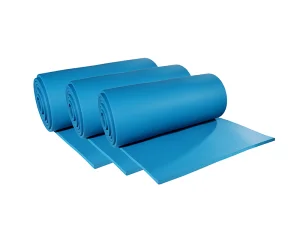
Q7: What thickness of Rubber foam insulation sheet roll can you produce?
Our continuous roll lines produce thicknesses ranging from 6mm to 50mm, with custom multi-layer structures available for thicker specifications.
Q8: What is the service life of rubber plastic pipe and board?
When properly specified and installed according to technical guidelines, the expected operational life of Kingflex insulation systems is 10 to 15 years under typical operating conditions.




 Kingflex