 Kingflex
Advanced HVAC Duct Insulation Calculation & Thermal Dynamics
How the math of thermal conduction, vapor transmission, and dew point suppression dictates performance.
The Mathematical Framework of Duct Insulation Calculators
When computing HVAC duct insulation metrics, simple approximations fail. An accurate HVAC insulation calculator uses Fourier's Law of Heat Conduction paired with convective heat transfer coefficients to guarantee energy efficiency and complete condensation prevention. For flat surfaces (such as rectangular HVAC air distribution ducts), the heat flux ($q$) is defined as:
Where T_i represents the ambient air temperature, T_o is the duct surface running temperature, t is the thickness of the insulation layer (m), λ (Lambda) is the thermal conductivity of the material (e.g., Kingflex elastomeric foam averages ≤ 0.034 W/m·k at 0°C), and h_c is the surface convection coefficient.
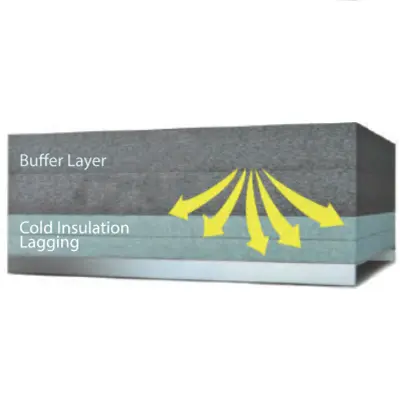
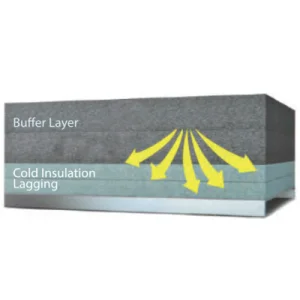
To eliminate outer condensation, the surface temperature of the insulated duct must be designed to remain strictly above the ambient air's dew point. An automated calculator integrates temperature, relative humidity (RH), duct geometry, and air movement to instantly outputs the minimal required thickness parameters. This avoids common systemic failures such as mold growth, water-dripping onto electrical lines, and dry rot.
| Insulation Type | Service Temp. Limit | Thermal Conductivity (λ at 0°C) | Water Vapor Permeability (μ) | Flame Spread Rating |
|---|---|---|---|---|
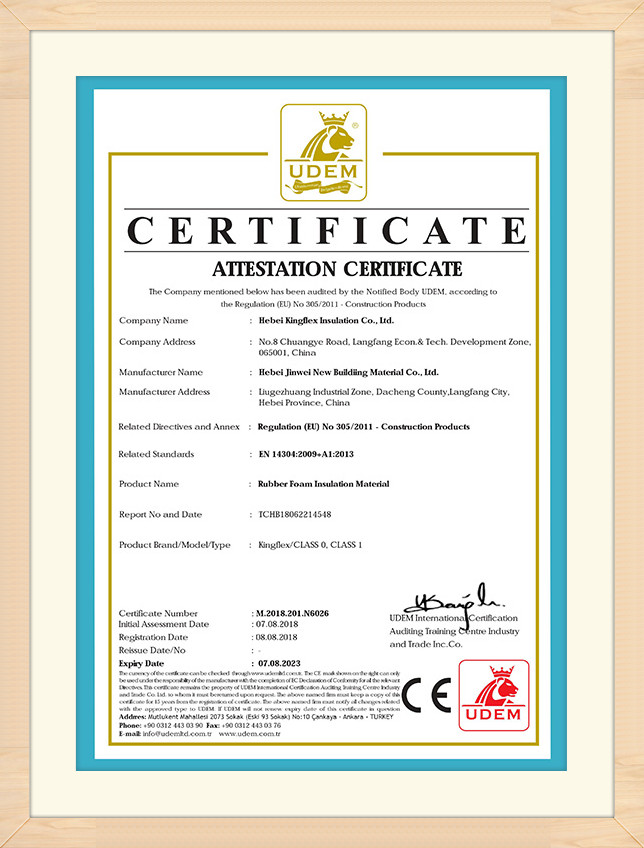
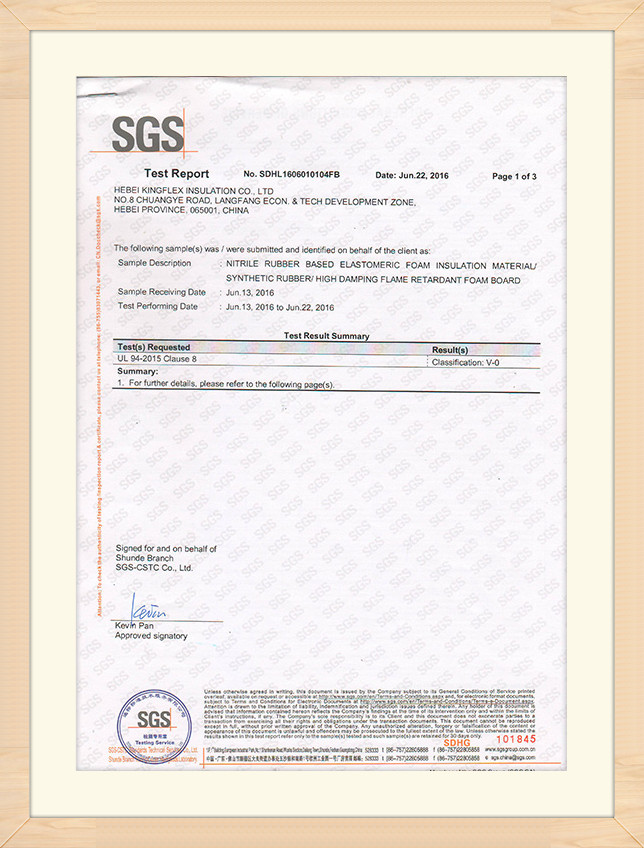
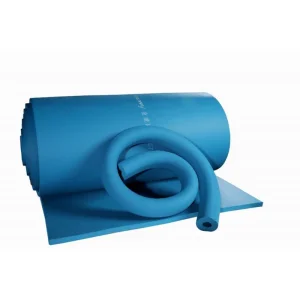
| Elastomeric Rubber Foam (NBR/PVC) | -50°C to +105°C | ≤ 0.034 W/(m·K) | ≥ 10,000 | Class 0 / B-s3, d0 |
| Cryogenic Nitrile Blends | -200°C to +125°C | ≤ 0.031 W/(m·K) | ≥ 20,000 | BS 476 Part 7 Class 1 |
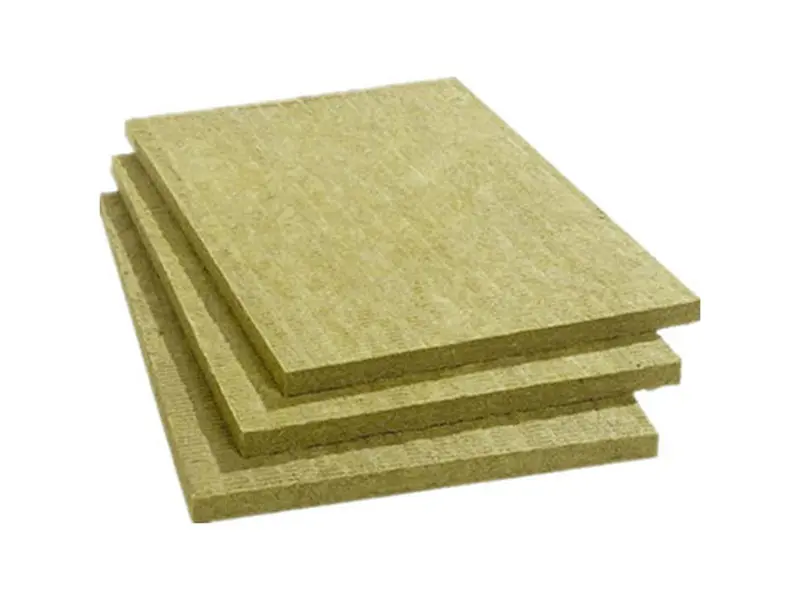
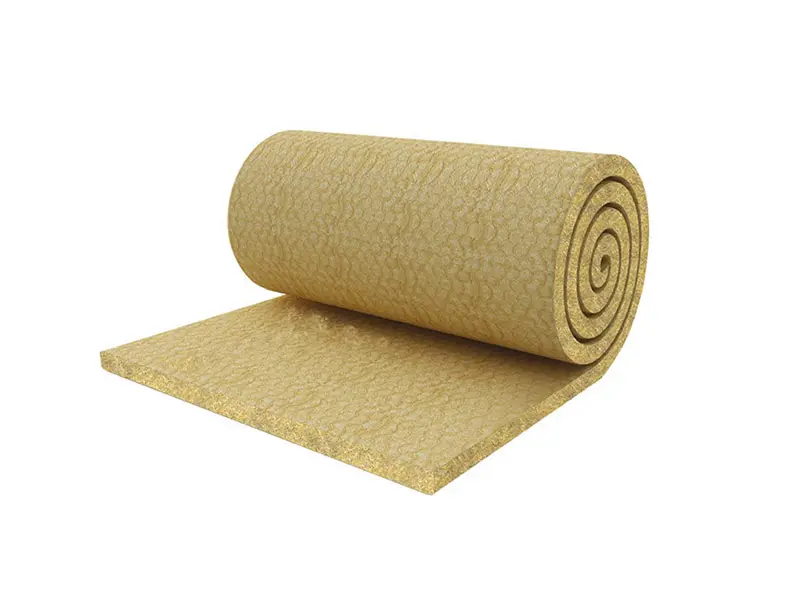
| Industrial Rock Wool Board | Up to +650°C | ≤ 0.040 W/(m·K) | 1 (Requires Vapor Barrier) | Non-Combustible (Class A1) |
Information Gain: The NBR/PVC Advantage over Fiber-based Core Materials
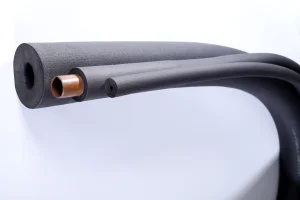
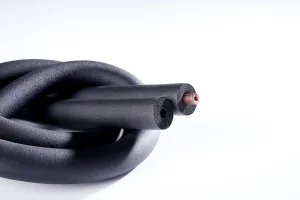
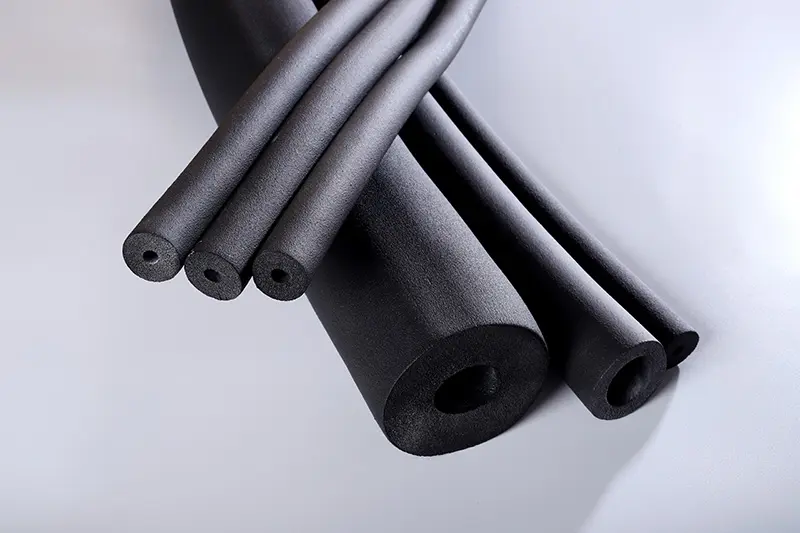
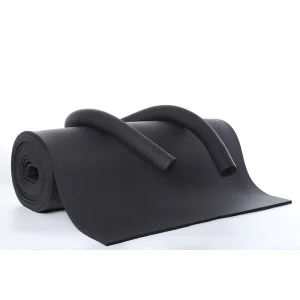
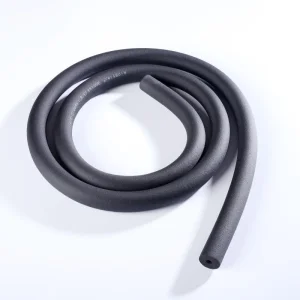
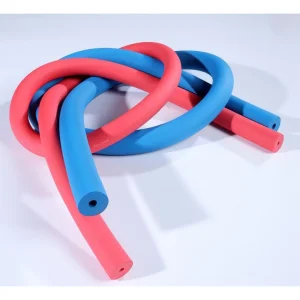
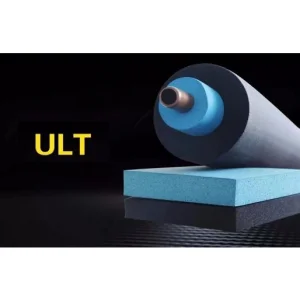
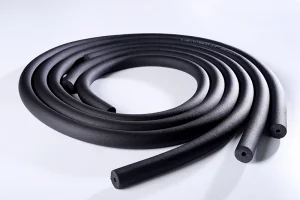
Unlike open-fibered materials (like fiberglass or standard rock wool blankets) that act like sponges when exposed to local moisture, our high-density NBR/PVC closed-cell matrix prevents moisture ingress from the source. Water vapor absorption is the number one cause of long-term R-value deterioration. For every 1% of moisture absorption by volume within an insulation layer, its thermal conductivity can spike by up to 15%. Because Kingflex NBR/PVC is synthesized with a closed-cell rate exceeding 98%, it retains structural and operational thermal barrier integrity for over 15 years.